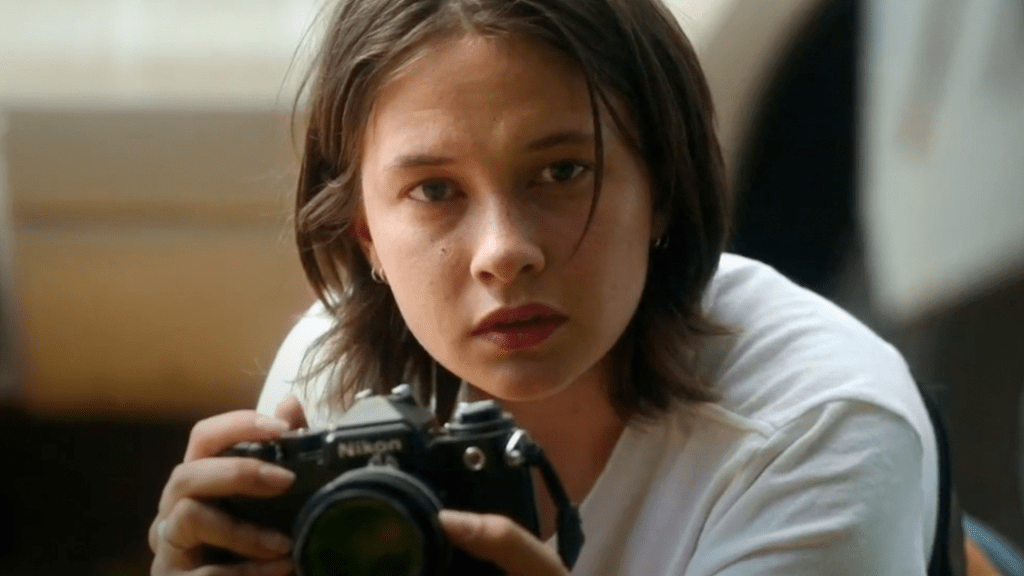
Alex Garland, like the war photographers he presents in Civil War, is deeply invested and allured by crafting horrifying images. Like them, 1 out of every 30 images he pumps out is amazing (the other 29 not so much), and perhaps this muffled version of the United States aptly reflects the precarious, incrementally rising anxiety of living in the States right now. But unlike a competent journalist, he forgot to include any context of what’s at stake or why it is important.
Civil War is the newest collaboration between American art-house juggernaut, film Twitter’s favourite brand A24 and writer, director Alex Garland, whose first three feature films have been distributed by said company. The common theme standing between these three original works is their mix of high-concept arthouse topics and settings (i.e. the shimmer in Annihilation being a Walmart version of the Zone from Tarkovsky’s renowned Stalker) with lower-brow genre elements. The use of horror to emphasize the fear of malevolence from men from the film Men (2021) (subtle, right?) and the inclusion of a cerebral kaleidoscopic environment in Annihilation to aestheticize marital plight, both including body horror imageries to represent some sort of transformation. This blend is a common trait amongst films with the A24 logo attached, and ultimately what landmarks their popularity in current film culture.
His latest film, Civil War, takes place in a dystopian version of the United States undergoing a Civil War, where Texas and California have formed an alliance to take down the empire. It follows three seasoned journalists, renowned war-photographer Lee (Kirsten Dunst), her collaborator Joel (Wagner Moura), and aging writer Sammy (Stephen McKinley-Henderson) across the ember of their country into the heart of darkness (or currently known as Washington D.C.) to interview the under-siege president (Nick Offerman), who allegedly opted for a third-term and disassembled the FBI. An ambitious newcomer to the trade, admirer of Lee, Jesse (Cailee Spaeny) charmed her way into the group the night before they head out. The four embark on an anxiety-provoking journey, each stop deadlier than the one before.
The elephant in the room when this film is announced is its blatant title, what it represents and what type of storm it will rage on the internet like every other film people have cared about since social media was invented. Will it be another cheap and redundant shot at Trump and his supporters? Will it be too allegorical of the Jan. 6 event? Surprisingly, the answer to both questions is no. The film makes subtle hints at Neo-Nazis but never appoint them as the genesis of conflict and while real-life footage of Jan. 6 was included and the final storming of capital carries some resemblance to the real-life event, the film is never about that. It does not falter into these traps because it straight-up cops out and refuses to address any issue at all. Civil War goes by the way of “making it about the journalists” and chooses to be apolitical, failing to understand that one cannot stand without the other.
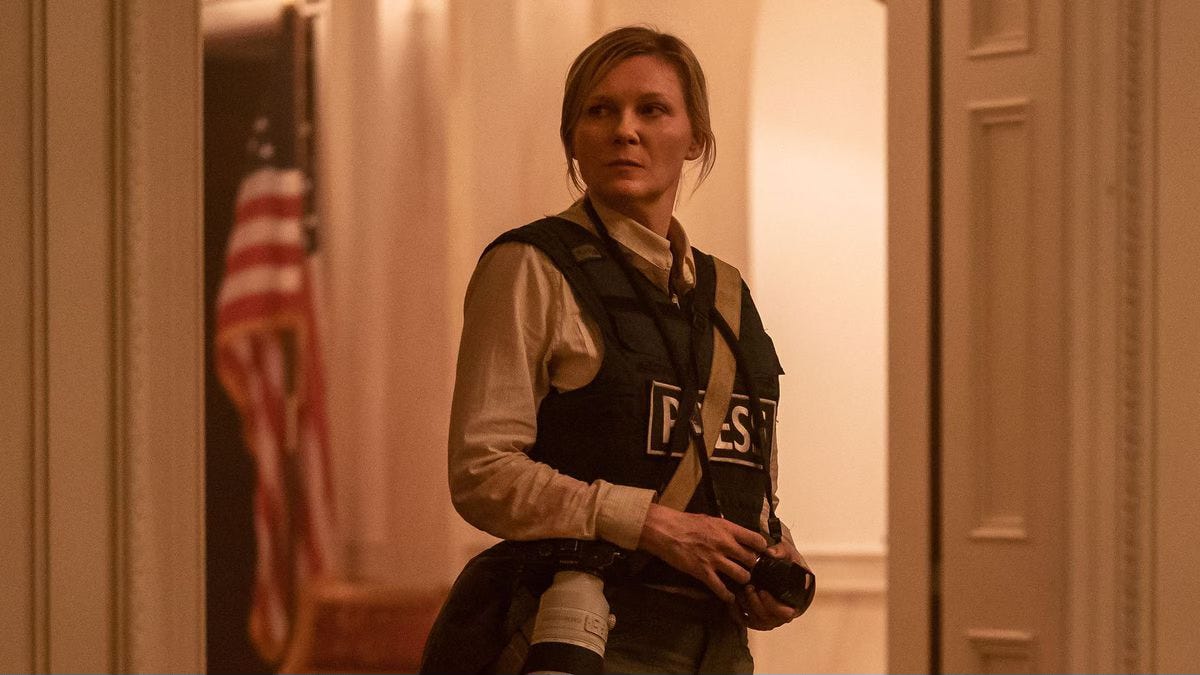
One glaring issue the film and Alex Garland fail to realize is that journalistic neutrality is not an excuse for refuting political statements. In fact, the political observations need to be sharper and more astute than those confined to biases. Journalists are products of their time. How can we connect with their experiences if we are removed from the specificities? A journalist from the Reagan era does not have the same struggle as a reporter during the fake news, anti-woke era. A war has sides. Informing what each side represents and their values should be part of a journalist’s duty. If the film centres around journalists, it should also partake in their duties. We never knew what form of publication they work for, what they profit from these pictures or interviews, they are capturing images of war, who is fighting whom, and why? These are questions that demand answers for the film to function. In Civil War, these people might as well be wildlife photographers.
While reading reviews from critics I admire, the ones who revered the film seem to unanimously suggest it has much less to do with anti-war and revolves more around the idea of people, photographers included, being progressively desensitized by atrocities, along with rushing to capture the gushiest, bloodiest image possible. In other words, the film is more Nightcrawler than Come and See. But here lies the larger complaint I have against the film – it’s just not that provocative or well-made. As I aforementioned, Garland has a penchant for blending his artsy concepts with genre elements. When I watched Annihilation to prepare for this film, I disliked it. The main reason is that I believe his sense of composition and understanding of the genre is not effective or comprehensive enough for the blend to function. Civil War suffers similarly. Even with photographers pivoting the film, the images are never as sharp or enticing that you can sense the ambivalence and moral corruption of being attracted to them. The only image that offered me any sort of emotional response was a shot of their car driving through a forest on fire. The batting rate for tactile images is incredibly low. In addition, the building anxiety always evaporates during each stop, where the film oddly shifts into a road-trip hangout movie with the help of a couple of jarring needle-drop choices.
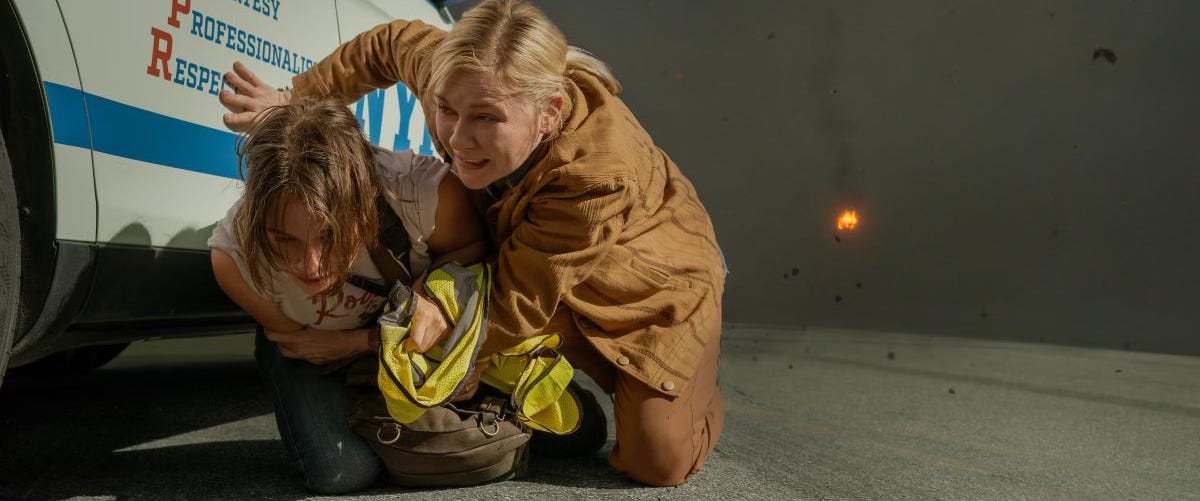
Dramaturgy isn’t Garland’s strong field either. Like in Annihilation, he spaces out time between adrenaline-filled scenes to stage blend monologues for characters to “connect” with each other. These actors are basically being written out of their parts. Both Dunst and Spaeny had given memorable performances in other films (both in movies of Sofia Coppola), but here their character arcs are so sloppily delineated and poorly staged that it felt like such a waste of talent.
“Every time I survived a warzone, I thought I was sending a warning home – don’t do this. But here we are,” said Dunst when the team sets up camp after an intense day of travelling. The emotional core of this line is conveyed through Dunst’s eyes, filled with dread and hopelessness. All the credit goes to her. The problem lies in the fact that this hefty scene begins abruptly with so little build-up, relinquishing whatever amped-up emotional impact she may have savoured. Spaeny’s Jesse suffers even worse. She mentions her heroes being Lee and her real-life namesake, Lee Miller. Her journey as a protege of Lee and their relationship takes the shape of every cliche in movies about a mentor and a mentee ever – the older mentor sees the younger mentee as an image of her past self, and her frozen heart gradually thaws and eventually makes the grand, final gesture of self-sacrifice. Sticking to a formula is not a flaw, but these scenes fall so flat you can see through their intentions of masking the film from being an otherwise exploitative genre flair, a poorly executed one. If the film is indeed a character study of Jesse being more and more addicted to capturing trauma and horror, then why can’t I sense an ounce of that progression in Cailee’s performance or feel the downward spiral when she finally takes the money shot? The only unique aspect worth noting is the physical logic built into Jesse’s onsite training – the way Joel acts as a guiding hand and metronome during her first real combat.
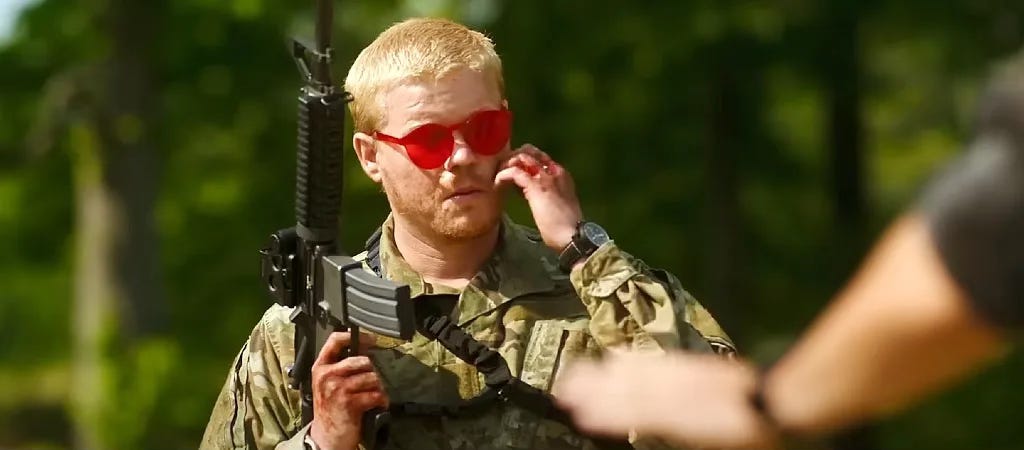
There are plenty of vigorous scenes and clever ideas. I like how the editing inserts the photo just taken by the photographer during an action scene. It provides these scenes with a distinct tempo. There are nuanced details that root Lee to her profession – how she uses a long camera lens as a telescope and sees the flowers on the ground in and out of focus when hiding. Despite the film’s flaws, if you have to see it, definitely see it in a theatre because the sound design is complexly layered. But ultimately, there’s just not much to pump my blood for – you don’t really care for the characters, and the situations they’re in are as thematically opaque as they can be. Even during the most intensive Jesse Plemons scene, carried by his hauntingly subtle performance (best in the film, in my opinion), it still baffles me because of how little it ends up conveying versus how tense it was while playing. We can talk about how strange it is that the film kills off the only two Asian characters five minutes after their introduction, some other time…
I’m Canadian and, like some have pointed out, I’m very dubious about the worth of 300 CAD if our neighbour decides to self-implode one day. That’s one of the many contrived elements within the film that I would simply pass on if it weren’t so self-serious and posturing.



 Cinema Travelogue
Leave a comment