
In terms of cinema, the first six months of the year are always tricky. For one, studios usually choose to push their potential critics’ darlings to the back half of the year for better awards prospects. The summer blockbuster season is already heating up, but with the disruption of Hollywood caused by strikes last year, their batting averages have been A LOT more misses than hits. By this time, both Berlindale and Cannes had come and gone and become old news; yet if you are not those lucky ones who got to travel to Europe and experience these prestigious festivals, you’ll have to wait months, even years, before you’ll have a chance to check them out. Still, as we reach the end of June, it’s nice to take a snapshot of what the year of movies looks like for now; if anything, it’s for us to look back at the end of the year and see how far we’ve come. Here are ten new releases that I enjoyed the most; they run the gamut from last year’s unlucky festival darlings that just received distribution to tentpole blockbusters. They are ordered alphabetically, as I don’t want to spoil the exact order of my 2024 ranking just now.
The Beast
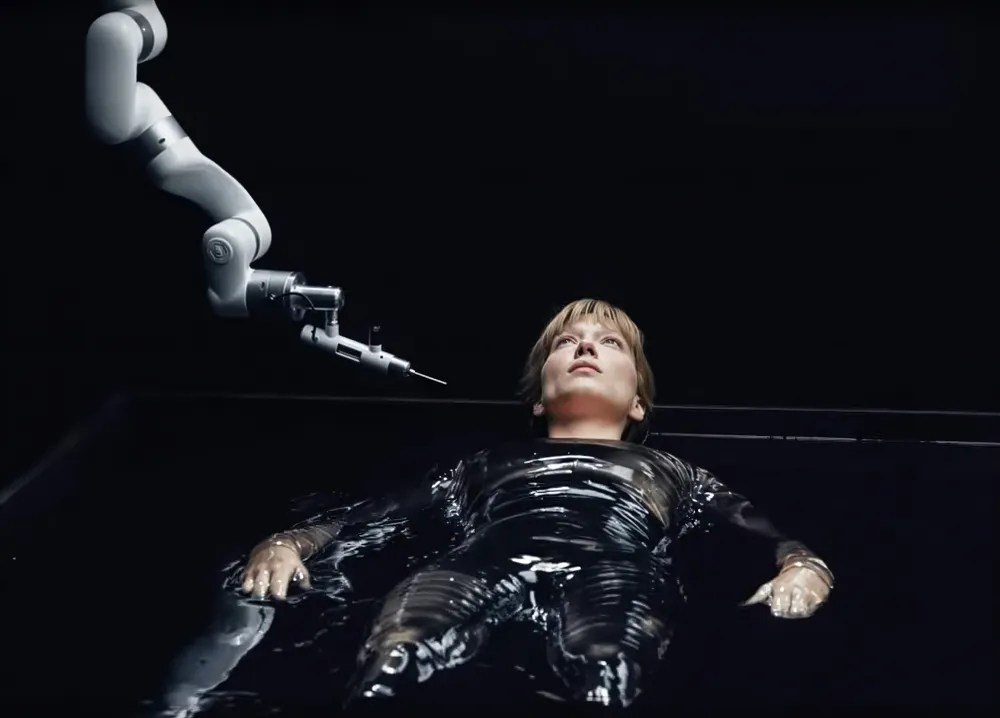
Only someone like Bertrand Bonello can have both the guts and the audacity to concurrently stage a lavish costume drama based on the novella by Henry James, produce a satire on the trashy LA culture and incel serial killer, and address our current trepidation with AI. His newest feature, The Beast, stars the sublime Lea Seydoux and George McKay across a century-long, non-linear love story from the 1910 Paris Flooding to a near future where AI has completely taken over our civilization and extracted all of our humanistic qualities. The film spans different genres from period melodrama to digitalized Lynchian horror. Bonello pressurizes every scene with varying degrees of dread that maintains his idiosyncratic sensibility under various aesthetics. Seydoux and McKay accomplish the hefty task of each playing three characters – a job that demands them to become malleable chameleons while maintaining a stringent sense of self within each role. This results in career-best performance for both and an equally funny and traumatizing role by McKay in the LA section channel mass murderer Elliot Rogers. If anything, The Beast is about fear and its essential place within the human experience. The same fear that drives us to loneliness is the same fear that urges us to love. The film states that with anguish in an unforgettable final scream.
Chime
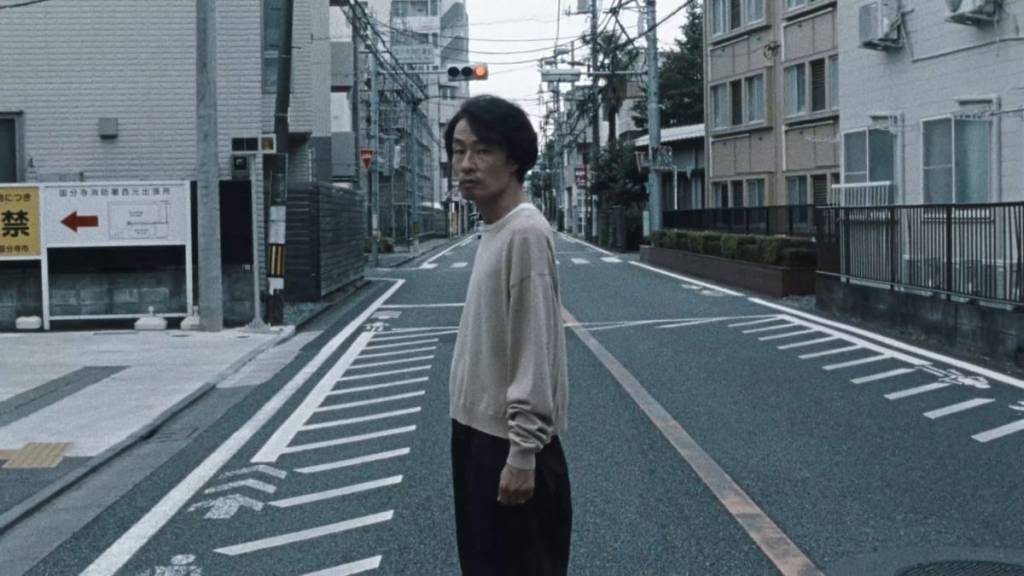
Clocking in at a mere 45 minutes, Kiyoshi Kurosawa’s Chime rightfully earns itself a spot on the list by being a very welcome return to form for the J-horror maestro. Not that his previous wartime thriller Wife of a Spy isn’t great, but here with Chime it feels like he’s finally returning to his home court – cold-blooded murderous horror that established his status in the first place. It is an extremely well accomplished piece of quotidian paranoia that’s simultaneously ready to burst in your face as well as hide creeping details in wall shadows. The incorporation of a train running in the background, metal cans dumping into the garbage, and accelerating footsteps on the bridge all act as metronomes that strike a permeable, omnipresent cord of tension that just cramps me up by the end. Of course, a lot of the film can be interpreted as ostentatious formal showmanship by Kurosawa, but I was genuinely lured by how chilling the actors’ facial expressions are and how they speak truthfully to our obsession with daily patterns. These ideas manifest as an invisible spell with inscrutable logic where the more you think of it, the less you understand; the more you’re inside the spell, the less truth you’ll have. In the end, you’re repelled by both sides of the door; you’re trapped by life itself. If anything, this made me want to rewatch Cure.

La Chimera
In La Chimera, Alice Rohrwacher follows the journey of a newly released from prison British archeologist, Arthur, who returns to the rural Italian village where he and his deceased lover once lived. Arthur, played by an empathetically down-on-his-luck and removed Josh O’Connor, rejoins a local group of tomb raiders to embark on a journey of searching and claiming the long forgotten, both physically and internally. The world in La Chimera seems ready to move on, but Arthur is not. He is an emo version of Indiana Jones on his lonesome way of combating progress. From free-flowing editing choices to visceral needle drops, Rohrwacher, as a cinematic magician, imbues a viscous dose of character into every one of her gorgeous frames. There is an overwhelming sense of elemental presence – the sun glaring overhead as it dares you to open your eyes to see what is truly in front of you. Raggedness dominates the screen from a small house on a sinuous mountain road to the abandoned train tracks to the dusty suit Arthur wears. The spontaneous switch to a 16mm lens understands the capricious nature of one’s grief – sometimes the memories of a lost one hit so hard your current world begins to look different. La Chimera is a film of love, communal joy, and earnest yearning to seek the long-gone.
Do Not Expect Too Much from the End of the World
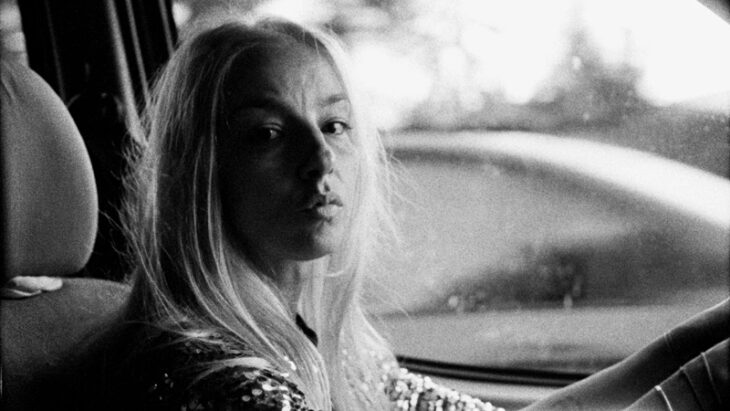
The Romanian iconoclast Radu Jude returns after his 2021 Golden Bear winning Bad Luck Banging or Loony Porn with another formally shattering feature – Do Not Expect Too Much from the End of the World. Unlike Bonello, Jude chooses to confront our current-day issues by making the most contemporary film you’ll see this year. Starring the foul-mouthed and humanistic Illinca Manoloche, the film follows an overworked PA of a small advertising company who drives across the overcrowded streets of Bucharest to interview four candidates for a workers’ safety ad her company is preparing to shoot. From climate change, workers’ exploitation, TikTok culture, and even Andrew Tate, Radu Jude assembles the greatest hits of modern-day stressors while not diluting any of his observations. Like his previous feature, the film is characterized by ridiculous and real billboard ads in the streets, in-your-face pedestrian level social observations, long footage of still images remotely connected to character conversations, and satirical namedrops of figures such as Jean Luc Godard, Mao, and John Lennon, amongst so many others. It’s the confluence of these disparate elements where the film resides, where Radu Jude freely plays with his toy box like the rules of cinematic convention have just been rewritten. The film is as funny as it is heartbreaking; for every sadistic Andrew Tate TikTok filter appearance, there is a lingering close-up of an exploited worker that shows vulnerability behind the camera. As a result, the film is a macabrely impressionistic and truthful tapestry that may as well resemble the end of our world after all.
Evil Does Not Exist
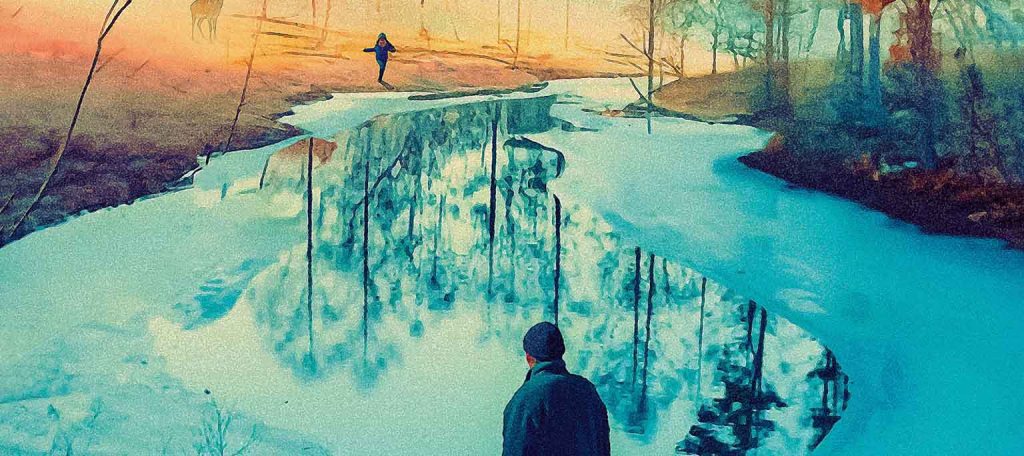
There are no more words I need to add about Ryusuke Hamaguchi’s hypnotic and patient Evil Does Not Exist – a bone-chilling exercise of ambient horror that strikes a very truthful and intense chord of environmental activism within me. I reviewed the film in detail here. I’m still extremely impressed by the way he orderly presents the entire line of operation within capitalist society while not reducing anyone or anything to caricature. Imageries and soundbites that still linger. “Water always flows from the top of the mountain to the bottom of the mountain; people upstream need to take care of people downstream.” The film is nature screaming, please see it.
The Feeling That the Time for Doing Something Has Passed
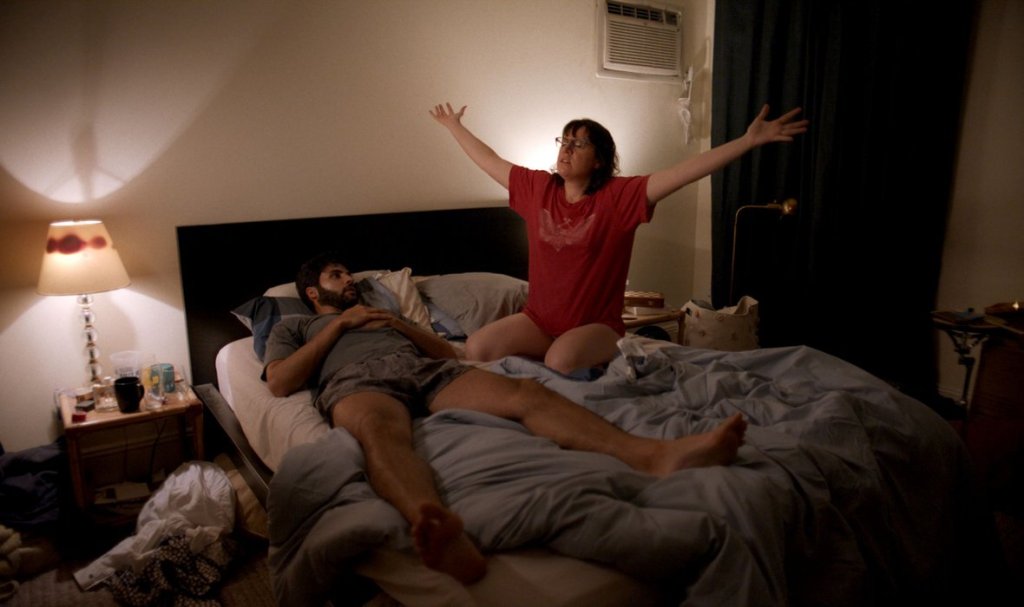
I swear I don’t like these films just because they have long titles. If I have to make a cheeky tagline that will urge more people to see The Feeling That the Time for Doing Something Has Passed, it would be: This is The Worst Person in the World for all the perverts out there. This New-York-based self-acted, directed, written, and edited second feature by Joanna Arnow is one of the most tender surprises of the year so far. The tenderness may not be visible at first sight, as character interactions are calibrated to a postmodern coldness that is common within a Yorgos Lanthimos feature. Anna, played by Arnow herself, is a woman in her 30s who has spent a long period of her time as an adult within a casual BDSM relationship with a much older man. The film captures their sexual encounters unflinchingly, as removed, fly-on-the-wall observations that play less into predated judgement than as a ruler for us to measure out and cohere with all of the other bizarre corporal business meetings and human interactions it presents us with. Are our actions outside of the bedroom really more normal than within the bedroom? Like a human, the film contains a multitude as Anna traverses torpidly through modern dating, her aimless corporate job, and time with her parents (played by Arnow’s actual parents). With Arnow’s idiosyncratic deadpan vision in front and behind the camera, it slowly but surely envelops us in a story of love that touches deep into human nature about how we share ourselves with others.
Furiosa: A Mad Max Saga
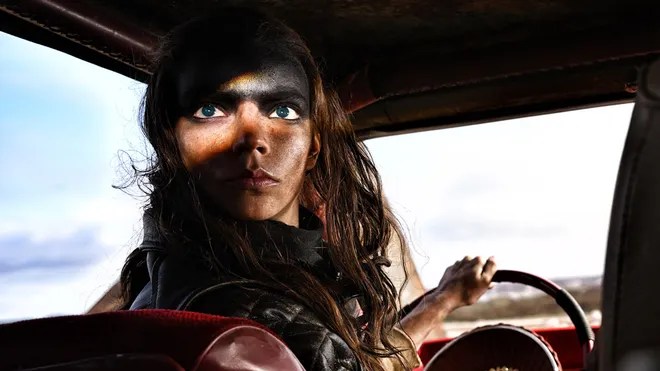
If Furiosa is indeed the last film in the Mad Max saga, I would argue it’s a poignantly fitting coda. Both Furiosa, the character, and the film are half-knowingly setting out on a quest they know they can’t fulfill. The former seeks to return to the “Green Place” that savours the last bit of her innocence, the latter is trying to match the expectation and excitement of being a prequel to the best action film from the 2010s. They both can’t, but it is this brazen, steady determination to continue on – a match made in heaven between George Miller’s combusting technical gusto and Anya Taylor Joy’s unwavering physicality – where the best blockbuster of the last couple of years is born. But this isn’t to say Furiosa cannot stand on its own merits. If Fury Road is a long-winding chase of catharsis within the improbable wasteland, Furiosa doubles down on this search from a predetermined path of doom, where our hope is long gone, but the lost will continue looking and fighting. The question is, as Chris Hemsworth’s unscrupulous Dementus states, “Do you have it in you to make it epic?” George Miller certainly does. When we watch a prequel, what matters is never the incidental; it’s the visceral bloodshed of the very moment Furiosa gets her arm torn off between vehicles. We know for a fact she will lose that arm and in the end make it out of the film alive, but the tension never wears off with the way Miller pumps Furiosa’s journey with myriad high-wired designs of action set pieces, a more expansive, decaying, and apocalyptic world filled with transcendent digital imageries, and characters that are newly introduced but felt like they have been in this universe since the beginning of time. Sometimes it genuinely feels like he is writing his own twisted version of the creation myth, where the Garden of Eden is long gone and all we have left are roaring motorbikes in place of stooges. I would argue the oil rig sequence is the best in the franchise. These dudes even got parachutes now! There is simply no one who can craft such a desolate and picturesque journey with hundreds of millions of dollars other than George Miller himself. And to wrap up such a riotous ballad of engines and explosions with a philosophical confrontation between two people and a teddy bear, that’s cinema, baby.



 Cinema Travelogue
Leave a comment