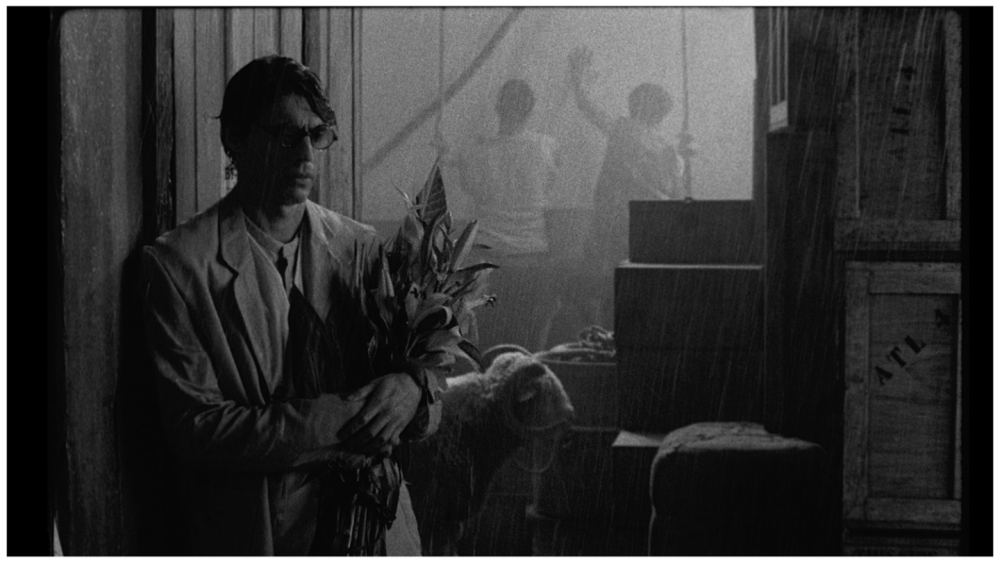
Winner of the Best Director award at Cannes this year, Grand Tour is a kaleidoscopic journey of post-colonial melancholia about people trying to catch up to something that has been long gone or never existed in the first place. It splices between time and space, scenes shot on studio soundstages and contemporary footage of the same places shot by Gomes and his crews when they went on the Grand Tour of Asia themselves.
Like Tabu, the performed part of the film feels a little too dry for my taste, without the charm and quippiness of the Old Hollywood screwball comedies if that’s what they’re aiming for. To its credit, the actors themselves are never the focus of the film. They’re not even vessels, at least vessels get more screen time. Their journeys are mainly described in narrations by native speakers, over performances, shots of nature, animals, and pedestrians; and travelogue footage. These elements are not new to Gomes’s films, but they feel more confidently assembled. Images, whether black-and-white or in oneiric colour, are sumptuous; music bursts spontaneously and freely.
There is both a temporal and spatial dissonance created by the formal elements. When the narration describes a character’s action, we don’t see the actors performing them onscreen; instead, we see current-day footage of real-life people. It signifies a sense of foreignness, no subtitles are provided when the native people speak their own language and the fact a bunch of English people are speaking Portuguese to each other is a choice itself. We as the audience are as distant from Edward and Molly as they are from each other; there is no doubt we are watching something performed, similar to the intermittent footage of puppet shows within the film. The corollary is a fissure between images and words that allows the audience to not infer the meanings of these elliptical images but join in on the journey. Gomes’s abandoning of authenticity and realism only amplifies the richness of his multilayered narrative – a wicked reminder that cinema is a place for the imagination and that dreams are active everywhere. It’s a vibe, but very rewarding if you stick to it.
With a film like this, the elephant in the room is always its commentary on colonialism. I wouldn’t say Gomes takes a profound or nuanced stance, but images do speak on that matter: the shot of naked Chinese people dragging the boat forward, Edward being upset by the people and cultures he encounters, and the funny subplot of a priest (looking like he got plucked straight out of a Bresson film) being moved by a gigantic Buddha statue. It’s still a little vague and would require a rewatch for me to confirm, but I prefer this over didacticism and visual obviousness every day.





 Cinema Travelogue
Leave a comment