Jia Zhangke’s breakthrough masterpiece Platform from 2000 follows a youthfully vibrant theatre troop travelling and performing around China, in whatever form on whatever stage they can. It was a deeply personal panorama of shifting social-political currents and an elegiac dedication to art itself. That film concludes in the late 90s when China shows the first sign of Dengism morphing into full-blown capitalism. 24 years and many acclaimed features later, Jia’s newest film, Caught by the Tides, somehow picks up the baton and carries the story forward.
There’s only one catch – Jia had already made this film; or at least two-thirds of it. The critical aspect people need to be aware of before entering Caught by the Tides is that the first two-thirds of the film are purely assemblages of b-rolls and behind-the-scene footages from Jia’s previous features, Unknown Pleasures and Still Life. This project originated from Jia’s boredom during COVID lockdowns, which led to him revisiting thousands of hours of unused materials. Perhaps struck by nostalgia or another opportunity for formal exercise, he returned to filmmaking after his 2018 Ash is Purest White. This key creative decision will make or break one’s viewing experience. Someone unfamiliar with Jia’s style and cinematic interests will most likely be turned off by the elliptical and even nonsensical structuring, constantly altering aspect ratio, and use of different film stocks. But as someone who loves the man wholeheartedly, I couldn’t help but find the film incredibly moving.
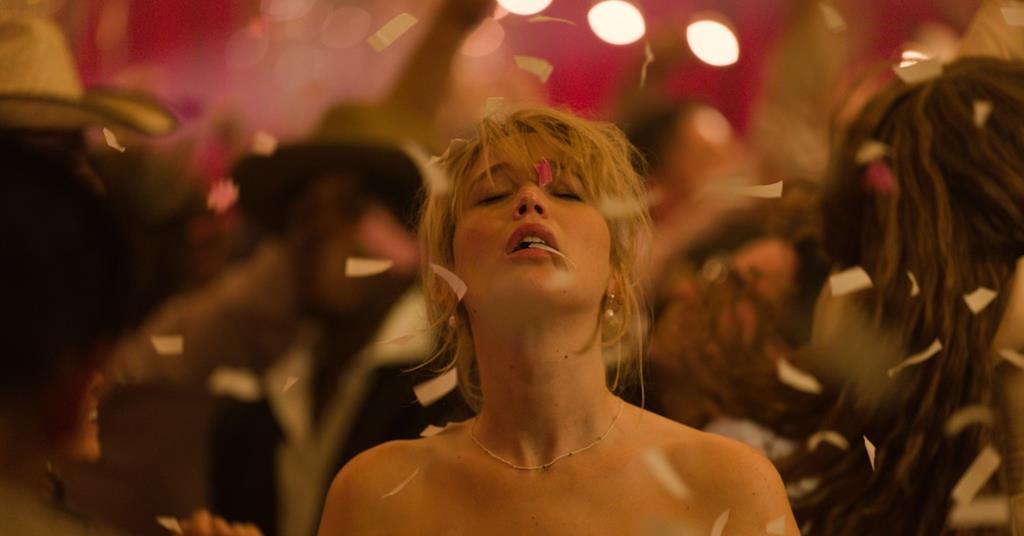
Thematically, Caught by the Tides is a continuation of Jia Zhangke’s effort as a chronicler of Chinese history, its technological developments and major historical events that shaped the trajectory of this country. The story itself is a lot more stripped down compared to its style. One of the most electrifying muse in cinema history, Zhao Tao, plays a muted woman who is caught in a decade-spanning relationship of loss and remembering with Guao Bin (Zhubin Li). I wonder how Zhao felt when the film first premiered at Cannes, as she saw herself naturally age over 20 years, an extremely rare feat that has only been done in the films of Richard Linklater and Michael Apted.
Caught by the Tides finds Jia Zhangke at his formally boldest and most experimental. This might be a redundant statement, but this is a feature that only Jia can make. For one, he is an incredibly trenchant observer of China’s history, and the film’s return to previously visited places still feels relevant today. The past is in the past, but the existence of these footages proves cinema to be a form of paths not taken – the stories told in the original films are only a tiny strand out of the infinite possibilities – this is Jia’s multiverse film in a peculiar sense. For two, it’s a testament to the type of auteurism that I find deeply affecting – the continuous collaboration with Zhao Tao for twenty years, the admirable curiosity and interest to film and document lives that leaves enough material for a whole another film, another story.
My reservation while watching the first Unknown Pleasures section was how much of a cogent story he is shaping up here without having the audience infer the events/context from the original films, but that worry just evaporates when it moves into Still Life section, which I haven’t seen. The yearning images of landscape in the backdrop of Zhao Tao’s monolithic presence speak for themselves. There is enough narrative, no matter how sparse it is, that sustains the film’s emotions. From the citizens of San Xia reckoning with the loss of their homes to the government tightening its rope of surveillance in the name of COVID, Jia’s embrace of the docu-fiction elements replaces nostalgia with a foreboding awareness that what our present is invariably a repetition of the past – the tides are continuously washing up the shore. He also conveys these ideas with a personal touch – most notably with the drastic revamp of a dancing hall across the span of 20 years.
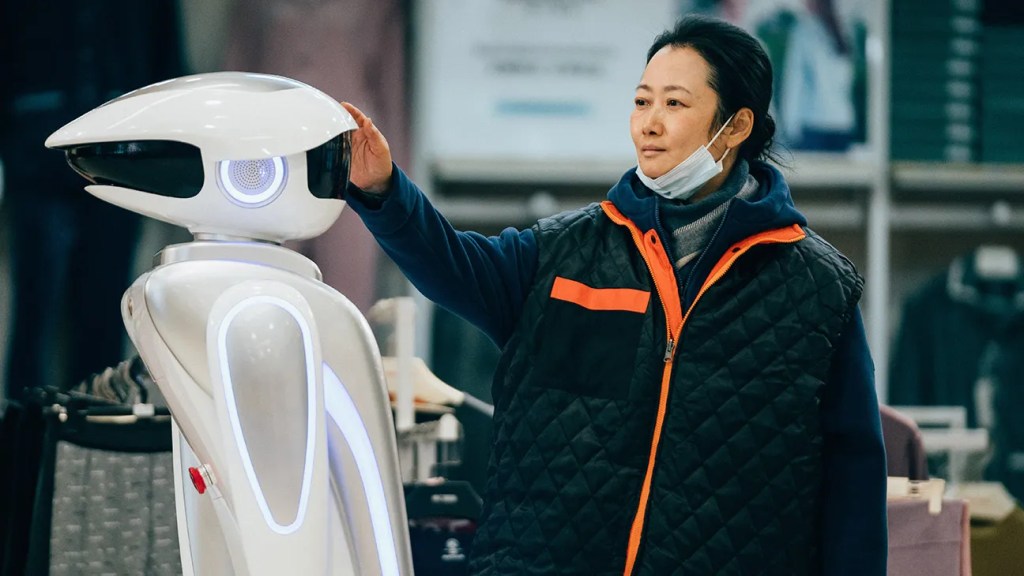
From making underground films earlier in his career to becoming more commercial recently, Jia always nimbly treads the line of making political observations that ducks the line of censorship. The brand new part of the film, shot during COVID times, obtains the look of an overly digitized commercial. This ostensibly off-putting visual choice reflects a tragic destiny that no one would have predicted when Platform was released. China is now drenched in the commerciality of TikTok and WeChat, robots roaming empty malls, and surveillance cameras everywhere. Nothing is more appropriate than replacing film stocks with digital.
With a dynamic strand of musicality, the film jettisons its role as a silent observer to incorporate several fourth-wall-breaking and behind-the-scene moments – the period-appropriate songs blasting over footage that are now considered souvenirs of the past – like the filmed materials and the process of filming carry equal weight. There is much humour to be found in scenes about being an outsider in a land that no longer recognizes itself. The recutting of the footage is a way of looking at history from a different angle and a moving statement that there are always more stories to tell. Filmmaking is not a game of zero-sum game but a continuous process of constructing and reconstructing. This is a work that affirms 20 years of persistence and dedication from one of the greatest filmmakers working today.


 Cinema Travelogue
Leave a comment