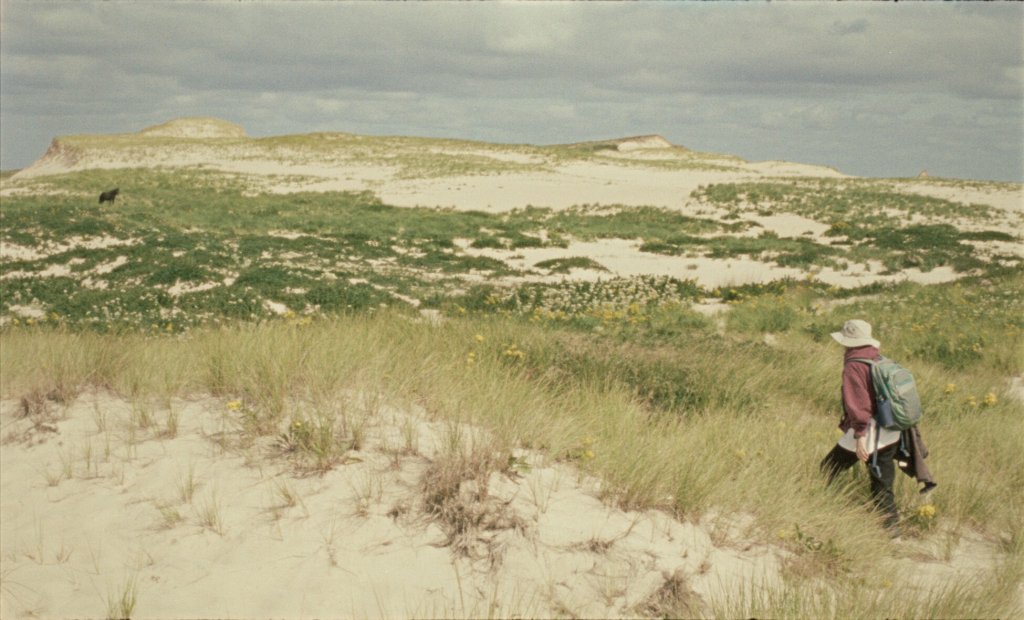
Geographies of Solitude begins by silently following Zoe Lucas around Sable island; we then see trancelike magic hour imageries of horses posing on open prairies and waves crashing onto the shore. The titular solitude can describe both Sable Island and the lonely old lady who diligently collects horse dung and maintains a neat Excel spreadsheet. The island is a sandbar located in the Northwest Atlantic Ocean over 100 km from Nova Scotia. There is a charming mystique that accompanies the idea of observing someone living outside the grid, free of worries of the secular world. What breaks the film’s initial glamour and cuteness is how it begins to focus on death and the camera lingers on corpses of horses, sea lions, and seagulls. The juxtaposition between these deaths and Lucas’ unsentimental narration as if they are just another array of numbers grants the film an extra layer of weariness that was very unexpected.
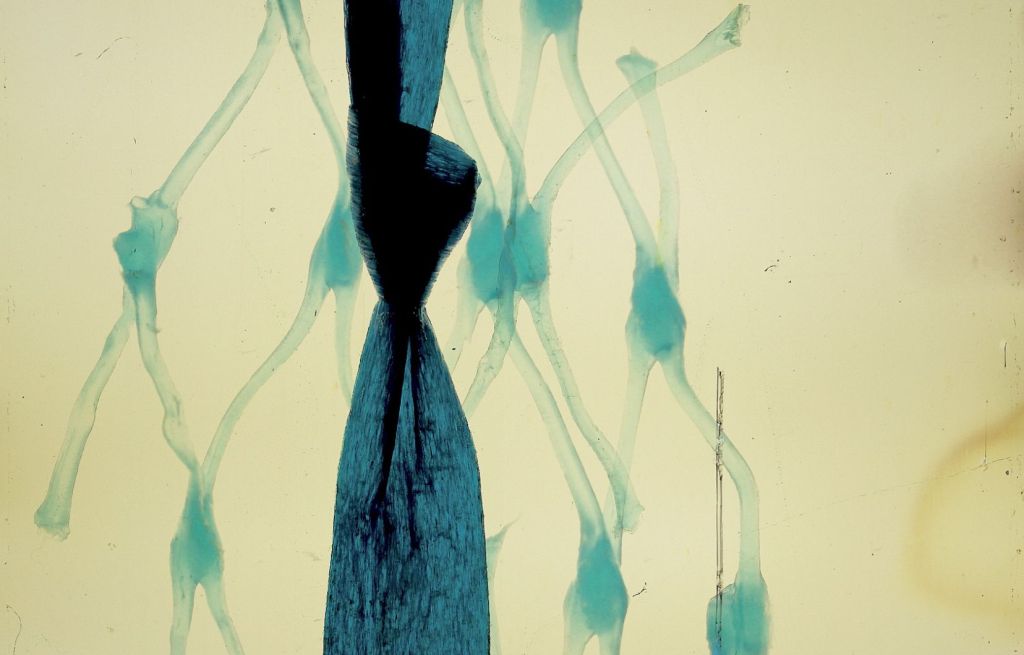
What transcends the film to even higher ground is how the ostensible callousness later proves to be a form of wisdom on Lucas’ part – the idea of using stone-cold numbers for environmental activism and interpreting life and death in a confined ecosystem as a gift from the world. The initial solitude of the island and the person are also quite volatile, proven by Lucas’ display of the collection of balloons in which she catalogues the holidays through the combinations of colours. Even on a peripatetic island off the mainland, traces of the secular, and capitalistic will reach you and the plastics will kill your birds and fish. However, the film is relatively hopeful regarding anthropogenic interactions with the island. It suggests a form of impermanence in which plastics can help form dunes the same way as vegetation and large structures of washed-up pipes can become ingrained in the island’s landscape through the power of time. Mills incorporates interstitial footage of film developed through material found on the island accompanied by music interpreted from sounds captured. These approaches suggest Mills’ intent to treat the filming process as another outside material that has wandered onto the island and assimilated.
The film up to this point is incredibly moving and insightful. The final chapter only begins to wither as it recycles some of its points regarding its environmentalism through words when they have been conveyed perfectly through images of the landscapes. Lucas’s solitude is also challenged by herself and the film gently leans into the connection between the filmmaker and her subject towards the film, although the two people remain to be quite vague. In the end, as Lucas claims in one of the voiceovers in the beginning, the film is more of a survey of the island instead of showcasing personal histories. The stars, the people, the horses, the plastics, the dunes, and the film all exist and are enveloped in the same place.


 Cinema Travelogue
Leave a comment