
Jeanne Dielman, 23 quai du Commerce, 1080 Bruxelles
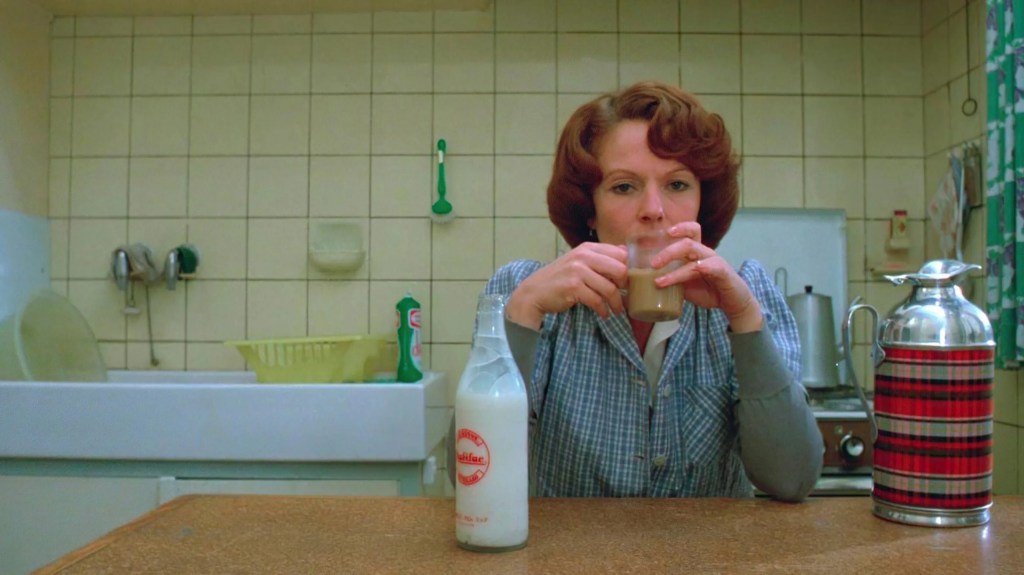
Personally, the 3 and a half hours flew by faster than any other films I’ve seen of the same length. Maybe staring at Delphine Seyrig doing house chores is ultimately what cinema is all about. A film with such a distinct spatial and temporal awareness, playing with light that tinges on the surreal. I don’t think this belongs with the “watching paint dry” realism cinema as its use of time-lapses, exploration of spaces, and its often symphonic rhythms are rather novelistic and require more creative input than simply putting a camera in front of something. During the second night, you can feel the spaces around Jeanne collapsing with each other through the combination of fidgeting body movements across space and quicker cuts that disorient but do not dominate. Afterwards, every scene inherits some sort of intensity with it. Some of the camera placements made me think of The Zone of Interest, but this film pays meticulous attention to everything going on within the frame instead of hinting at something offscreen and settling for dullness onscreen. More importantly, I don’t know how it manages to fly by the “mundanity of life” rhetoric and make every one of its frame feels like a unique invention. Maybe it all circles back to Seyrig, without a single close-up, manages to bring out one of the most vivid portrayals of a human being onscreen through her physicality.
Anatomy of a Murder
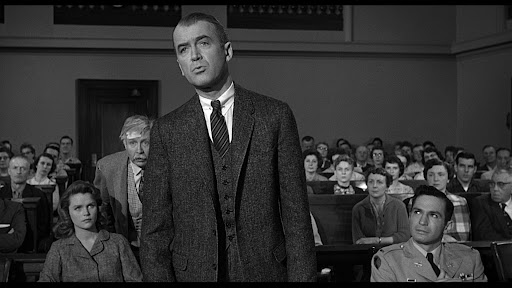
Very modern and without much of a moral compass. I don’t have the book with me, but I remember Andrew Sarris writing about how Preminger’s movies are not about the moral right versus wrong, but the right and wrong of someone on one side versus the right and wrong of another on the other. This film very much cements the case. The way it skims over the final summaries from both sides and verdict delivery seems to be in direct contrast to the meticulously filmed cross-examinations, as if our final standings of guilty or not guilty don’t matter against everything in between. Twelve individual minds can’t combine and form one opinion, as it is impossible for the audience to deliver verdicts on the characters of a lawyer, a lieutenant, a dead bartender, and a housewife in 160 minutes.
Gertrud
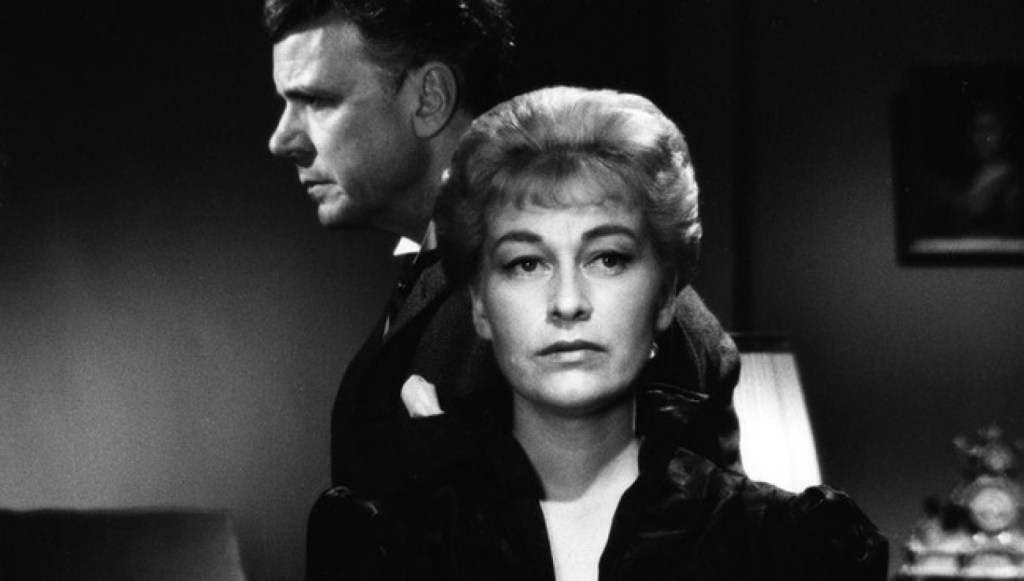
A miraculously beautiful film. A life designated to love is viewed through the succession of dreams that do not mystify but concretize intangible feelings as light leaking through windows reflecting onto faces. The flashback scenes have this overexposure of light to them, but it is not used to distinguish between the real and the dream, instead, it’s different states of the same dream. The long, fluid camera work is incredible and tracks the actors’ bodies across spaces. The acting to me focuses more on physicality than emotions shown on the face – it’s more about the act of lips touching against each other and the desolation of two people who do not see eye to eye – the result is scenes with performers within spaces that contain them expressing a state of emotion more as a unit than as separate, individual parts. Gertrud resents predetermination and fate set forth by others; she gets her way, but she aches nonetheless. Even though her lifelong path can be summarized by the poetry she wrote as a 16-year-old, it’s the journey that matters—a film that materializes moments of love and the moments it extinguishes.



 Cinema Travelogue
Leave a comment