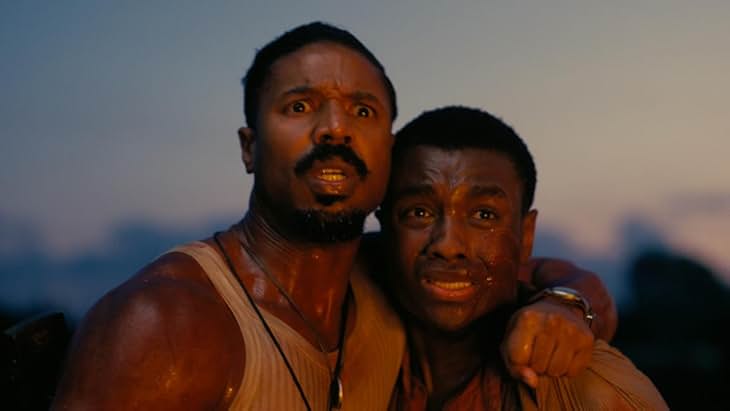
My initial expectation for Ryan Coogler’s Sinners was barely existent. As someone who has helmed nothing but legacy sequels and franchise projects since his debut feature, Fruitvale Station, I carry a vast amount of doubts towards whether he has enough authorial voice left within him for an original project such as this one. Granted, the receptions of those studio projects have been on average much higher than the norm, but we all know the bar for the norm is embarrassingly low and personally, I still have yet to discover a path where Coogler manages to carve out of the Disney cash mountains. Within his newest film, Sinners, a vampire quasi-musical gangster flick, the answer remains the same, even Kevin Feige is not pointing a gun behind his back this time.
I find it kind of poetic to make a movie about cultural gentrification and then to gentrify and regurgitate every genre that comes its way. Also poetic for the trailer-like ending to require post-credit scenes for its resolution, something populated by movies that have done nothing but decimate and narrow cultural space. This is a glib way of saying that the narrative contructions of horror, western, gangster film, or any other genre that Coogler is attempting to make pastiche out of within this film do not form a cohesive whole, so the entire project becomes an act of compartmentalization that weakens its individuals parts. The most irremediable aspect is how the film spend its first half attempting to build up its characters through mostly dialogue-heavy interactions, but then kill off most of them so quickly at the final face-off without any narrative or character connectivity that a film with actual cares for its characters, their actions, emotions, would have. Instead, as the film climaxes over itself, its character gets flushed away with superficialities. Coogler’s big swing is thus a blank series of recycling iconography.

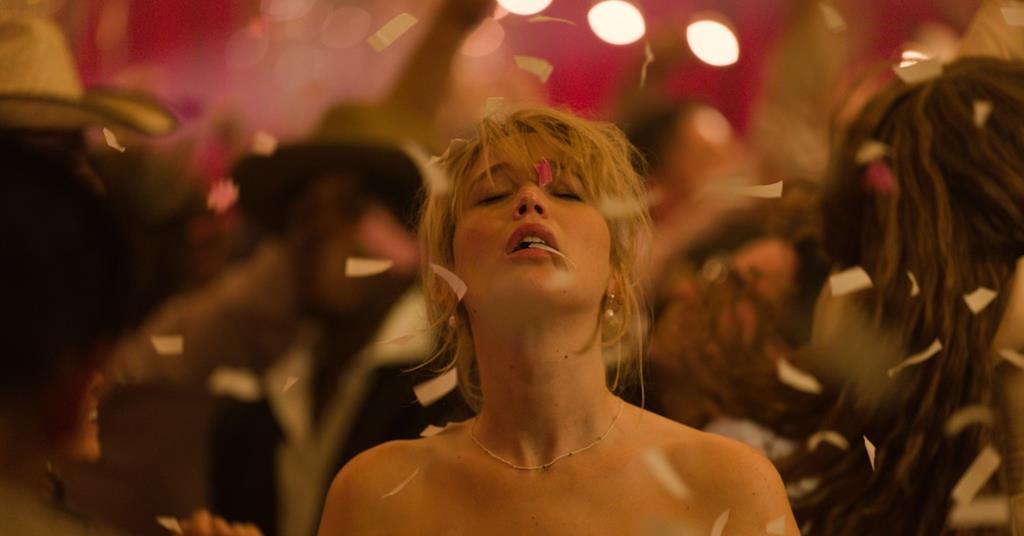
Sinners do not lie in its own camp. It is a piece of typical muscular filmmaking with long takes and dense colour palette that intermittently produces exciting scenes (the dance sequences) through accumulation of flashes (complicated camera movements and climactic music), but with no real edge or coherence to convert its scale into something tangible in feelings. Can’t make a movie with just icing, and it turns into grease the more I sit with it. As a genre blender, I would’ve enjoyed the film more if the horror is in visual conjunction with the thematic idea instead of lip service from the vampires themselves, or if the action is better choreographed, or if any of the character drama is not strained by a script that only cares about reaching check points. When the Chinese couple pack their car and the film cuts to a shot of dusk, what popped into my mind was “the end of episode one”.
I see people likening this to John Carpenter, perhaps because of the enclosed setting. I would offer 1 million dollars to anyone who can find a Carpenter film that shoots every conversation in shot-reverse-shot shallow focus with no attention to the physical setting and the background all blurred out. In the garlic-eating scene, which has some similarity to The Thing, is there any suspense or doubt that any of the people in the circle is supposed to be a vampire? No, because the established rule of vampires in this film is vague with limited imagination and previous build-up that would suggest possible contagion. So when the camera pans around the circle, everything becomes very plain and literal. It ends on Delroy Lindo with a joke that plays like cheap derision on suspense. The real homage to The Thing, I guess, is metatextual, where we watch Ryan Coogler eat the garlic and discover he’s already been bitten by Marvel, twice.



 Cinema Travelogue
Leave a comment