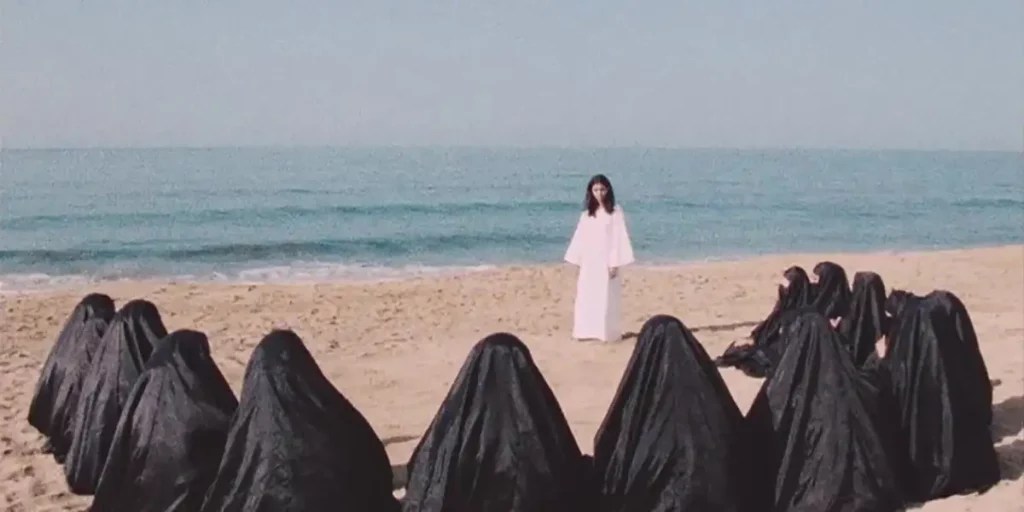
Heiny Srour’s docufiction hybrid quietly launched on the Criterion Channel at the start of this month. Before it’s streaming release, it had a run around the cinematheque circuit over the world. Thanks to the TIFF cinematheque, I had the opportunity to see it in theatres last month.
At a museum in London, a photography exhibit remembering the Palestinian and Lebanese resistance movements is finally going to open. A female student, Srour’s stand-in, questions why none of the chosen photos feature any women. The male exhibitor then replied, “In those days, women had nothing to do with politics”. The remainder of the film, consisting of historical reenactment and the female protagonist (Zeitouni) wonderinging through some of those moments in white dress (the color that her partner described as “suit her the best”), is an authotorial rebuttal against such rhetorics and a confrontation that the women of Lebanon, in addition to exterior rebellion, were and are actively fighting against more nuanced inner conflicts within themselves. This is best shown through the opening scene, where the main character identifies a senile version of herself in a mirror, despite being unable to remember the names of her grandchildren, she persistently lays out gender values for them. What she sees/foresees is a vision towards an inescapable cycle of dogma that is inculcated within their innate self, despite her trying her best to circumvent it.
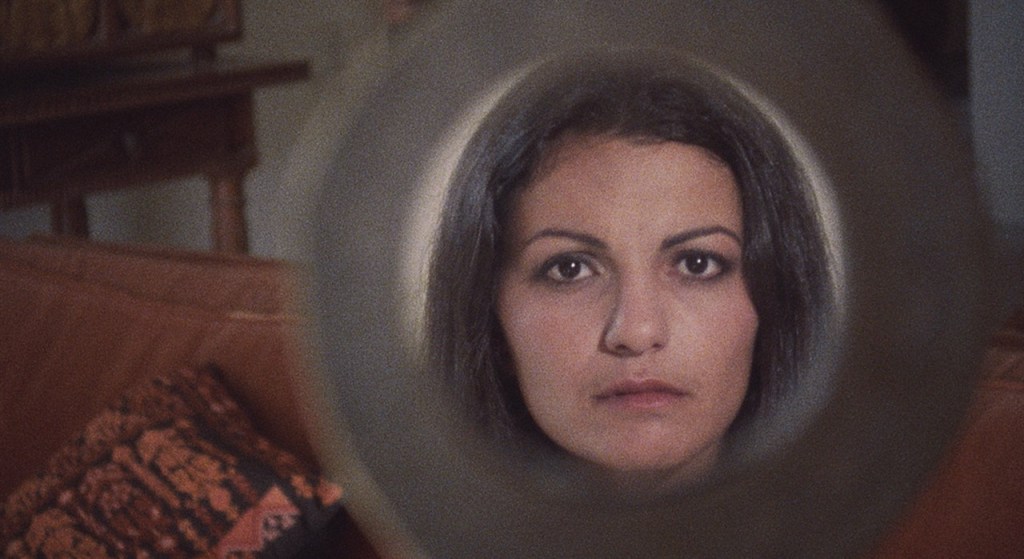
On the filmmaking side, Srour is a lot more courageous and much less pessimistic than the vision of her film’s stand-in. She combats the limited scope of stationary museum exhibits through her personal reconstruction of history, dedicating her focus on the crucial effort of women outside the battlefields who are often neglected by the spotlight of archival footage. Photographs cannot tell the whole story, archival footage cannot videotape everything, nor can film, but the illusion of realism created by the film camera will do its best to supplant biases and insert additional historical contexts. Srour does a lot more than asserting reality, also describing the interior ambivalence towards the dogma of traditional marriage and how ideology passes down across generations through some really well conceptualized oneiric sequences of lateral pans. Many historical recreations are full of songs, dances, and humour that prevent the film from being full of bleakness. Near the end of the film, there is a scene where the camera is pensively panning across empty chairs with a voiceover telling the fate of the women we just saw onscreen. I wonder if this is a way of Srour addressing her own limitations in recreating reality. No matter how lively the people sing and dance, they are all ghosts against empty chairs now. The skeletons of dead soldiers encircle and haunt the ones who attempt to look back.



 Cinema Travelogue
Leave a comment