
An endless summer of nothingness. Setting almost entirely within the resplendent seaside scenery showered with glistening sunshine, the newest adaptation of Françoise Sagan’s 1954 novel Bonjour Tristesse follows the aimless summer vacation of a young girl, Cécile (Lily McInerny). She spends all of her time sunbathing, swimming in the ocean, enjoying fruits, toast, and hanging out with her boyfriend Cyril (Aliocha Schneider), her playboy father Raymond (Claes Bang) and his demure and easygoing girlfriend Elsa (Nailia Harzoune). Unlike the 1958 classic directed by Otto Preminger, this newest version of Bonjour Tristesse, which premiered at the Toronto International Film Festival last year, is less a work filtered through the perspective of memories than a film that simply observes everything occurring onscreen as it unfolds in the present. The audience is not greeted with a precondition of regret that will plague the colourful images, but is dropped directly into the same naivety as the 17-year-old Cécile, lacking hindsight. The absence of self-reflection is the point, because all the protagonist is interested in is soaking in the languid present. Without memories serving as a portentous guiding hand, audiences unfamiliar with the source material or the 1954 film may assume their time in the sun may actually be endless.
The balance is soon offset when Anne (Chloe Sevigny), an old friend of Raymond and Cécile’s deceased mother, comes to visit. Anne is an outside force and a representation of the past that is foreign to Cécile and a romantic threat to Elsa; there is a closeness between Raymond and Anne that instantly and subtly alters the chemistry between the triad. She is an emergent threat that percolates jealousy and ideological contrast beneath the beautiful surface. Unlike Raymond and Elsa, Anne is motivated and direct. She upsets Cécile by bringing up her failed exam when all she wants to think about is leaving school behind and enjoying the moment.
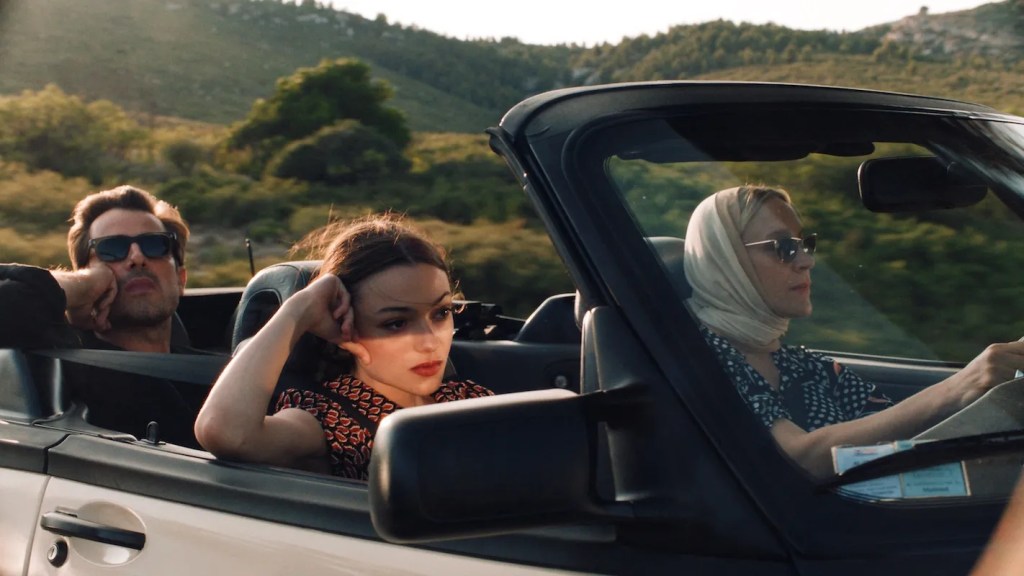
Without an imposed layer of memory, this newest edition of Bonjour Tristesse is rather formless, with a feeling of haphazardness and passiveness that runs through the entire film. It is easy to impose wastefulness onto a series of images aestheticized according to the Instagram playbook. There are many beautiful things in the movie: the actors, the acoustic music played by Cyril (which comes as no surprise if you have seen Aliocha Schneider in Angela Schanelec’s 2023 film Music), the food (especially the peaches), their giant house, and of course, the natural scenery itself. But they all feel extremely composed without any motivation to carry out the narrative or character, a beauty without much of a perspective or focus that can make up an actually interesting movie scene. There is a lack of intrigue in its perspective shots that would’ve exerted more energy into its main plot, which revolves around juvenile passion. Perhaps everything at the end can be explained by “That’s all part of the point”, but doesn’t a film that commits to one thing for almost its entire runtime and then suddenly pivots to criticize it basically uproot its own foundation? The consequence is that the film feels rather plateau throughout, where nothing is preserved or lost.
Despite the vapidness, the cast is outstanding. All of the actors have very memorable faces: McInerny’s wide-eyed optimism for dictating her life, the flimsy and mysterious charm of Bang, the competing demure of Sevigny and Harzoune that simultaneously inhibit melodrama and exhibit an alluring calmness that is desperate for people to fall under within their orbits. The film shoots them naturally, without extended extreme close-ups, but emphasizes their sexuality enough that it turns them into subjects of attraction and sexual chemistry. In a small supporting role, for those familiar with Nathalie Richards (re: Up, Down, Fragile), I almost burst out of my seat when she started dancing for a second during a dinner party scene.
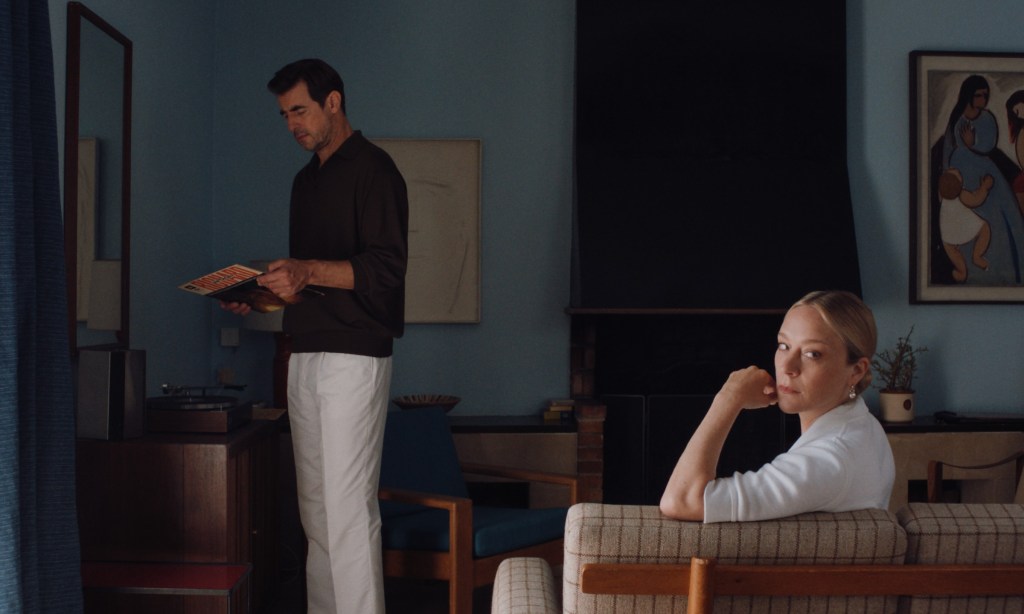
The film is about a group of people who are drenched in privileges and wealth. They are not impudently denying it as much as dispossessing the capability to reflect upon it; even when they do, it is too late, what they’ve lost cannot be regained, and there is not really a turning point in sight for them. The depiction of the upper social class is not uncommon amongst the classics, from Jean Renoir’s The Rules of the Game to Antonioni’s trilogy on modernity and its discontents. When Cécile goes motoboating with Cyril, handheld perspective of shots of a giant rock stranded in the middle of the ocean echoes the rough-edged small island L’Avventurra, where Anna went missing. But unlike how the location works in that classic by Antonioni that harkens and exacerbates the emotional desolation of the characters, every location in Bonjour Tristesse feels merely pedestrian. Antonioni’s modernity from over sixty years ago may have decayed so drastically that everything just resolves into Chew-Bose’s flattened Cinéma du look.
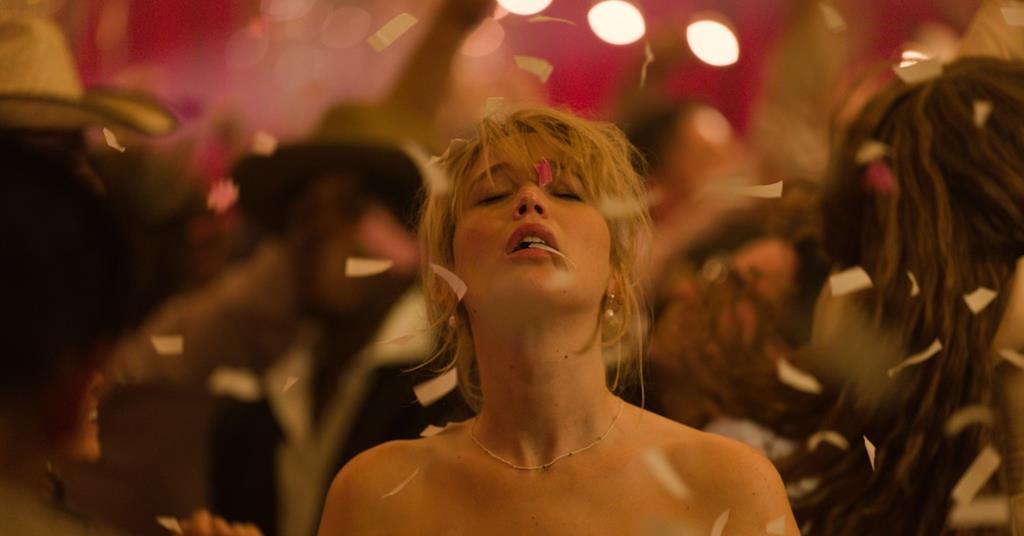
In Bonjour Tristesse‘s favour, or thanks to its intrepid source material, the film is light years ahead of surface-level class commentary of the typical, “eat the rich” Hollywood films that cannot go 2 minutes without winking and reminding they’re on the audience’s side. Even the lack of emotional pungency makes every character quite vague; they are never reduced to caricatures. There are enough hopes exuded by the character’s actions onscreen that make one want to watch them continue going about their days. But when the film finally tries to reach the core of its interests, will these people ever come out of their shells? We see a momentous camera movement occurs that revolves around Cécile sitting alone in a room at a party; perhaps the question is asked too late. Again, the characters in a way acknowledge that, but is it enough? For me, not quite.



 Cinema Travelogue
Leave a comment