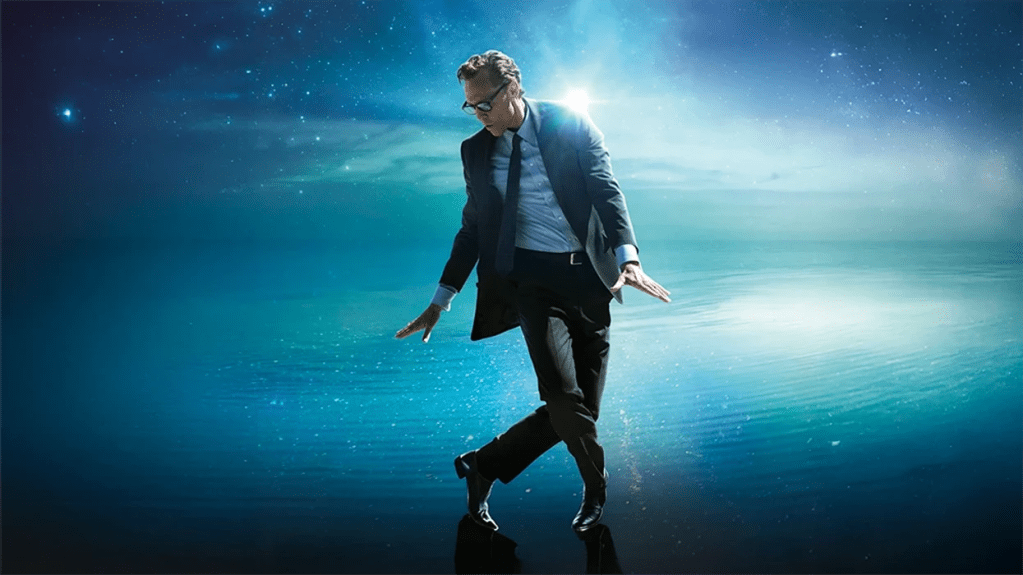
“I contain multitude”, a quote from Walt Whitman’s poem Song of Myself, is the most recited line in Mike Flanagan’s genre-blender The Life of Chuck, an adaptation of the Stephen King short story of the same name. To tell the story of an accountant born to the name Charles Krantz, it divides and structures itself into three different periods, in reverse chronological order. An aspiration for multitude is also applicable to describe Flanagan’s approach. As a devotee of Stephen King and having primarily worked in the horror genre, he introduces genre sparks into a story that mainly operates in a schmaltzy, dramatic mode.
The first act of the story, titled “Thanks Chuck”, imagines an end-of-the-world scenario plagued by worldwide environmental disasters – earthquakes, floods, abnormal volcanic eruptions, the defection of the Internet (specifically Pornhub), and spiked suicide rates. A divorced couple (Chiwetel Ejiofor and Karen Gillian) is at the center of this all as they spend what appears to be humanity’s last breath strolling around the empty Spielbergian suburbs, conspiring with the cosmic calendar, and wondering why an unknown accountant named Chuck is suddenly on every ad they pass by.
Ironically, the apocalyptic imagining of the end of human society as the consequence of environmental collapse is the portion of the film that is the most grounded in reality. The central mystery throughout the first act is less how the world has reached this point -despite how every character persistently monologues about it in ugly, shallow focus- than how any of these have to do with Chuck. Flanagan begins answering this mystery through match cuts. Sequences occurring in the apocalyptic world are often countered by shots of a moribund Chuck in a hospital bed surrounded by his wife and son; the respirator next to him strangely appears in both worlds. As we will gradually discover in the latter two acts of the film, the deteriorating world that the film presents in the first/third act is the interior universe imagined by a moribund 39-year-old Chuck.

In situations of death, we expand the scope of our vision to try to see the world with a wider perspective. The conception of Life of Chuck coincides with certain fascinations of cinema- the construction of two paralleled realities and probing if one can explain the other. The idea of a greater universe existing beyond our perspective, or the mythmaking that lies beneath every visionary’s ideal to capture the essence of human existence, is a worthwhile target for a filmmaker. But in the following two chapters, the film accomplishes the exact opposite. The mystery and the existence of our protagonist Chuck are both reduced by Flanagan’s excessively sentimental puzzle box that ensures every sense of malaise posed by the unanswerable question of human existence is comforted by life-affirming rhetoric that is repeated like slogans in an infomercial.
In reflection, the first act is a stereotypical life-review flashback in connected to the near death experience. Instead of a cheesy montage frequently used by lifetime TV, the film uses a literal end-of-the-world scenario to represent the end of a personal life. As if the editing choices are not obvious enough, Flanagan brings in his wife Kate Siegel to play a teacher that word-by-word explains how every encounter one has in life, whether it was impressionable or not, will stay in one’s mind and form a collective universe – essentially the entire concept of the film delivered in lip service. The first act is thus reduced to a reference board for the latter two acts to bring back characters we’ve encountered and reiterate theories we’ve already heard; all hope is lost for mystery when everything is so irremediably airless. The remaining two acts become a long-winded exposition to account for abstract encounters in the first. What it ultimately achieves is a banal assurance that pats itself on the back for a redundant neatness.
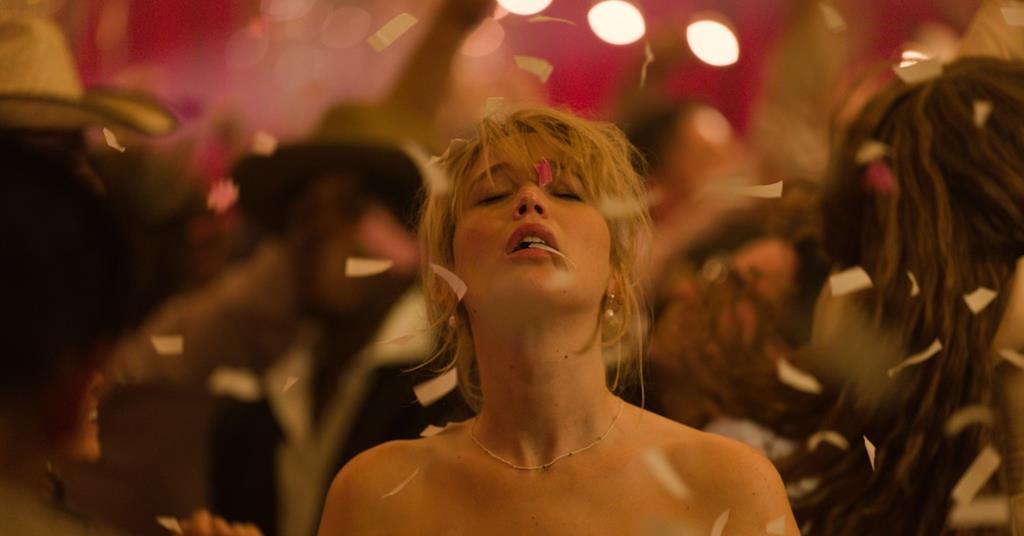
Despite its best effort to be saccharine, the film’s depicted events sum up to be more pessimistic. The third act, “I contain multitude”, is the longest act of the film and portrays Chuck’s childhood all the way through his last year of high school. It ends on a motivational note where a 17-year-old Chuck, after seeing his own prophesied death, promises himself that he will cherish every moment he lives on Earth. If you juxtapose this sentiment with the second act, “Buskers forever”, spanning across a day 9 months before Chuck’s eventual death, this promise is conspicuously unfulfilled. The entire act is centred around Chuck’s spontaneous decision to dance to a performance drummer in the center of a plaza; the narration heightens this dance through an exposition of Chuck’s banal accounting career and unfulfilled dreams. This dance and Chuck’s promise to himself are designed as responses to each other; the narration poses two questions at the end of the dance: why did Chuck stop in front of the drummer, and why did he dance? By asking these questions in the first place, it suggests a midlife stagnation that contradicts the young’s hopeful sentiment. Chuck did not do what he promised himself, and because the only character-building we have of Chuck lies in the narration (the script, rather than the mise-en-scène), the actual question —why didn’t he follow through on his promise —becomes trivial due to Chuck’s non-existence.
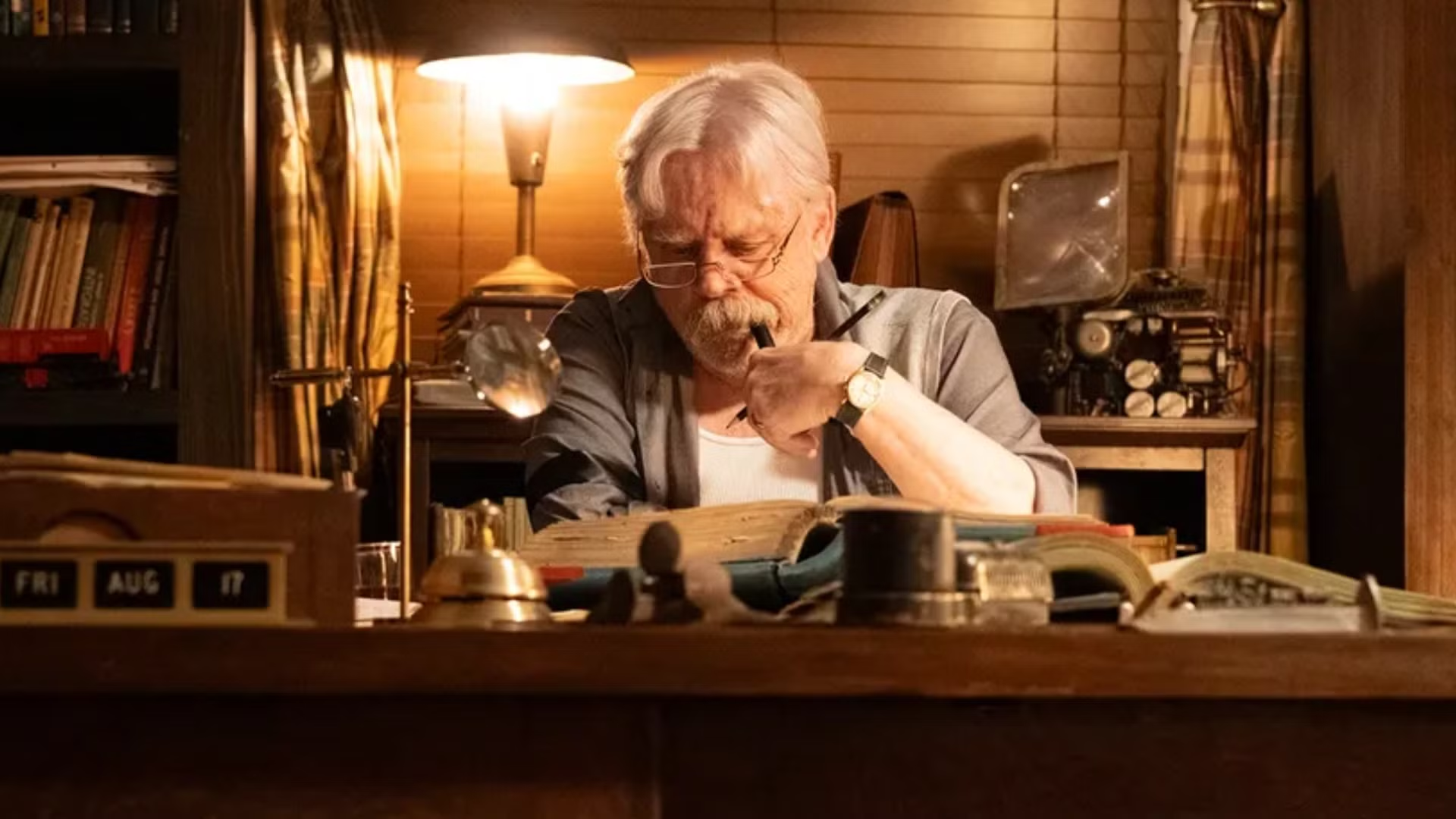
Equally, the film sacrifices what’s unequivocally the most crucial aspect for a film that attempts not only to capture, but celebrate life itself – the humans. In this arena, Stephen King’s source material should take as much blame as Flanagan’s maudlin story beats, trite character dialogue designs, and unimaginative staging during the dances, which are purportedly the two sequences in the film that are bursting with life. Life of Chuck is not one-of-its-kind when drafting a quasi-fantastical story around fictional characters; see the infamous Forrest Gump, or Fincher’s The Curious Case of Benjamin Button, or Tim Burton’s Big Fish, all containing various degrees of maudlin sentimentality and skepticism that play in variate tangents with history. The personal narration of all aforementioned movies is solipsistic to a certain extent due to their singular perspective, but The Life of Chuck makes an attempt to bring in an outsider force in the form of Nick Offerman’s voice narration. Not only does it describe the actions onscreen that are already filmed, but it also exposits Chuck’s character motivations and past experiences that were never shown. The audience never gets to experience any major events in Chuck’s adult life, like we would with Gump or the father in The Big Fish, compared to the extensive portrayal of familial losses that shaped his childhood. What results is, tragically, despite the film spending the first act celebrating him, we never know who Chuck is beyond a stereotype, and why does him dancing matter at all. Solipsism disguised as worldbuilding leads to a film that neither understands the world nor its protagonist.
The structure delivers a sunny, unfilled promise to mitigate the existential dread of its first act; it essentially feeds nostalgia throwback to its audience through the structure by concluding on the youth marching onwards. I would argue The Life of Chuck is the most similar to another film that came out in 2024, Robert Zemeckis’s “one-take”, picture-book adaptation, Here. Although there is no concrete entity, such as a house, to ground the film’s storytelling, its structure subsumes its main character with a domineering force of determinism that strikes an eerie dissonance between its positive messaging and what the actual character experiences. The promise Chuck makes in his youth is washed over by time; his world shrinks as his 9-to-5 job backs his complacency and then collapses as he dies just before he turns middle-aged.
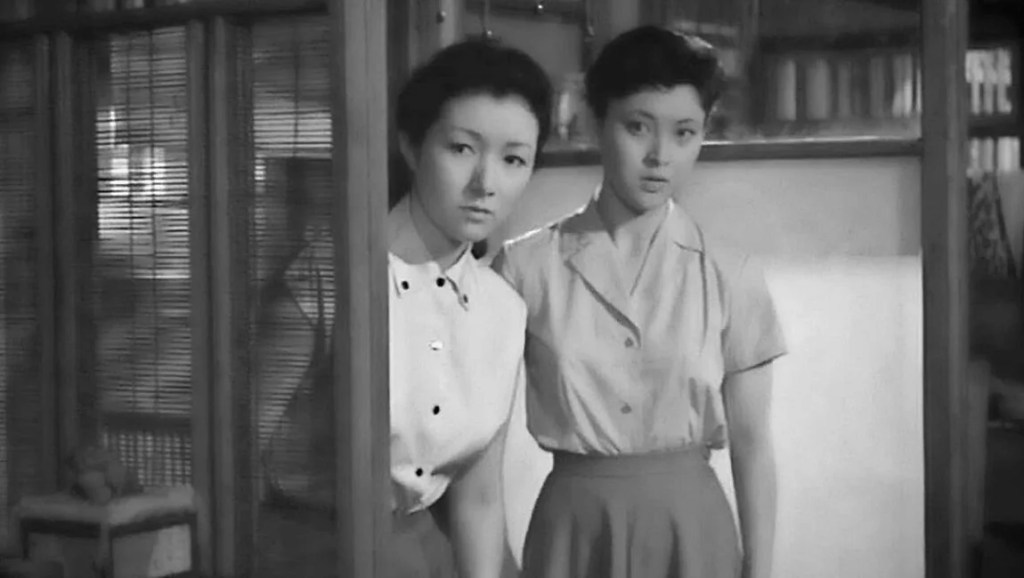
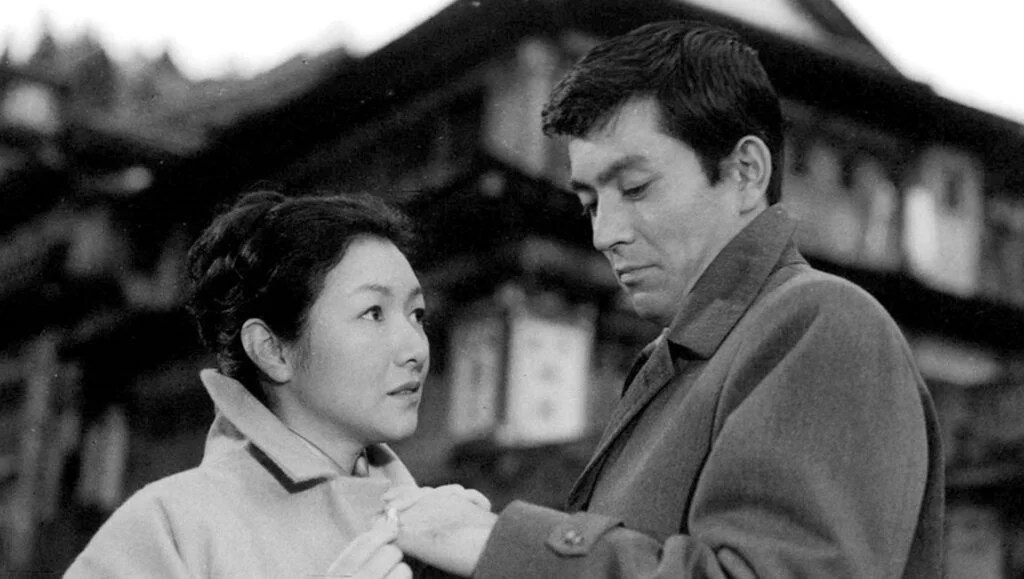
The life of Chuck is ultimately a secretly tragic one; perhaps there is a beauty to be found in this elegy, as seen in the numerous films of Ozu. Its shortcomings are mainly due to its director, Mike Flanagan’s, lack of vision to see past the script and create a cohesive film universe that allows all three parts to work well together. “Waiting is the hard part”, as repeated by different characters throughout the film, is both a challenge and a question about how one lives on while fully acknowledging the inevitable death. The Life of Chuck appears to combat this deterministic outcome through a backwards celebration, dealing with the present through the beauty of the past: at least I had a dance, at least I tried to be true. But since Flanagan chooses the a extremely tidy and cold approach when dealing with every dramatic beat – for example: the central couple in the first act is mainly used as a plot device to introduce the idea of a cosmic calendar – the only fascinating footprints he leaves the film with are a few genre setpieces that never go beyond their conceptions. It’s no wonder the film won the audience award at TIFF last year. It has a simple “life-affirming” message, and it takes the most direct and unconstested path to make it; waiting for the schmaltz to end is the hard part.
All images courtesy of Neon



 Cinema Travelogue
Leave a comment