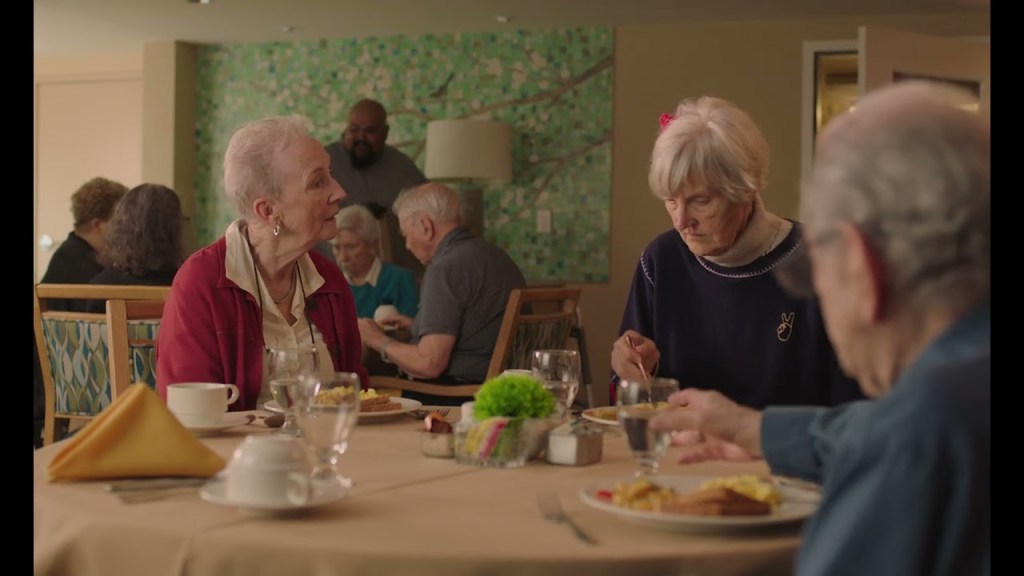
Familiar Touch, Sarah Friedland’s debut feature, follows the journey of an aging Ruth (Kathleen Chalfant), as she struggles with dementia and enters into assisted living. The film has an elliptical quality to it, as if our perception of the events occurring onscreen is synchronized with Ruth’s own obfuscation of the difference between her reality and the reality of the world surrounding her.
By no coincidence is the opening of the film at its most lucid. We see Ruth, an octogenarian with decades of experience, skillfully assembling a meal for a guest. She welcomes the guest, a middle-aged, bearded architect named Steve (H. John Benjamin). If not for the subtle malaise within Benjamin’s expressions, we can easily regard her flirtatious candour as a sign for an individual who, despite the wrinkles on her face, has welcomed a rejuvenated, new stage of her life. But as we come to gradual realizations during this conversation, which is imbued with an awkwardness cadence between shot/reverse-shot, that Steve is, in fact, Ruth’s son. The mise-en-scène that captures sunshine basking in Ruth’s kitchen and dining room, and the exquisite and tidy interior decors are only concealments of an unavoidable fact that Ruth’s mental ability is quickly decaying.
Our perception of Ruth’s condition at the beginning of the film precedes Ruth’s own; this creates a gulf of unspoken sadness that is formed out of the dissonance between the capable image Ruth tries to project herself onto and the purported objective view of her condition that the film positions the audience. Such interplay between mental perspectives is reused several other times throughout the film, which includes a chapter where Ruth hallucinates herself as a chef of the retirement home, and schools her caretaker as if she were her own children. The fact that this particular scene eludes mawkish drama is attributed to the portrayals of the compassionate individuals working in this home. “I need to play the patient and you the doctor”, said Ruth to the doctor conducting her weekly check-ins. They tacitly play into Ruth’s game that she does not know herself to be playing. Our emotions throughout the film may align with those of Steve, as we witness the helpless decay of an ostensibly sunny woman losing grasp of what’s around her. The slow dance between Ruth and Steve as they reencounter each other in the retirement home is the film at its most powerful. The shot remains static as they spin in front of the camera; we see each of their faces appear in a close-up, Ruth’s filled with joy and Steve’s full of moroseness. The characters themselves cannot see one another’s faces, only we can; right in front of us, the film reveals a gentle collision between two different realities that sadly fail to meet at the same point and will eventually come to an end when the song concludes.
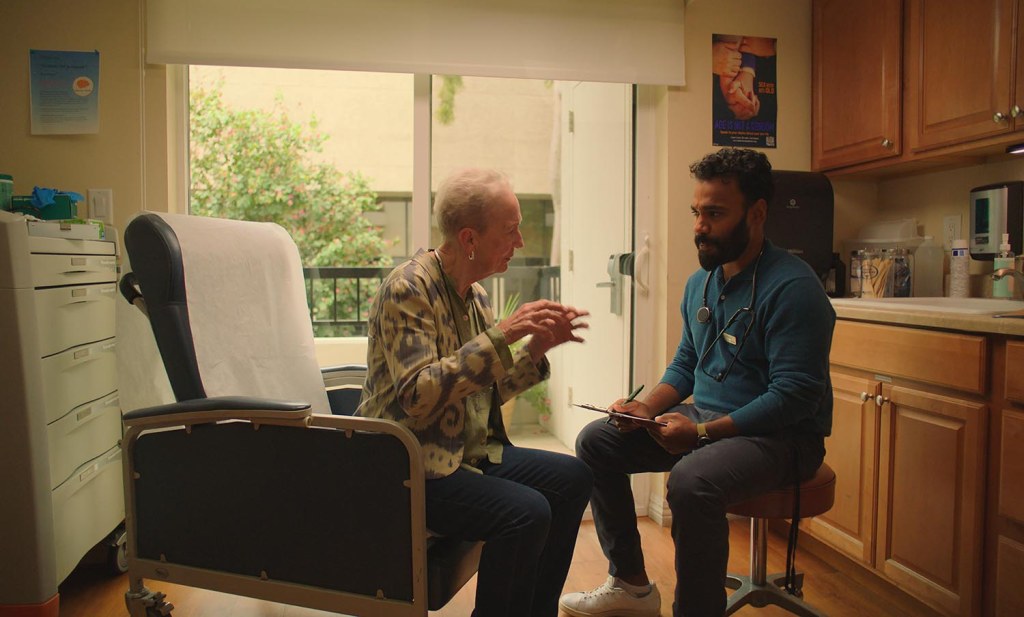
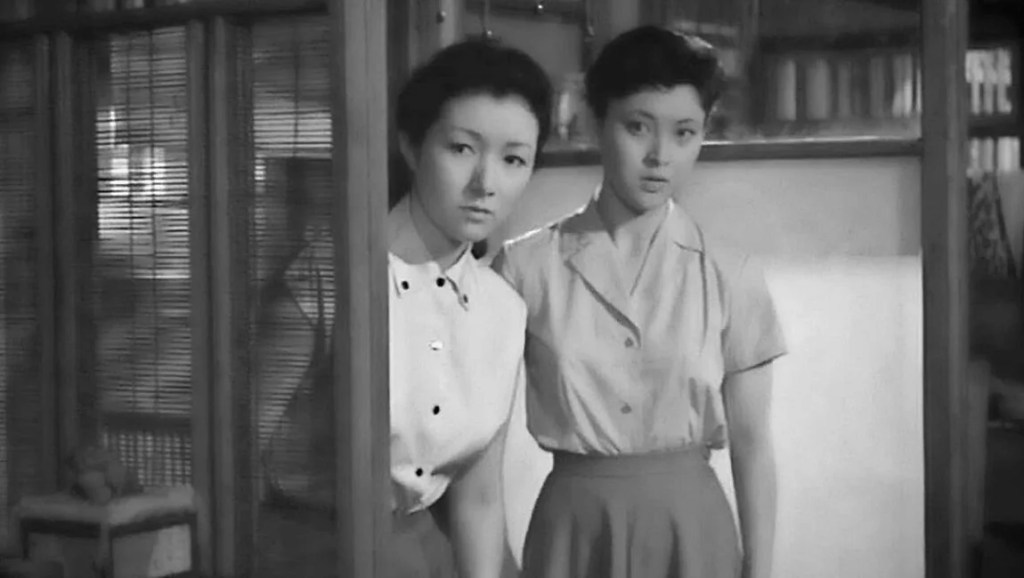
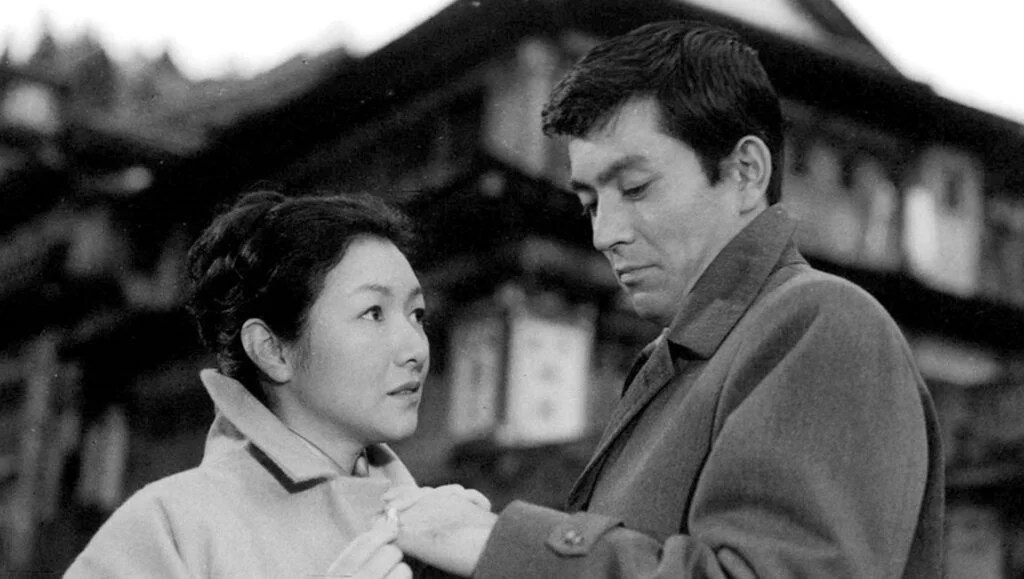
But despite the emotionally resonating moment in the end, the majority of the film fails to reach that level of dexterity. There are films who contains the multitude and fascination to observe, to interrogate their subjects of interests by constructing an organic world, where their subjects flourishes and comes to life; there are also those that only seeks to represent a predetermined set of ideas, which always ends up showing something that feels lesser than the multitude and liveliness of the subject. Familiar Touch places itself in the second. In interviews, Friesland expressed her formal plan for the film was to use static cameras to emphasize the impact of minute physical gestures from the actors. This dispositive is not inherently the problem, the execution is. The static camera is frequently employed in a film by Hou Hsiao-hsien, Tsai Ming-Liang, and Yasujiro Ozu alike. But those filmmakers showcase an pertinent understanding of the worlds through their respective brilliance in organizing the spaces within their frames. For Hou, it’s the unwavering distance imposed by history; for Tsai, mysteries and desolation drawn from the presence of actor facing against constructed onscreen spaces; for Ozu, it’s the interlocking sequences of shots that constitute an unimpeachable social order. Friedland, however, does not showcase any knack for framing in her debut. The compositions themselves lack a sense of consistency, that of a total vision, that would grant the film a sense of preciosity instead of outlandish schematicism. There is the wide shot placed on levels lower than the human observer, and there’s also the uptilting angle that observes Ruth as she plays with her food. The sound design, the aspect that tries to emphasize Ruth’s perspective, is exaggerated to an absurd degree that diminishes what has already been accomplished in a simpler portrayal of juxtaposed realities.
What is lost is a sense of freedom. There are great ideas that circumvent the film from delving into cliches. Friedland allows Ruth to manifest a completely self-imposed love triangle between her, her son, and a male doctor who does her weekly check-ins. It’s simultaneously a playful nuance that sees a senile person return to their primordial state, that of which imagines her son as a subject of attraction, as well as allowing Chalfant to showcase a genuine degree of carnality within her performance, a level of physicality that is frequently neglected by this type of subject matter. However, the tactility of the milieu, the brightly lit retirement community, is never fully realized under the reactionary decision to emphasize subjective sound design and compositions that parsimoniously lock the characters under the will of the script. The film was shot in a real retirement community and used its residents as actors, yet they never ceases to be ornamental to the film’s attempts at subjectivity that frankly, exhausts and reduces its subject.



 Cinema Travelogue
Leave a comment