The first scene in Invention, co-directed by Courtney Stephen and its lead actress, Callie Hernandez, signals two key aspects that contribute to the overall tone and atmosphere of the entire film. First, the elliptical and free-wheeling sequencing of shots. We see a wide shot of an old man standing in profile, leaning slightly towards a piano. We have no context on who this old man is. As it’s only the beginning of the movie, this image emerges so abruptly without any signifiers toward any previous actions or scenes that we are left hanging in a contextless void without further explanation. Second, the mysterious role of sound; different beats of music come in and out of its soundscape, as if the on-screen piano has become sentient, and begins to create its own melody. Both aspects combine to send a welcome message to its audience: the reality onscreen is serendipitous, never reliable, and ever-shifting. Its coherence relies more on intuition, where the entirety retains a consistently ambiguous and fascinating rhythm with an emotional resonance that prevents its more wild formal choices from obscurity.
The film’s elliptical structure is also reliant on the usage of different video formats. There is the textured 16mm that the film uses for its main narrative, filming various unadorned locales in an unnamed shire where Carrie’s late father resides before his death, and following her as she meets people to learn about her father. There is also the interstitial VHS archival footage of Carrie’s father, who is also Callie Hernandez’s real-life father, who passed away during COVID in real life. We see her father’s video presence age as the resolution of the footage transitions from VHS to clear digital images late in the film. Acting in Invention becomes a metatextual task for Hernandez, and the film subsequently becomes a hybrid of fiction and documentary.
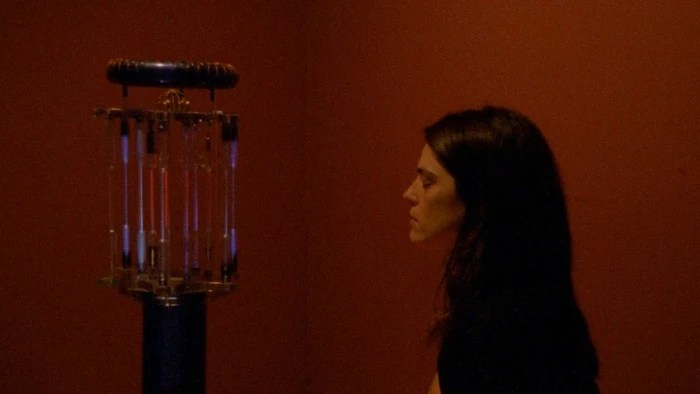
The contribution of Hernandez’s personal edge towards the project is not necessarily additional authenticity for the story, but a complex understanding that grieving is not constricted by one thing. This is shown through the film’s half-cynical, half-endearingly hilarious emphasis on the idea of inheritance. Say what you want about materialism, but given the malleability and fragility of memories, the only thing one can remember a lost one is through what they’ve left behind. Perhaps money or at least her father’s nice house is what Carrie was hoping for when she entered the executor’s office; ironically, she learns the only inheritance her father has left her is a patent for an electromagnetic healing device. As she recalls, her father was always in his own world, and connection was impossible unless a common interest was shared. Through descriptions of acquaintances and one fervent acolyte of his healing practice, he can be perceived as a genius inventor, a failed businessman, and even a cult leader. So the film takes on the structure of a detective film. As Carrie visits different locales and collects information regarding her father’s patent, the detective work invariably turns into a bittersweet, off-kiltered father/daughter bonding journey that comes a little too late.
The film has great insights regarding commerce. The patent that Carrie inherits is rather a passive idea, and as the estate administrator puts it, “ideas are as valuable sd products you can turn them into”. Through conversations between Carrie and her father’s business partners, we learned that not only have they not made any money with the machine, they have even lost some. In a smaller chapter in the film, we also see Carrie arguing on the phone with customer service of an airplane company, who deemed her ineligible for their bereavement discount as her arrival and departure flights are not within two weeks of the death of her father. These two funny events have a commonality: the capitalistic machine dominating the individual; intangible feelings such as grief and ideas are negligible and second-tier compared to money, which is a number that is easily quantifiable.
Perhaps it is this sad truth about our current world today that propels Carrie, and correlatively the film, into a conspiratorial state. Carrie was once asked whether she believes in the American dream or not, to which she responded with no and that she doesn’t know exactly what to believe. In our digital world, the parties that own everything in the world and control the orders of our daily lives have evaporated into a web of interconnected, yet invisible nodes. Carrie’s father’s death has transfigured his presence into home videos and recorded infomercial ads on TV. Directionless within the world and attempting to grasp who her father was as a man, but only frustratingly through unreliable second-hand sources, Carrie’s inclination to believe that his father was doing real, benevolent works against the shadows of large pharmaceutical companies, is ultimately propelled by a feeling of impotence. Conspiracy is the corollary of an urge to defuse the meaninglessness, even if that means taking up imaginary villains.
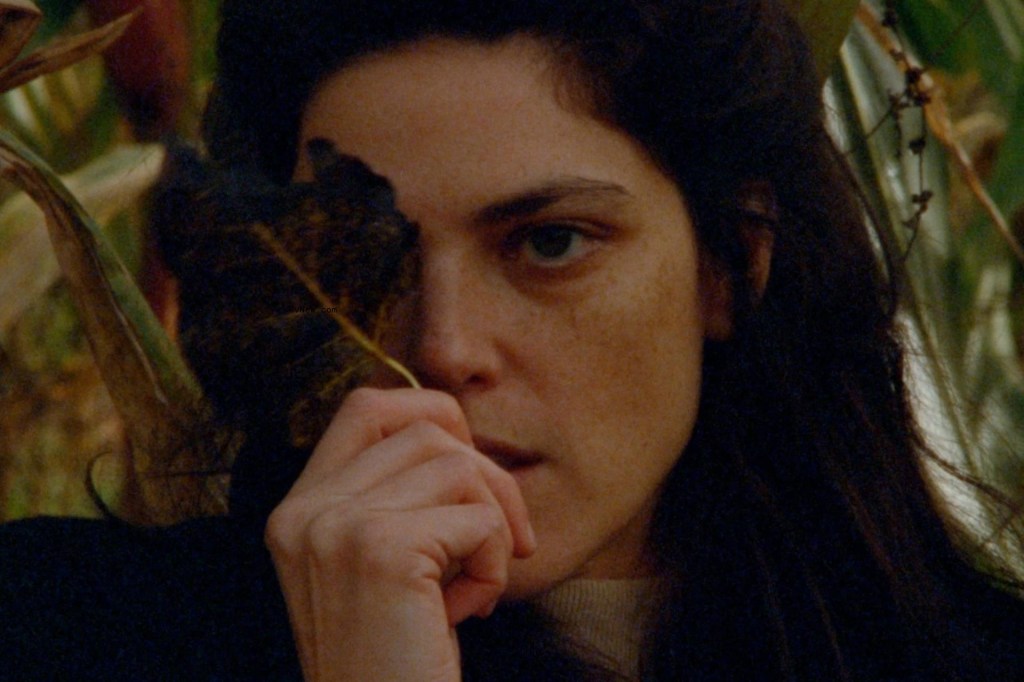
I find this intersection of grief and conspiracy similar to one of my favourite films of last year, David Cronenberg’s The Shrouds, a film I hope I can write about some time soon. While the intense physical connection between Karsh and his late wife provided Cronenberg’s film with a corporeal edge, Carrie’s disconnection with her father when he was alive made the inclusion of an electromagnetic device deeply personal and moving. If we perceive each living person as one who carries their own wavelength, then Invention is the epistemology of reckoning with the wavelength of the lost one. The film’s distinct perceptual interests – with frequent cuts to stale shots of nature, Carrie’s father’s prototype healing machine, and imperceptible psychedelic sequence – make the point that connecting, or attempting to understand someone, especially when they are no longer in front of you, is a sinuous and strange process.
We even see this through the different interactions Carrie has with different people. Some an instant, romantic connection; some off to the side, the more the conversation drags on. The film treats these conversations with equal respect, despite how awkward they can be. It understands that an emotional connection is drawn from two matching wavelengths; one that doesn’t match doesn’t mean it’s invaluable. For that, the film is kinder than the world at large.
The line between reality and fiction is blurred throughout the film. It establishes its own filming by playing behind-the-scenes conversations over a repeated shot of a candle. As one of the voices claims the film to be improvisational, whether the film is actually fiction becomes debatable. Carrie’s venture to talk with different people and learn about her father matches the real-life journey of the actress playing her; their intention becomes one. The most prominent example is her connection with Sahm, which originated from behind-the-scene voices, which the onscreen story continues off without any obstructions.
Later in the film, it completely abandons compartmentalizing fiction and non-fiction elements and allows the two to merge; even a simple shot/reverse-shot becomes untrustworthy as fiction. When Carrie returns to the executor’s office, their over-the-table conversation is invaded by metatextual elements, by leaving in clips where the crew members clap to signal action and dubbing outtakes over the existing conversations. When put into context with the videos of Carrie’s father, these fourth-wall-breaking choices strike as an acknowledgment that attempting to understand someone and their emotions through a filtered, filmic reality is ultimately futile, as the conclusion we draw will always be a derivative.
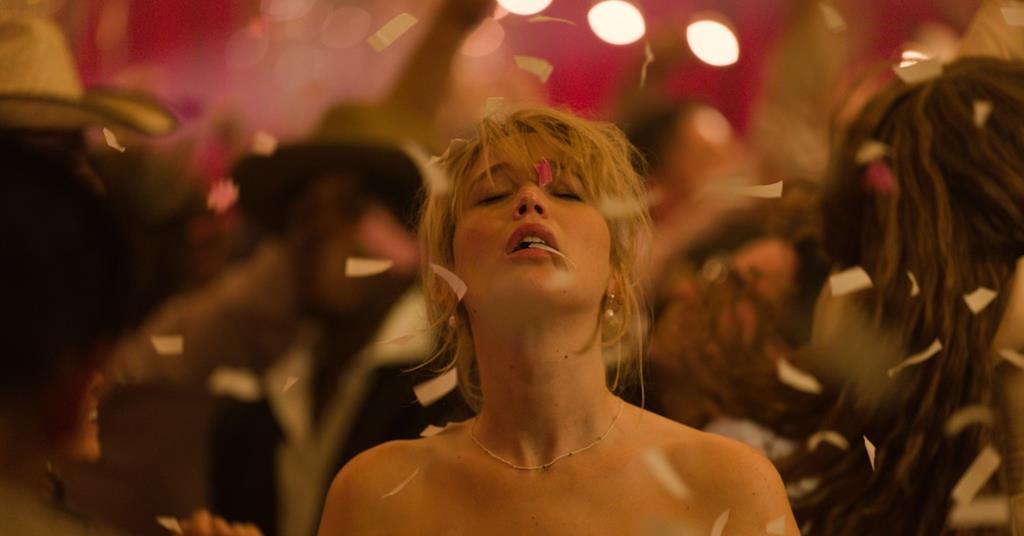
By ostensibly throwing its hands in the air, however, it manages to achieve a greater emotional reality in the end. The reason is its lack of cynicism when deconstructing its own fiction. As the film has been fairly astringent regarding its framing and cutting rhythms, its cut to reveal its own making feels less of a harsh reckoning than a bifurcation of its reality that will still reach the destination eventually. Carrie’s emotional breakdown in the end becomes more powerful as we can no longer decipher whether it’s indeed Carrie or the actress Callie who is crying. And who cares about the answer? The healing is real.



 Cinema Travelogue
Leave a comment