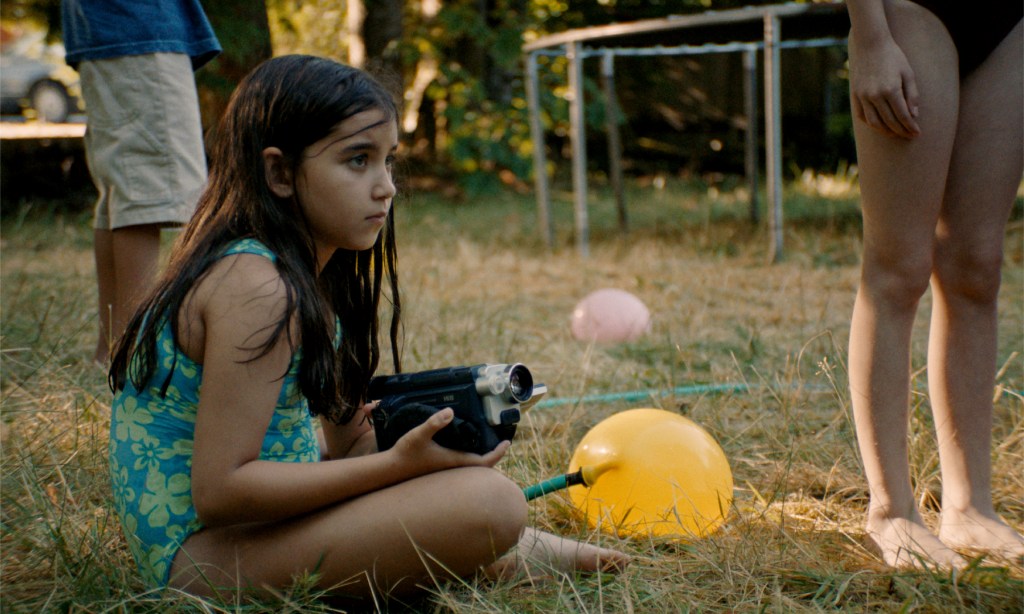
Image Credit: Courtesy of TIFF
The past is never just the past because we are always accessing and processing it in the present; the present is also never just the present because it is always haunted and influenced by the past. Following a series of personal short films which she probes into her family histories, Blue Heron is Sophy Romvari’s first narrative feature, a continuum of her pursuit in exploring personal memoriesa and the role that physical remnants of others, such as photographs and home videos, can act as tools for reflection. At the centre of the film is her reckoning with the childhood memory of her oldest brother’s mental illness and the family turmoil he brought along, both under the scope of a familial portrait.
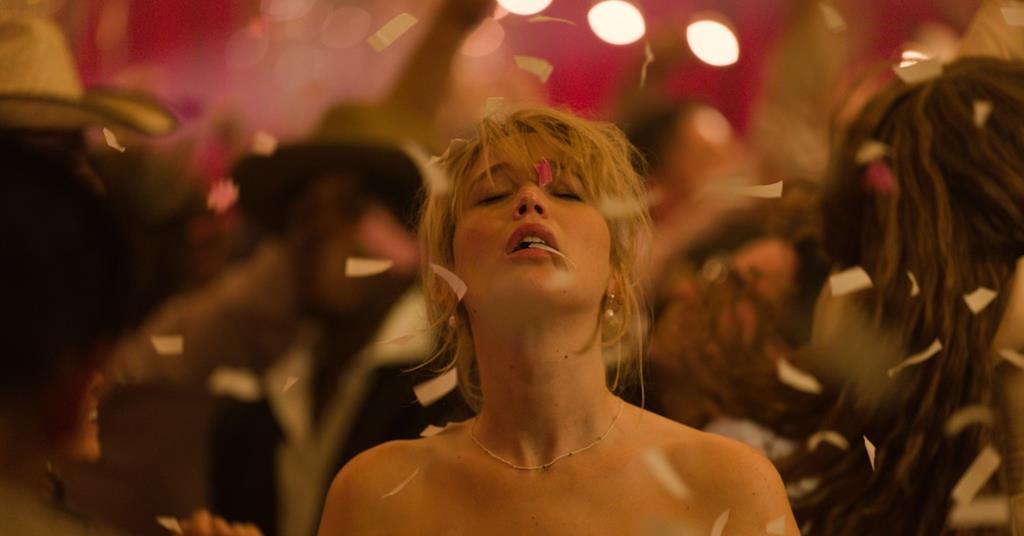
The most significant deviation Romvari takes from her documentary-style shorts is that the autobiography does not extend to the onscreen characters. Instead of starring in the film herself, like she did in Still Processing, Romvari hires actress Amy Zimmer and Eylul Guven to play the adult and child versions of her character’s stand-in, Sasha. It’s an additional layer of reflection, and an evidently meta-textual one that the film is unashamed of diving into. The grown-up Sasha is also a filmmaker, who we see in the second half working on her newest film, which features the same events that were portrayed in the first half through young Sasha’s subjective lens.
What distinguishes Blue Heron from childhood auto-biographical films such as Aftersun and The Fabelmans is this methodical distance Romvari draws between herself and the subject at hand by imposing what is essentially a mise-en-abyme into a film that is already predicated on emotional intimacy. The first half observes Sasha’s tumultuous childhood with her family, where relaxing scenes of children cavorting are frequently accompanied by voices of the parents arguing in Hungarian, and eventually disrupted by the oldest Brother, Jeremy’s mental crisis. The film maintains an intimate handheld style, while employing zooms to mimic the look of home video, something that the child Sasha would’ve recorded herself. The second half is much more formally clinical and includes medium shots that one would often find in a documentary; it even includes a scene where the grown-up Sasha records a roundtable of psychiatrists to discuss the clinical case of her already deceased brother for her filmmaking project.
Although autobiographical films tend to emphasize the role of memory as a position of observation, they rarely pull the rug and deliberately reveal the film as a filmmaking exercise. Ostensibly, the second half seems to exist to dissect the first, and thus underwhelms its emotional impact through over-explanations and redundant therapy sessions. But Romvari’s filmmaking intent does not lie in reconciliating or healing from those painful memories, but in the process of remembering as a valuable tool itself.
“Thank you for your memory, that’s all I have now”, says the adult Sasha at the beginning of the film. We did not understand what exactly she meant, but after the film, we do. Blue Heron is closer to a rumination on inheritance, which functions more similarly to Courtney Stephens’s Invention, as it treats memory as not a personal property, but things left to us by someone else. The making of the film is indistinguishable from the final as the act of remembrance and the resulting memory are held in equal importance. Between the objective and subjective way of observation is where Romvari places us, telling us it is okay to be still processing.


 Cinema Travelogue
Leave a comment