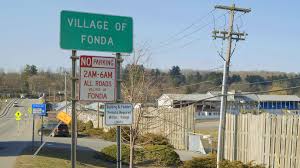
Images from movies are always those of myth extracted and sublimated from truth, and the power of this realist art to make fiction seem as if it were part of reality is its ultimate testament. Alexander Horwath’s essay film Henry Fonda for President is free on Le Cinema Club this week, and it has been one of the new releases I’ve been yearning to see most since its one-night Toronto screening at the Lightbox, about a year ago. My initial interest in the film came not from Henry Fonda himself, but from the glowing reviews by critic Filipe Furtado. I’m kind of lucky to have missed that one screening. One year ago, I had yet to see the iconographies that are Fonda’s faces in Young Mr. Lincoln, The Grapes of Wrath, My Darling Clementine, Daisy Kanyon…, so my emotional reactions from seeing him in the context of those images may have been significantly weakened; the sick joy of cinephilia would have escaped me then.
This is not to say Henry Fonda for President is a 3-hour long parade for all Henry Fonda mega-fans in the world, a film that only grants access to VIP pass holders who’ve seen all of his works. Fonda’s presence and what he represents – which Horwath will economically and dextrously draw out through cross-cutting between objects or words of commonality between movies and a calm, lucid, analytical style of narration – can be sensed even if one has only seen his most popular work, 12 Angry Men. This is an impressively organized feature for a 184-minute runtime that may seem daunting at first sight. Juggling clips from movies, archival interviews, and present-day digital footage, the only requirement for one to become invested is to believe these various records of Fonda can somehow accumulate into a cohesive image about and above the man himself, which Horwath pulls off in a steady and convincing manner.
In the beginning, I briefly touched upon my experiences with Henry Fonda, because Horwath has done the same in the opening of the film himself: 1980, the summer Olympics at Moscow, Reagan’s presidential nomination speech, and three trips to the movies (The Wrong Man, Once Upon a Time in the West, andThe Grape of Wrath). There’s an innocence in the title, which originated in a 1976 TV show that Fonda made a cameo in, uniquely drawn from cinephilia. Nobody is going to think Horwath is actually making a case for Henry Fonda to be president or saying he should’ve been one. But it is this fervent interest in the images that capture the ideals of a certain persona and the minute, even trivial, intertwining etween history and fiction that powers the perspicacity to see facts and understand them in the greater context of the world, while obtaining a naivety to believe in fiction and a kind of underlying relation.
“I think of Henry Fonda for President as a ‘double helix’: an actor’s story and a story of America, spiralling around each other. And maybe it’s a double road movie, too — it moves on a real, geographical road and on a virtual one in the fourth dimension, across 330 years of American history.” ALEXANDER HORWATH
While watching the film, I kept identifying with Horwath’s quote in Le Cinema Club’s programming note – the film being a road trip. A road trip film – a good one at least – is strictly bound by two important cinematic concepts, time and space; the construct of time gives it a beginning and an end, thus a limit, and the space is what defines each point of arrival. Henry Fonda for President is probing the relationship between fictional and historical events. It is, first and foremost, a linear journey through American history, serving as the fundamental framework for this 3-hour project. This progression is marked by the overlapping of Fonda’s personal histories, his ancestors, and works that depict events preceding his birth, all contextualizing the historical with the personal. The actor greets his fictional past self by living double lives, ones he embodies through the efforts of silver-screen giants like John Ford and William H. Hellman. This is where director Alexander Horwath comes in himself, embarking on a roadtrip seeing what all those places look like now and who inhabits them. The first hour or so of the film is as much about Fonda as it is connected to Ford, whose pictures dominate the narrative of the birth of America; seeing those the present day, conspicuously digital footages of railroads, towns, hills, gardens, and mountains that were once dancing upon the celluloid of Ford’s impeccable mise-en-scene and have become nearly unrecognizable is an one of a kind cinephile journey itself. We see how the land becomes defined by cinema and how the grandeur of those definitions feels small as our impressions renew over time. Henry Fonda thus becomes a conduit, through Ford, 24 frames per second, linking the geographies of the past with the present, through which time makes its most potent statement, showing land that endures longer than a person’s lifetime.
“Henry Fonda is an auteur, even if he does not recognize it”. The way I would describe an auteur in cinema is someone who manages to imbue a unique kind of spirit into their work that is not strictly defined by external signifiers. With actor, this is more complicated. Their faces, their gaze, their voices are distinctly theirs, but not all actors are auteurs, so to speak. So it always depends on the role and how specifically a director demands it. Horwath makes a strong case that Fonda’s auteurism begins with the archetypal roles he chooses for himself. There is a clean, orderly presentation of Fonda’s personal life and analysis of his on-screen presence, so the connectivities do not become tedious conspiracies of virulent paparazzi. As a critic and programmer, Horwath attempts to discover the auteur within Fonda through the interconnectivities between each of his roles, between prudishness in The Lady Eve and the clenched fists in Fort Apache, the dichotomy of the everyman in The Grapes of Wrath versus the mythical origins of a Mount Rushmore figure in Young Mr. Lincoln; both examples of commonalities found in contradictions. In Young Mr. Lincoln is where the auterism of Fonda most shined. Despite the prosthetic nose, Fonda’s performance is one of the few instances in which the essence of the actor himself is still preserved, despite the illusion of “role-playing” the genre requires.
Fonda’s presence is emphasized by “chiaroscuro”, referring to a physical gesture he performs where he hides his face behind his hands when faced with emotional difficulties. Physicality plays an important in Horwath’s interpretation of Fonda’s public images, and they are often placed against the images of America itself as the democratic spirit of an individual face against system of the nation that is often dominated by reactionaries populism; no wonder that the films begins and ends with Raegan, who represents both of those thing and whom Henry Fonda was verbally against. Horwath seems to remark on a lineage of America’s development that views the progressive spirit of Fonda as an inextricable part of America’s heart, yet is invariably undone by a greater force in the course of the country’s history. Fonda was The Wrong Man, and the duality of his on-screen image and political activism – the former guarded by the illusion of light to form a contradiction, a temporary yet permanent victory, while the latter reveals the limits under the lens of the American mass – allows an irony in the title to strike. Through this contrast, Horwath forms an elegy not to the passing of Henry Fonda himself and to all his great works, but to a very specific image of dignified, taciturn individualism being defeated by innate contradictions within the democratic image he represents, and ultimately surrendering to the passage of time. A man’s trip in this world is defined and limited by the time he spends in this world, what Horwath accomplishes is to commemorate this trip through profound analysis of the indiviudal stops. What Fonda represented did not win, yet he leaves his marks through images of him remain. Isn’t that something?


 Cinema Travelogue
Leave a comment