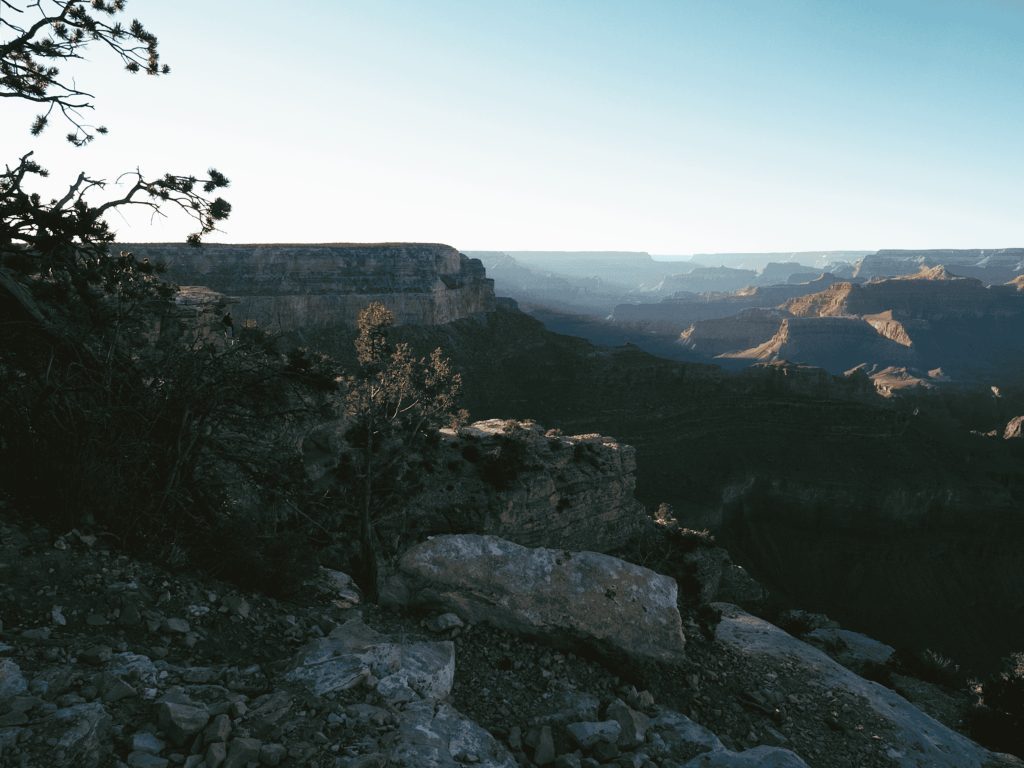
The snow is melting; the frozen land thaws in Ontario, where we’ve had one of the coldest winters in years. Spring’s arrival is foreshadowed everywhere, the anticipation within my heart, the cool air that caresses my face – as opposed to an abrupt attack like that from deep winter – when I open the front door in early mornings, and the stream of melted snow flowing by the sidewalks like Paris by Hong Sang-soo in Night and Day. The beginnings of spring and the start of daylight saving time excite me. What better than to coincide the start of a chapter in the perpetual natural cycle with the start of a diary that records encounters with cinema. Not travelling chronologically backwards like The Tsugua Diaries, but going forward in time while glancing back. It’s Wavelengths time.
Last year, TIFF (Toronto International Film Festival) celebrated the 25th anniversary of its Wavelengths programme. Opposite to how an anniversary is always a celebration of renewal and longevity, last year was a rather depressing moment for Wavelengths. As a programme that forefronts movies from around the world that challenge and break the conventions of form and subject matter, last year’s programme consisted of only 8 feature-length films and 3 short programmes, a drop of 4 features from 2023 and 2024. By a much steeper contrast, the 2015 edition of Wavelengths had 22 features and 4 short programmes. Part of the reason is TIFF’s decision to decrease the number of venues used after the pandemic and become more centralized around the radius of 2 blocks around the Lightbox, instead of utilizing a sprawl of theatres across the city (including Jackman Hall, a perennial home for Wavelengths screenings pre-COVID); but this decline is also the result of the festival’s changing paths in recent years under the leadership of CEO Cameron Bailey. TIFF strives to be the leader of the North American film industry – for whatever benefit it implies to the “people” of “The People’s Festival” – and has over-the-years progressively transforming itself into a more palpable international sales market, evidently opening up a literal market place for its upcoming 51st edition and expanding sections of TV and new media (for a film festival? hahaha); their desperation for world premiere statuses is no less another symptom of that shift. The numbers don’t lie and they tell a tragic story: in an industry predicated by so many threats from all sides, populism has become the last straw for a grasp of relevance – which frankly will never return to cinema – from the audience, and wavelengths – despite a few big names, curates films that struggle to receive distributions beyond the festival circuit – is on the chocking block of corporate interests, thus fading.
The thing is that cinema is not defined by TIFF, or by any institutions whatsoever. The filmmaker Michael Snow, who made the eponymous film that became the programme’s title, originated from the underground filmmaking scene in New York prior to the institutionalization of experimental cinema by film schools and the transition to just another distribution label. Here in Toronto, the interest in experimental cinema is relatively small (naturally) but enthusiastic. The night before I began writing these words, I attended a sold-out screening of Stan Brakhage’s Anticipation of the Night, and Comingled Containers hosted by Still Light in a bicycle repair shop that hosts circa 50. Brakhage’s cinema are films of exhilarating, constant movements, without sound other than what comes out of the 16mm film projector. As it plays, the collective silence in the room anticipating shifts of shapes and colours is no less magical than a 70mm IMAX showing eventized by big studios. The truth is that a film is a contained spectacle, no matter the scale, Super 8 or 70mm, an object derived from a ballad of time and space reflected onto a flat surface. Arguably, every film can be deemed experimental and a leap of faith, despite its disparities in viewers’ eyes, as Straub once claimed that Ford makes experimental films. Michael Snow’s Wavelength has fewer irreconcilable differences with every movie ever made than one would imagine. In terms of the techniques, the cuts and zooms in Wavelength have been implemented myriad times prior to 1967, but it’s the way Snow implements the effects based on the space he’s working with that allows the distinct effects to flourish. Every film works with or against time and space, and it’s up to its makers to utilize them fully. So it’s not the fact that films from Wavelengths are typically coined with adjectives such as “slow”, “abstract”, and “lacking of a narrative” that makes them better than others because they provide more challenges to the viewer – there are certainly plenty of bad experimental works – but how they always leave room within the disjunction of their forms to contemplate on the basic principles that cinema is founded upon, instead of resorting to film language that sales cinema with messages and words – the leftovers of images and sound – is the reason why they should persist and are worth discovering.
On a personal level, what makes Wavelength films so alluring is their eye-opening surprises. In 2024, attending my third TIFF, after mentally burning out from paying 88 dollars the previous year for a very bad premiere ticket for Mother, Couch, an extremely tedious and weird-for-weirdness-sake film in Special Presentation, I started looking elsewhere for a more adventurous and worthwhile festival experience. My searches through the entire festival catalogue led me to films with either an interesting director or an eye-popping excerpt image, both Wavelengths novelties; yet I wasn’t invested in the programme as a whole. The big, notable names – Miguel Gomes, the Best Director winner at Cannes with his Grand Tour, and Wang Bing with the second and third entry (Hard Times and Homecoming, respectively) for his Youth trilogy – were great experiences. But the real encounters were two half-filled screenings (as screenings of lower-profile films in Wavelengths often are) that I stumbled into because the tickets were available. They were films by filmmakers Jessica Sarah Rinland and Madeleine Hunt-Ehrlich, both of whom were complete unknowns to me, Collective Monologue and The Ballad of Suzanne Césaire. The latter did not resonate with me, other than an opening of rhythmic dances evoking Claire Denis; as I later discovered the cinema of Straub/Huillet, it also seems like a dull emulation of their works. The former, Rinland’s observational documentary on an Argentinian zoo and its history, provided me with such warmth through its analog textures that forefront the relationships between the workers and the animals under the scope of this collective space.
Two films, a hit and a miss, cement a belief within me that I always seem to believe: the power of this art exists everywhere, no matter how ostensibly small and invisible it can be. Wavelengths resembles a kind of preciosity, where the magic magnifies on the same stage as the big premieres of the Knives Out series or of Spielberg. Only until close to the end of the festival, or in the aftermath of the 11-day fever dream that I started to realize that these experiences belong together as a collective like a mini festival within a festival, a delicate collective space.
So, what do I want to do in this series of reviews? I obviously do not agree with the reduction of Wavelengths. As someone who lacks the power to change programmers’ and higher leadership’s decisions, all I can do as a film watcher and writer is to capture my experiences of watching these movies and entrust the power of these capsules itself as a method of savouring. By my accounting, there have been 155 feature-length films selected by the programme since 2012, and significantly more shorts dating back to 2001vat the programme’s inception. Thereby, at my own pace, I will attempt to track these movies down, view them, and review them.
I am by no means an expert. I have only seen 28 out of the 155 features. Of the Wavelengths frequenters, I have only seen 1 from Wang Bing, 1 from Sergei Loznitsa and none of his archival documentaries, 2.5 from Miguel Gomes (The Tsugua Diaries being a co-directing effort with his partner Maureen Fazendeiro), and, deeply shameful, none from Pedro Costa. It is crucial to point out that Wavelengths is an arbitrary collection of films selected by programmers, currently Andréa Picard and Jessie Cummings. The Wavelengths tag is not an imprimatur of quality, and I have no idea if I will love the filmmakers I meet along the way, but I want to be honest. Doing a detailed view of films previously selected is a way of consulting my own tastes, reflecting upon what piqued my interests in the first place, and understanding my own proclivities going forward to reconcile my love for cinema and maybe find some sort of resolution going forward; placing a personal ideal against another one on the basis of the shared appreciated of the malleability of cinema.
My look into the programme would be shortsighted if I categorize it as a detailed look at avant-garde cinema in the recent decade as a whole. The experimental film scene has shifted drastically since the prominence of Snow, Markopoulos, Beaver, Wieland, Gehr, and others; if one compares the filmmakers being programmed in 2001 and those being programmed now, the shift is extremely evideny. Experimental cinema has become a cement school of study on its own and may just be an alternative but equally stringent path of academicism for those less drawn to narrative; the experiment itself is in question when a systematic film language is in place. So it’ll be crucial for me to see these films what they are and not have a “just another label but good” view towards when watching these films like certain auteurist practices, which will turn this diary into a blind, worshipping exercise. Instead, my study will focus on what’s within the frames of these film, and subsequently how filmmakers frequently invited speak for the tastes and proclivities of the Wavelengths programme itself and how it has shifted throughout the years.
In our current culture, there’s no denying that movie-going has become increasingly obsolete. Loving movies up to a level that detaches the act from its social benefits, and becomes a personal obsession and obstinacy of a lone lighthouse keeper staring into the abyss. If you are passionate about something, the only way to reconcile with it rationally is to exhaust yourself doing it, allowing the flames to burn so brightly that they can only be extinguished by themselves, and the quietude of the remnants and placid air become nothing but logic. I like Wavelengths, and I would like to see it through.


 Cinema Travelogue
Leave a comment