t’s always so difficult to review works like those from Blake Williams, because the sensorial pleasures they provide can hardly be accounted for by superlatives. Yet because the film is in 3D and rarely screened, I also lack the opportunity to dissect it shot by shot to examine how Williams achieves the overall effects. So this review should only be regarded as a scattershot of impressions.
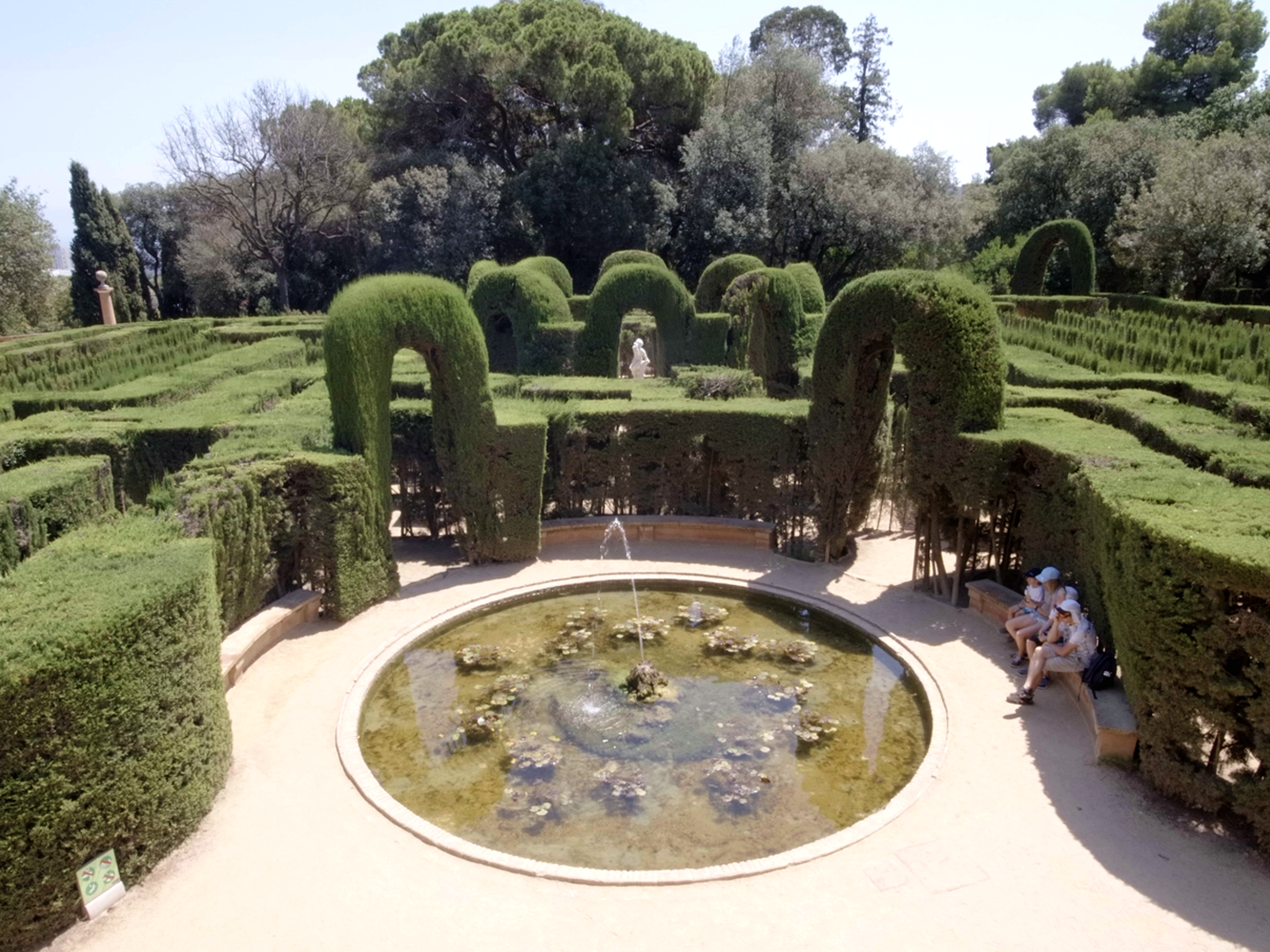
Laberint Sequences, as the title suggests, it is constructed from sequences. It begins with a series of static frames from different sections of the maze shot at different angles. What immediately strikes me was the depth of field that the images has. It further cements what Bazin argues about the invention of depth of field being the advance of cinema in The Evolution of the Language of Cinema – bringing cinema closer to reality while offering the viewer personal liberty in their perception of the images – by how the 3D stretches the range of perception and introduces some sort of heft to the images themselves because an overwhelming abundance of vision are made available for the eyes to perceive that a 2D image will never be able to contain (The only exception may be Vincente Minnelli’s Some Came Running but that’s a much different subject on its own). There are inherent mysteries in these images, and they are not found through exterior fictional narrative or thematics, but in how overwhelmingly concrete the reality of the images is.
The following sequences enhance the mysterious nature of the images by introducing movements, especially lateral pans across the intersections of different paths in the maze, which create the illusion of losing an abundance of visual information, magnified beyond its 2D counterpart.
This was a rewatch. Surprisingly, I’ve forgotten about the last section of the film, which includes footage from the 1953 3D film The Maze. The voice of Deragh Campbell dubs over the actresses’ dialogues in the movie, and film’s interest pivots to a challenging its own reality. The challenges also include hallucinatory lights looming over the film footage. During the post-screening Q&A, Blake Williams claimed he doesn’t know why he used the red and blue lights, but mentioned he loves the choice nonetheless. My attempt to bring any logical connection is that it has to do with a shot of some flowers in the labyrinth at the end of a previous sequence, and the color of those flowers, which are similar to the hallucinatory lights, are elements that get inherited from one sequence to the next despite their disparate physical forms. There is also a shot of a train tunnel, which does not have any connection to the maze itself, but has similar spatial construction as paths within the maze – narrow with infinite depth proliferated by the 3D.






Leave a Reply