A boisterous rainforest in stillness, shrouded by the screeching of insects dominating the soundscape; a torrential rain intrudes upon the stasis and soon evanesces in the middle of the frame, bringing and taking away a temporary grace of sunlight. This opening spectacle in Ramuald Karmakar’s The Invisible Zoo assumes a non-intrusive position of observing a space of unmediated nature. But as the title breaks the illusion, this view is not nature by itself, but an ecosystem hall ‘Masoala Rainforest’ that opened at Zoo Zurich in 2003. The space’s intention to create the “scenography of wilderness” is successfully captured by the sound design, enveloping the senses within a foreboding unknowingness that only nature can offer. However, the remaining of Karmakar’s 3-hour documentary on Zoo Zurich does not strive for immersion like the zoo itself. Like how inclusion of the word “invisible” in the title creates a paradox that makes the invisibility explicit, thus neutered, Karmakar’s project focuses more on the rules and operational logic that govern such a space, the exact process of creating the illusion of invisibility.
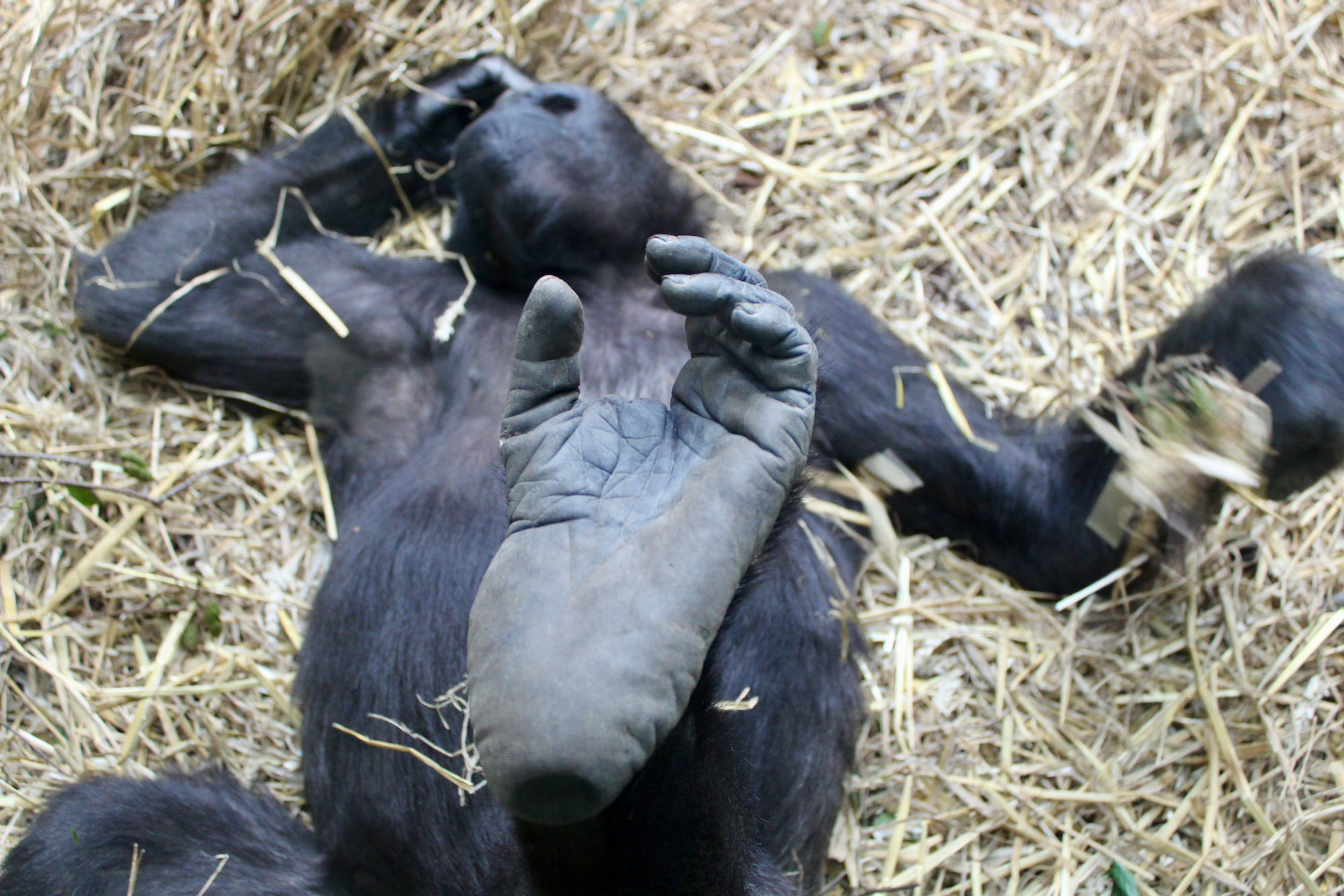
The filming process took 50 shooting days over 4 seasons, but the overall project spans 8 years. Time plays an integral role in the film’s effects. The elemental pleasures of seeing the zoo through 4 seasons: the opening shot of the rainforest appears to embody summer; the same wide shot of a landscape, with different species of animals walking in and out of the frame, is shown during both foggy spring and snowy winter. There are also individual moments where a shot lingers long enough to capture the change in the amount of sunlight entering a space. The varying animals – Western Lowland Gorilla, Peacock, lions – are filmed in periods of elongated stillness, where they inhabit the spaces they’re designated in the zoo. It’s the duality between forced assignments and this purported freedom of existence implied by the zoo that is the most relevant in Karmakar’s depiction of the zoo as a space.
Karmakar and his camera crew, Frank Griebe and Ian Oggenfuss, appear to have a systematic setup demarcating the animals from the zoo staff: the animals are filmed in static shots, typically behind bars or glass that make their confinement explicit; the staff are filmed with less rigour, as the camera obtains more freedom and mobility when filming the humans performing their tasks. This setup specifies the conditions under which the audience watches the film: we are not allowed inside the cages as a caretaker would; instead, we adopt the perspective of an outsider and visitor to the space. This demarcation of techniques also challenges what the zoo founder described as the animals’ natural zone.
There is a deep, almost one could say: existential connection between cinema and animals. The emergence of cinema historically coincides with the establishment of zoos in the cities of industrialized nations. – Cord Riechelmann, In the Eye of the Animal, A Short History of Animal Film.
These static portraits of animals would be amicable and banal if not for the later moments in the film, which reveal that the zoo is a distinct system in its own right that neither resembles nature nor the human world, but rather a dystopian intersection of both. In one scene, a crocodile is filmed behind glass in an interior exhibition hall. Its eyes are closed, and its inert body resembles that of a rock. Offscreen voices of passing visitors comment on its immobility and question if it’s alive. Similar to how when someone enters a movie, they expect to see reality reflected on the big screen, a visitor enters the zoo with the promise of seeing authentic lives of other species, but according to their preconceptions and expectations about the animals. The animals on the opposite end of this relationship, despite being captive, are not performers but are simply living their lives in a mandated space. Whether the crocodile is compliant or actively resistant towards living in a confined space will remain ambiguous to the end of time. No matter the question, the juxtaposition between the visitor’s temporary status and the animals’ permanent state of being is foregrounded when the visitor asks whether the crocodile is real. There is a tacit deftness in the way the crocodile feels no need to answer its voyeurs, and in how this mismatch of expectations is delineated clearly in a single take.
Time makes its effort again towards the end, this time through the designation of screen time. Karmakar and his crew do obtain access to film behind-the-scenes activities. The operational activities include benevolent ones: interviews to hire new volunteers, discussions on disease prevention and control, and planning and oversight of new grounds. But there is also a long segment featuring a lion in a cage, and another segment in which an animal (never actually seen) named Oja is being transferred in a cage. The vivid sound design emphasizes the animals banging against the cages; the auditory image of a tamed beast.
The tipping point that shifts the entire vibe of the film is a segment following a group of zoo staff killing a zebra, dragging its bleeding body across the floor, dissecting its body parts, and placing its carcass in the section of a lion. Here, the camera switches back to the static position belonging to a visitor, who would have affirmed the image in their head of a lion hunting down a zebra had it not been for background knowledge proving its falseness. The film is reminiscent of Wiseman in these moments, specifically in how the human activities depicted become surreal through their realism.
I do not believe Karmakar is taking a critical stance against these activities. The zoo’s allowance of free camera access to these moments suggests they may be the leader in their field and proud of their operational logic. What Karmakar’s camera so curiously observes is a latent irony in this peculiar logic of creating an unnatural process to meet this ideal of realism, which invites critical examination of the idea of a zoo itself. This examination only obtains its full effect through the way Karmakar balances screen time in the film. As COVID-19 approaches the end of the documentary, visitors are prevented from experiencing the invisible zoo, and their absence creates an ominous atmosphere within the space, leaving only the zookeepers and the animals. The architectural design becomes more conspicuous, and the static camera observing the animal acquires a sense of mystery due to the absence of an observer. What purpose does invisibility serve when there’s no one to hide the visible from?



Leave a Reply