
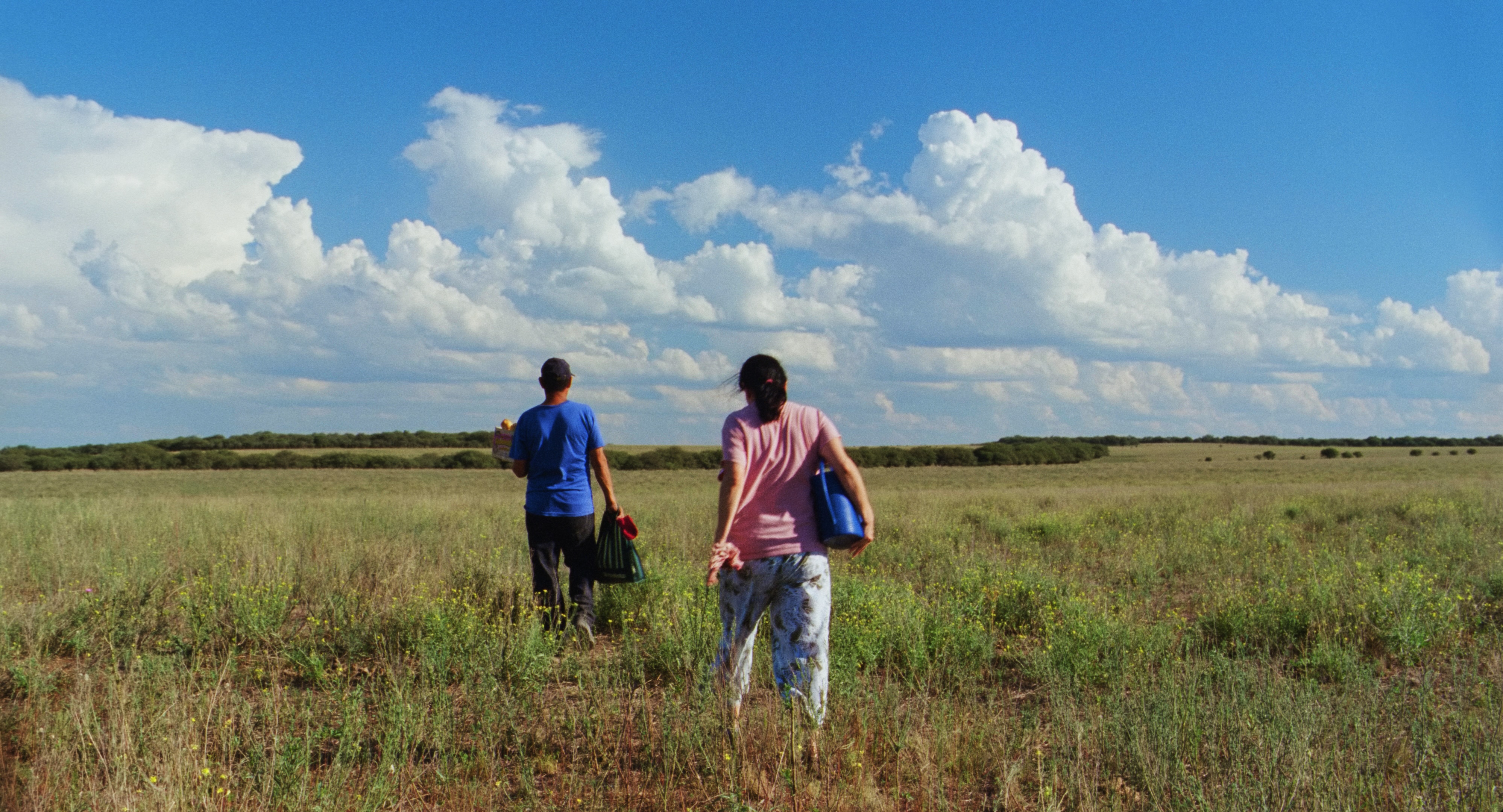
A strange and wonderful phenomenon at this year’s TIFF is re-encountering old, familiar faces in cinema. In Valeska Grisebach’s The Dreamed Adventure, when Saïd, played by Syuleyman Alilov Letifo, opens the film with his travel-worn face full of smiley wrinkles, one instantly remembers his Adrian in Grisebach’s 2017 film Western; because he has not appeared in anything since, an illusion manifests in my mind of being teleported through a time capsule and that no time has passed at all. More directly, time is the central concern in Lisandro Alonso’s La Libertad Doble as he attempts to reintroduce Misael and his fictional world 25 years after La Libertad. Completing the trilogy is Bobby Sommer, who cinephiles might remember from Jem Cohen’s 2012 Museum Hours. As he mostly works as a chauffeur during his day job, the opportunity to meet again on the big screen is rare. But in Sebastian Brameshuber’s London, it can be said that his face- or his right side-profile- is the mystery, but ultimately the warmth of its openness that sustains the film.
London is simple in its premise: a series of conversations between Bobby and a variety of passengers he picks up during his drive between Vienna and Salzburg. At first, we don’t understand why Bobby drives so often between the two cities, but as different passengers take an interest in him and begin asking him questions as he did to them, the poignant reason gradually unravels and threatens to overtake the film. However, it doesn’t, because the film isn’t aiming to become a psychological study of Bobby. As the film progresses and he opens up on more topics such as his past experiences in the army, his perspective on having family and kids, or the general feeling of becoming older, the character Bobby acquires more depth, but the film remains segmented by his individual encounters instead of connecting them into a linear emotional journey. Therefore, Bobby’s journey during the film feels more like a natural journey of time itself; by its end, one feels the weight of time taking its toll instead of the weight of Bobby’s emotional baggage.
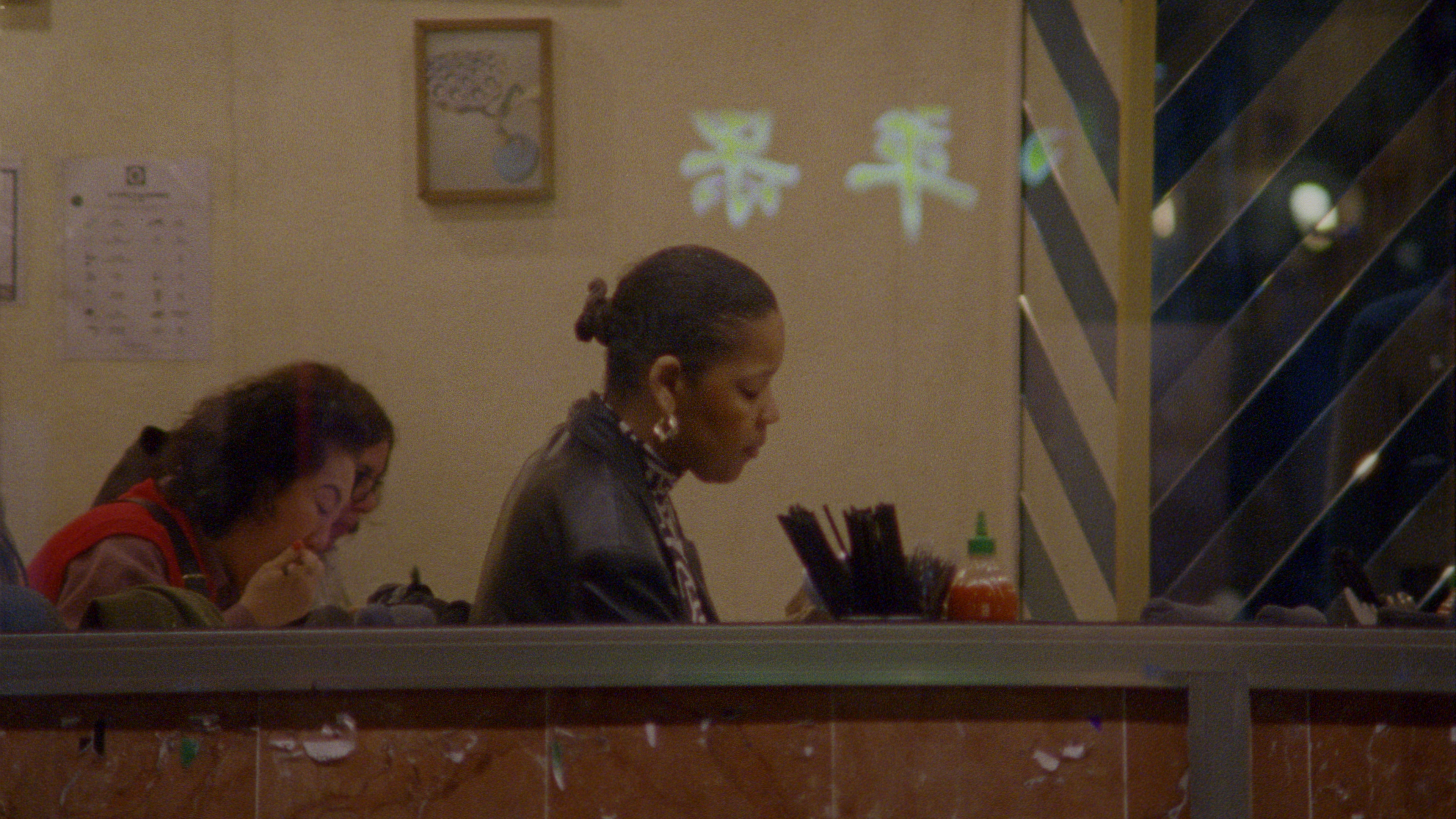
Time seems to work differently in the cramped space of a car; Bramhuber’s editing style makes the ellipsis of time between moments of quietude feel seamless – the exterior views gets darker in the split of a cut. He also has a strong grasp of conversational rhythm, which is exemplary during a scene where Bobby interacts with a Romanian worker who speaks only Romanian and French – the awkward pauses and change in mannerisms as the lady switches between languages is an exciting break from the film’s congruent sombreness. His visual plan also remains elegant and simple: interchanging between a shot of Bobby’s right side profile, a shot of the passenger side, a shot looking out the car’s windshield, and a sporadic shot of the backseat if someone also sits there.
The wonderful and melancholic tradition of the road movie is somewhat preserved by Brameshuber. However, the desire to explore different places is replaced by an interest in the journey between two finite points. Brameshuber briefly shows Bobby’s actions when he exits the car – having a cup of coffee, using the washroom, even an uncomfortably close, behind-the-back tracking of him entering a hospital – but he remains a figure fixed to the car and the road.
Constructed fiction as documentary seems to be a trend in this year’s Wavelengths. Even in something like Once Upon a Time in Harlem, the group of erudite legends gathers only because William Greaves invites and assembles them in a room so he can film them. Brameshuber has cited Monte Hellman’s masterpiece Two Lane Blacktop as a major influence. In that film, Warren Oates imagines a fictional self every time he picks up a hitchhiker. The hitchhikers themselves, ranging from a grandma and her granddaughter to a closeted cowboy to hippies, are fictions themselves as the reverse shot. Brameshuber does not make choices that adventurous; however, for a film predicated on the naturalism of human connections, I wonder how much of a reality shock people would suffer from learning that Brameshuber made London entirely in a soundscape and used rare projection to construct it. Given how the film is presented, this visual choice feels inevitable, and it helps explain how the weather so perfectly mirrors the emotions during the conversations. Weather appears as a spontaneous gesture in the film. The rain is moody and melancholic; the flashes of sun are a kind of senile epiphany Bobby reaches during his ever-present side profile.
The film mostly avoids didacticism, except for one scene where filmmaker Ted Fendt makes a delightful cameo as a man who is travelling to see poles that were previously built by the Nazis and are about to be destroyed. From his pedagogical monologue, we learn the origins of the highways Bobby, alongside many anonymous automobiles, has been driving on for most of the film; surprise, surprise, the Nazis built them as well. The film remains very simple, slightly concealed, collected, like Bobby himself, but that is not to say it aims to be an apolitical utopia. It ultimately takes on a political angle, one that reveals itself as somewhat of a surprise, but also logical, as a quiet confrontation that reflects upon the structure of the whole film: how one can be a good Samaritan in this world we live in – open yourself to others and their stories; keep moving forward and try to give others a hand along the way. By transforming Bobby’s car into a social, Brameshuber opens a window to the world that for 90 minutes dispels its murkiness.


Leave a Reply