
On Sunday, October 16th, Soldier’s Field welcomes two baseball rec teams, Battlers Paint and the Riverdogs, for their final match-up before the field will be closed down for the construction of a new school. Carson Lund’s debut feature, Eephus, dominated by its director’s quirky, offhand humour and an eccentric cast of middle-aged men with a few younglings scattered in there, whom all look like people that you might run into during a stroll around your neighbourhood, is about one of the most tragic things in life – our defeating battle with time. In many films, one can clearly blame this loss of communal spaces, spirits, and identities on capitalistic progress. However, given how the field is being torn down for a school, which is a rather benign objective, one can’t easily make that association and label the film as a political statement on capitalism. Instead, Eephus is picturing something that is less repugnant but equally devastating – the axiom that nothing will ever remain the same.
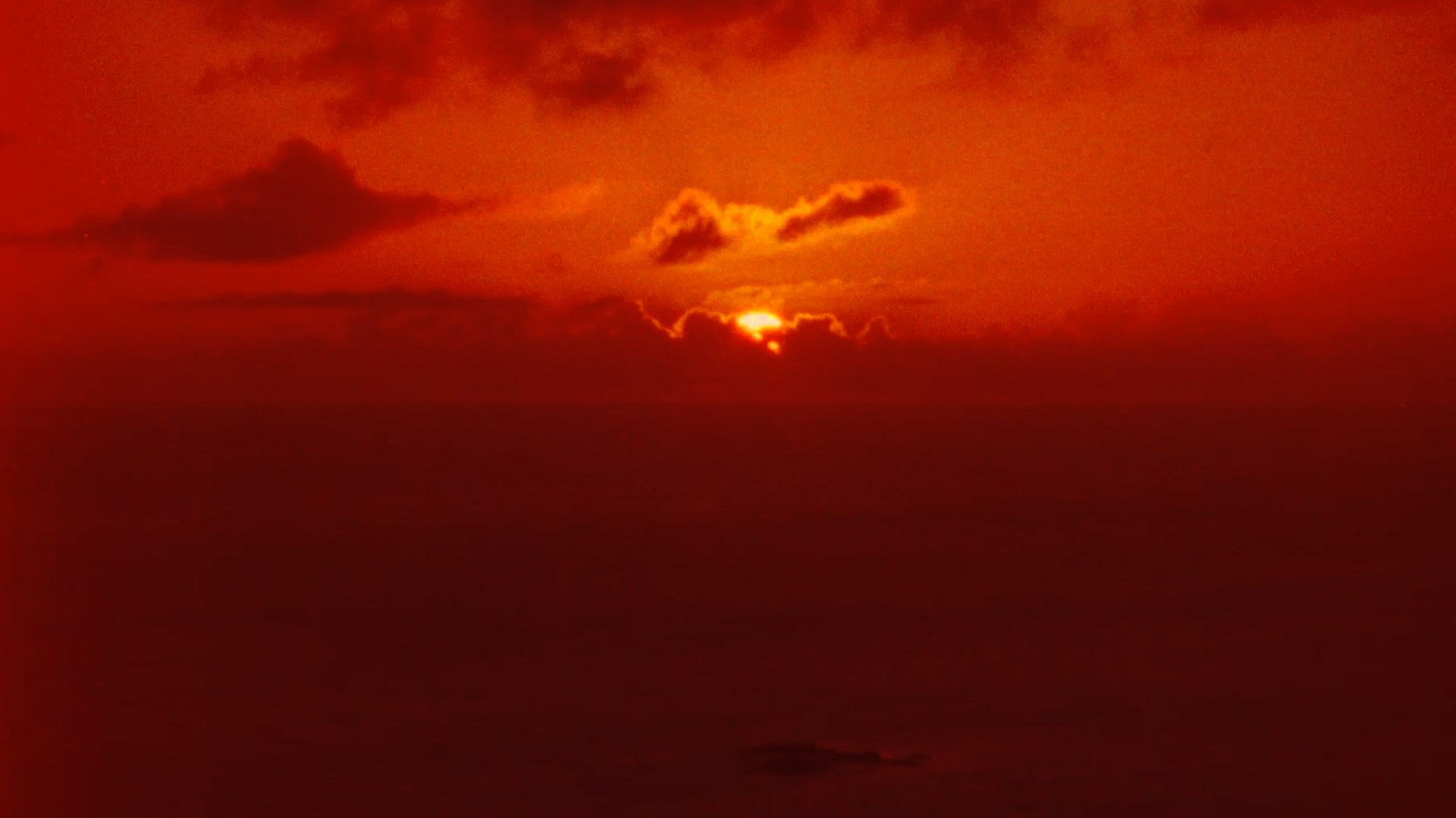
Although this is Lund’s first feature film, his experiences of working in other filming departments serve him well. He previously served as the DP, editor, and co-sound editor (he is credited as those for Eephus as well) for Johnatha Davies’s underrated, ethereal Topology of Sirens. Eephus is one of the few American movies I’ve seen recently that pays meticulous attention to the position of the sun in relation to the time of day through its cinematographic choice. The film has very good reasons to do so – the entire film is set on a baseball field where the two teams play from midday all the way into the night. With such a simple concept and a lack of dramatic throughline, the film fills up its runtime with its inner complexity of human nature that is embodied by a large ensemble of characters. Kudos to the casting director, for one can easily identify each of the personalities as soon as one of them shows up onscreen and opens their mouth, and kudos to actors that none of them are caricatures. This is their one last ride, but the film and its characters do not take the position of a maudlin poet. Instead, these people seem to be solidly moulded by life experience to be unsentimental about loss that they are content with showing up and hanging out for one last time on the field.

There are firm philosophies within all these people. This quality is demonstrated by the a curmudgeon member of the squad, Rich, who carries the intensity of a retired Marine and swears off anybody he thinks is interrupting or poking fun of the game. He even delivers a monologue where he labels everything in life as combat, except for seeing your loved ones to death, which is love. This statement is quickly refuted and mocked by the other players, but one can clearly see the importance of this rec game to him, as this is where his trained competitiveness can have a reasonable place of release.
On the opposite side of the spectrum is the meek and equally intriguing Bill Belinda. We first see him poking fun at his own name, as he has been doing so his whole life. He is one of the only characters that carries somewhat of a narrative objective into the game: his wants his children to witness him hit a run. Ironically, the first two times we see him on the base, he ended up with a walk. This game is the only occasion where he has a chance to elevate his presence in front of his kid instead of just “chugging along,” as he describes it himself.
These two are only few out of the many others that established their personalities through simple mannerisms and tacit bickerings with one another. The field’s biggest Patreon, Frankie, who arrives at the field earlier than anyone and keeps the game score like a dedicated professional, demonstrates an endearing nonchalant sincerity. Riverdog’s strong-headed manager and pitcher Ed (Keith Williams Richard), who consistently tries to prove he still has it in him to throw nine innings that he even tries to skip his niece’s christening. Glenn (Pete Minkarah), who obsessively talks about the fireworks he brought for the postgame. Only on the field, where these men can channel their distinctive vison on inner worth and masculinity onto the physical form of a game. The widescreen composition emphasizes the distance between these men. When two men are talking to each other, their eyelines are not facing one another. Instead, they are eyeing out to the field, like how in the great westerns the cowboys are always eyeing the horizons, as if they will miss something crucial if they don’t. Their masculinity forbids them to admit that this might be the last time they will ever see each other, as baseball is the sole connective link between them.

Anyone who tries to depict sports in a movie runs into the confrontation with iconographies; it is no different in Eephus. Lund sporadically inserts sensationalist moments that would serve as the climactic moment an average sports movies. Despite a tendency towards depicting naturalism throughout the film, he still contains numerous romantic impulses towards the game. He answers the rhetorical question, “Is there anything more romantic than the sun setting on a fat man stealing third base?” with an elegiac beauty exuded by the autumnal scenery of fallen leaves and distinct breeziness of the season. During the only home run of the game, the camera gradually glides across the field in slow motion, where we see the player high-fiving not only his own teammates, but players from the other team as well. It’s as if the he has just hit a game-winning home run during the ninth inning of a World Series.
At the end of the day, these are people with common 9-to-5 day jobs; a few of the players commented on having to work the next day during the latter stretches of their game. Most of them aren’t athletically inclined, even significantly overweight. Lund plays with this fact in small doses throughout the film, but never overindulges or grants the camera access to make their beer bellies the butt of the jokes. They only appear in the frequency that acquaintances familiar with each other would be comfortable with. For instance, a visibly obese man brags about being fast during his haydays, and is instantly put down by his old buddies.
At the end of the day, it’s exactly the pedestrian quality of their conversations that makes the film’s screenplay closer to a remarkable hang-out movie than an interminable, quirky send-off that is so niche it becomes a footnote. An eephus is described as a pitch thrown “so slow you get bored watching it and lose track of time”. However, it is this feeling of languidness that makes Soldier’s Field and the people on it memorable. Ultimately, the film depicts one of the myriad undistinguishable days these men will spend throughout their normal, often boring lives. The lost of time is remarked as a form of tragedy; this is true and the feeling of things slipping away from you is a feeling universal enough that even if you have not been on Solider’s Field, or ever touched a baseball before, the calmly observed moments will resonate with you that close to end, the shot of a man watching fireworks will be more moving than the actual fireworks. Frankie’s first and final words on the field, “Today, today, today, I consider myself… the luckiest man on the surface of the Earth”. He delivers these words with echoes as if he’s talking to the crowd of Fenway Park on a microphone; in Eephus, Lund makes it possible so a small loss reverberates its impact across the screen to anyone from anywhere on Earth that cares to watch this movie.



Leave a Reply