Image: Courtesy of TIFF
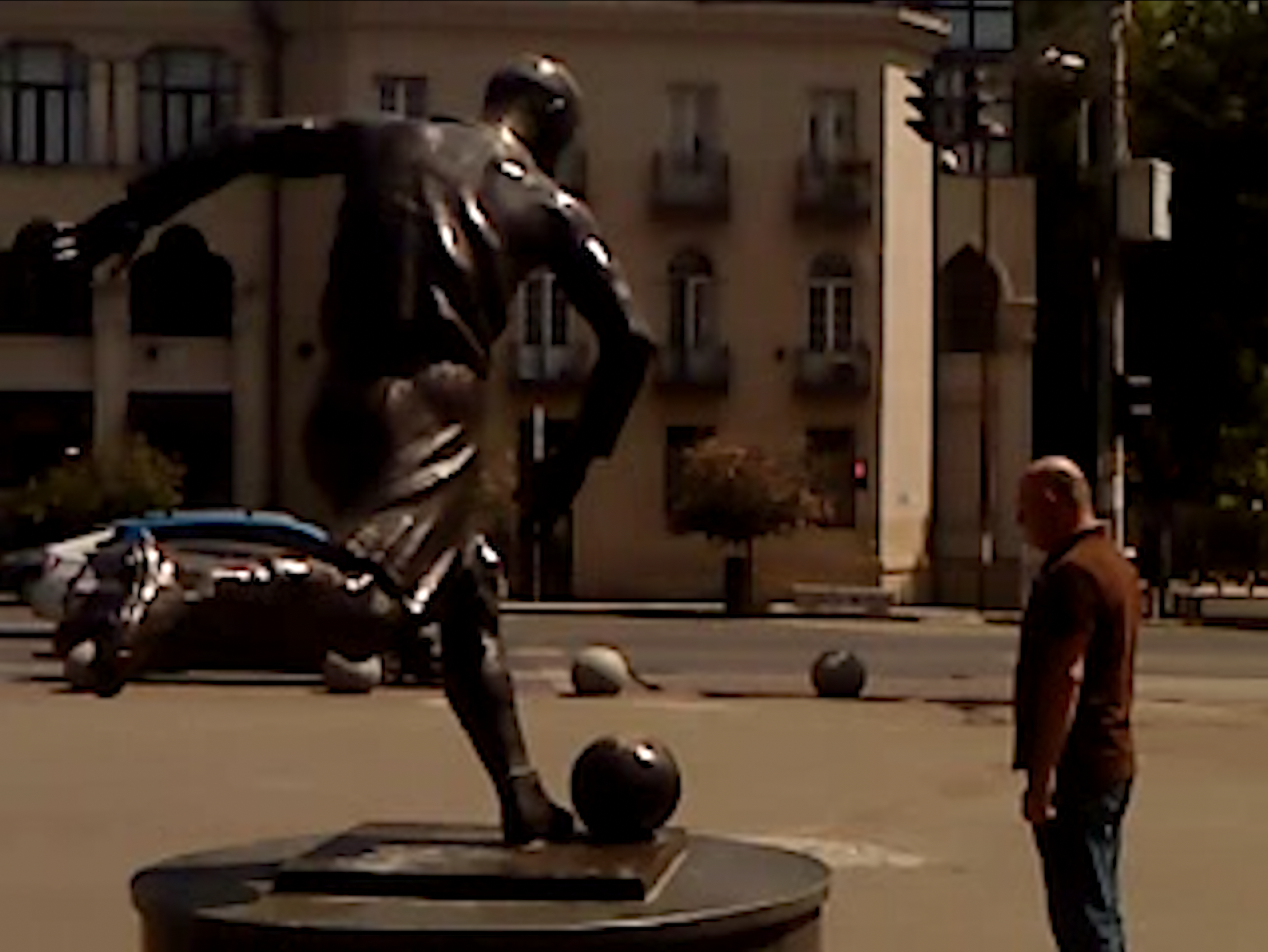
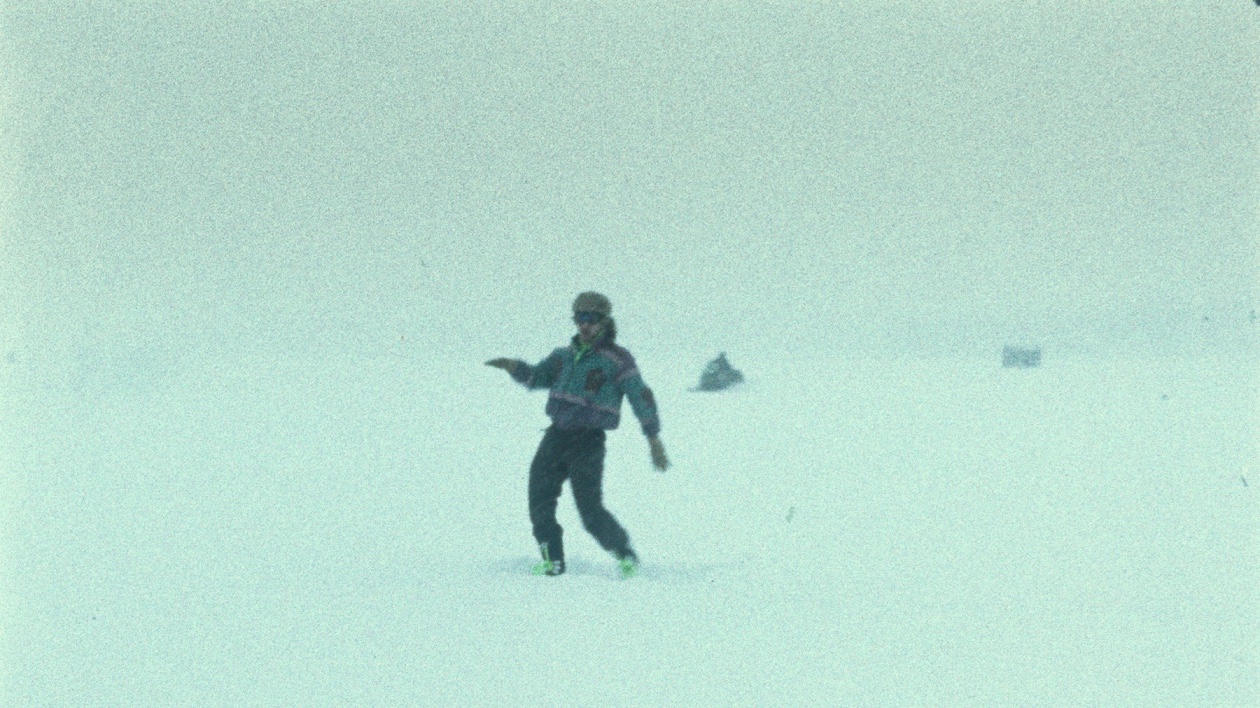
Chasing evanescence, on the search for someone, on the search for images, and a reunion through the realization that everything that you’re seeing has already been seen before, so basically, the realization of cinema itself. Dry Leaf, Alexandre Koberidze’s newest feature centring around a father’s effort to trace his sports journalist daughter’s footsteps through the football fields of rural Georgia, is self-admittedly about the endless and hypnotizing journey itself. Because it was shot using a 2008 Sony Ericsson, the inclination to compare the film with paintings is understandably strong. Just as people would link Hong’s In Water with Monet, the justification for a filmmaker to choose obfuscation over clarity for the film’s image is a goal of painterly abstraction. But for me, cinema is an art predicated on seeing; images of a film do not manifest themselves out of a void, like how you would apply paint to a canvas. Films are reflections and derivations of realities, an existing image imposed by an aesthetic will. Especially in this work, where perspective is essential as the whole premise is based on a continuous search, and the 3 hours are fulfilled by Irakli’s curiosity to look – a documentary instinct to observe local lives, listen to its people, and chart geographic nuances. The title Dry Leaf, referring to a football term where the trajectory of the ball is unpredictable, is a testament to the centrifugal nature of a frame, where one frame insinuates the proliferation of the hundreds of other possibilities of a sudden pan or a zoom; what’s in front of us is never finite.
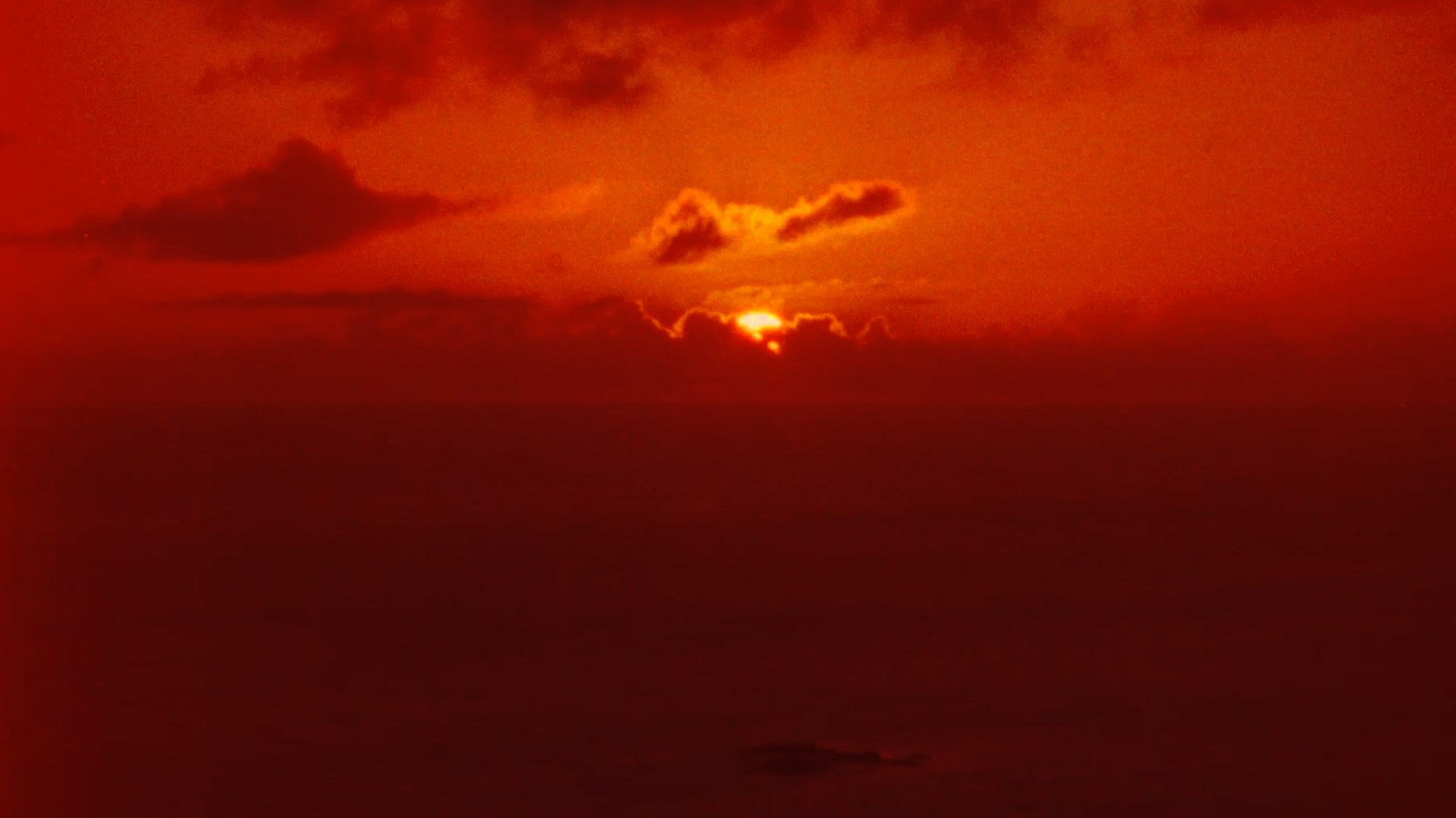
As digital images are always accused of smoothening the images and removing them of textures and tangibility with reality, the Sony Ericsson achieves the opposite effect by turning the pixels into literal physical objects themselves. Most evidently, there is one sequence where Koberidze replicates what he did in his short, The More I Zoom in on the Image of These Dogs, the Clearer it Becomes That They Are Related to the Stars, and establishes the linkage between two wide shots, two landscapes, by showing how, if you zoom in deep enough, you can reproduce the same image. Koberidze is thus laying bare the technological dependence of the medium that simultaneously shows a barrier between film and reality, while also digging into its underexplored capacity to show commonality amongst our world – the lowest common denominator of everything that can be filmed and will be filmed.
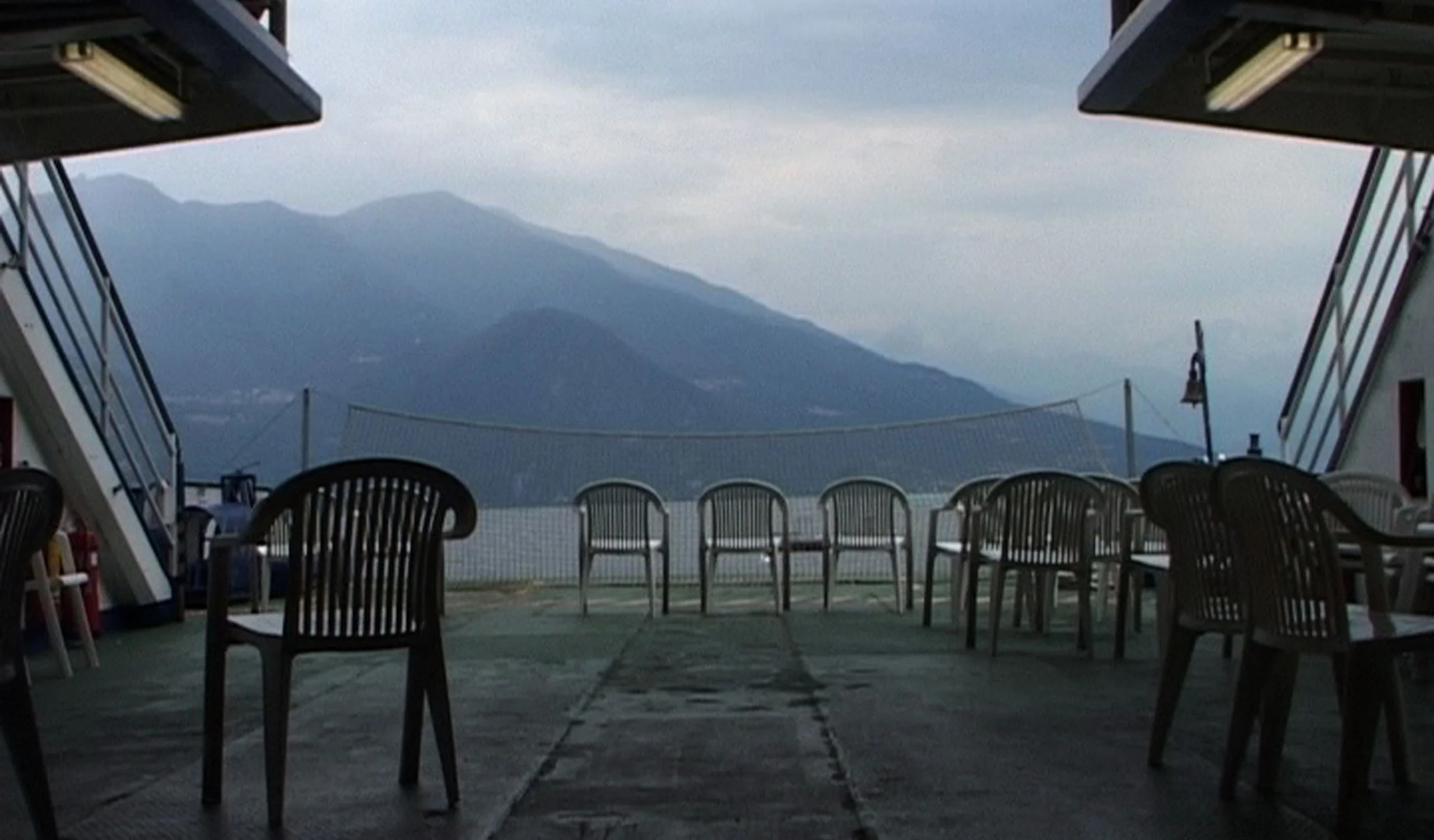
Despite the blurriness, Koberidze still carries his own sensibility, his proclivities for football, dogs, cats, and pigs, which remain consistent throughout his oeuvre, and this pertinent interest shines alongside his formal elegance when shots pan across landscapes and longer takes are interspersed with frames inhabited by animals. The shots themselves reveal a fascinating effect where physical features collide. Most notably when elements are projected onto physical surfaces, such as when shadows that look embedded with walls, glistening sunlight reflecting off a tranquil lake, and the car-washing scene that seamlessly shifts legible identities into sheer embodiment of Impressionism.
Although I would not coin these images as “the world filtered through nostalgia”, because all beauties are inherently nostalgic – once we witness it, we become afraid of losing it. Early in the film, Irakli draws a line onscreen and asks an offscreen character what it is, to which they respond “a stick”; Irakli refuted by calling it “a line”. Every colour and shape we witness onscreen depends on the viewers’ imaginations to thicken its meaning by applying their awareness of other things before seeing the movie. For how abstract the images become, we can still find something recognizable within them. So these frames themselves lay bare the leap of faith the audience takes whenever the light darkens in the cinema house. The invisible people in the film are a further extension of this concept, where Koberidze questions if a counter shot does not come with a visible person speaking, do we still believe in the power of the prior shot? The nostalgia is the inclination for us to believe and overcome the evanescence.
What I find so moving in Koberidze’s films, especially Dry Leaf, is their freedom. This is quite a generalized term and is often mistaken for flimsiness, and becomes an excuse for filmmakers to turn into demiurges. So what I am attempting to convey is how the film is never schematic and how Koberidze’s intuitions for movements and framing are always founded on a humanist approach instead of cynicism and nihilism, not leaving a place immediately after it becomes no use. Irakli surely understand this risk, and we do as well; it’s the risk of no film, no Dry Leaf. So, despite this being a film about lost communal spaces, its elegiac tone does not surrender to the inevitable. During this exchange between Irakli and a kid: “Where would you play after the football field is demolished?” “Everywhere”. The camera and its images become not a tool for mourning, but to reclaim freedom, the freedom to look at things as even if they’re departing, the freedom to look at things just because it feels right; holding onto a shot after the human exits the frame, not because you learned about Bresson at film school, but how you just want to look at that football field, that fallen leaf, that empty football stand for a couple more seconds before you move on.



Leave a Reply