Streaming for Free on Le Cinéma Club this week
In the opening of Rabah Ameur-Zaïmeche’s 2022 heist noir, The Temple Woods Gang, a shot pans through the beige-coloured condominiums of the Temple Woods housing project, each fenestrated with a contingent of small, rectangular windows. The shot ultimately lands on a distant sight of an amusement park, with a Ferris wheel conspicuously sticking up in the landscape. Near the end of the film, this Ferris wheel reappears in the background as one of the main characters, Mr. Pons, exits a building onto the sidewalk. The reemergence of this Ferris wheel, which otherwise carries no narrative significance in the film, is attributed to the keen geographic precision that Ameur-Zaïmeche has on the film – a small (only narrative-wise) background has the power to contain the character within this sense of space that persists despite how awry the situation has gone on to become.
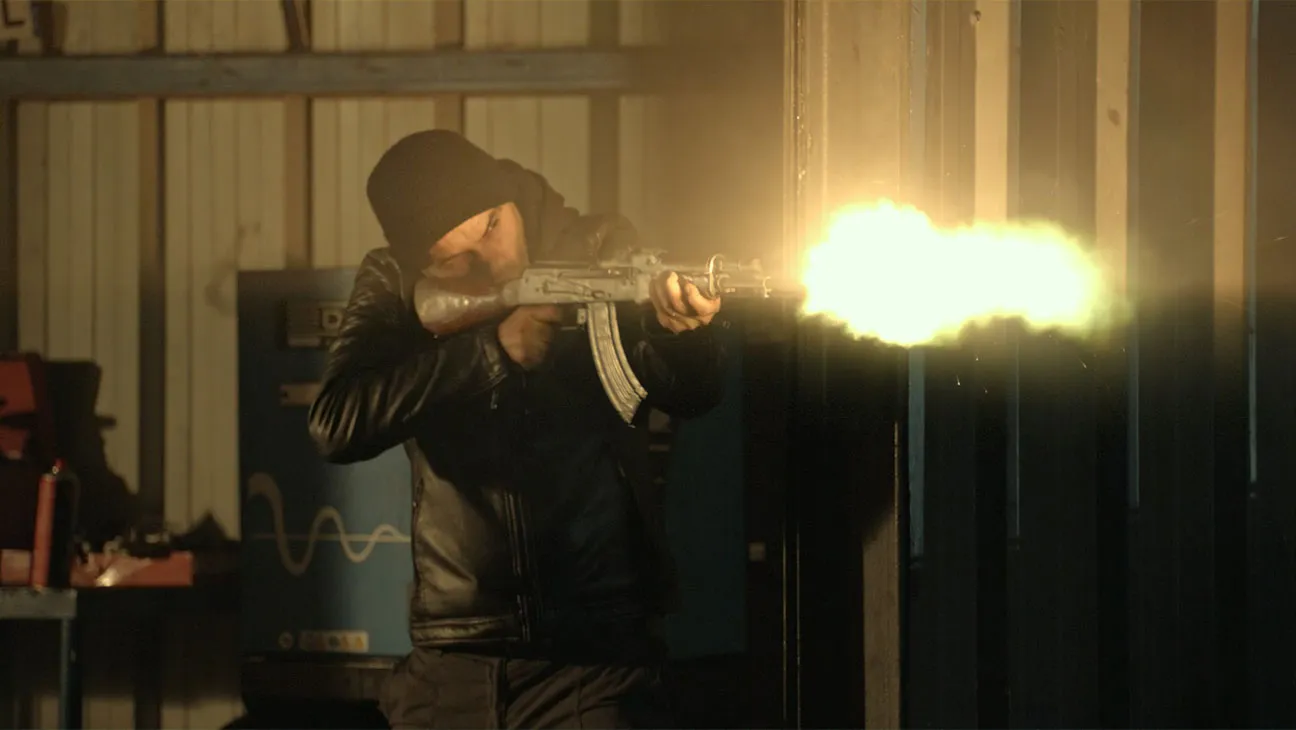
Lived-in details and a sense of place give life to this distinct blend of quotidian life and crime underworld. The film’s intensity arises from the way the compartmentalization of genre can be easily broken on the same plane. The first half of the film follows a gang of robbers who all live in the Temple Wood housing project as they plan and execute a heist of a van carrying a large sum of money in suitcases on a highway. The Temple Woods Gang is simultaneously a procedural film and a hangout film, two genres that not only do not mix but also feel rather opposed to one another, because the former is predicated on a tightness driven by tension, while the latter prides itself on the looseness of its narrative structure. The mix of the two would be jarring for those accustomed to the tradition of recent Hollywood thrillers, because the scenes Ameur-Zaïmeche has chosen to show are the ones cut from those movies’ scripts. Scenes of these robbers hanging out in bars, barbecues, or feeding pigeons occupy more screentime than their execution.
Throughout the film, there is always the feeling of “what’s next?” that stems from the offset of expectations typical of a heist film. What comes after pulling off a master plan? What comes after revenge? The film never basks in the joy or adrenaline of accomplishment; it simply moves on to the next scene. Instead, Ameur-Zaïmeche has a penchant for human faces, especially the cryptic, worn-down faces of middle-aged Frenchmen who all seem to possess capabilities beyond their nonchalant gait and the mundane environment they’ve chosen to surround themselves with. Whether it’s a hotel room or an apartment balcony, the setting lacks distinctive decor, as if the men who inhabit them are refusing to reveal their personal touches. These spaces are lit without the typical genre flourishes of dark shadows. Mr. Bons’s apartment, especially, is backlit and inundated with natural daylight, washing over the frame with a whiteness that covers the frame with a distinct feeling of emptiness on its own.
What occurs after the robbers have done their deeds should be experienced firsthand, but the idea of compartmentalization is yet again crucial to the film’s narrative flow and thematic interests. Mr. Bons, who we see in the opening mourning the death of his mother, is mainly distant from the film’s central plot throughout the first half; he is a roaming individual while the gang of robbers is captured as a collective. The subject that was robbed also signals division. They are framed in static shots, showcasing a kind of formality, while the robbers are filmed with handhelds, resembling cinema verite. In a play with physical appearance and physicality, Ameur-Zaïmeche crafted the most invigorating and funny dance that crosses the line between the two parties and deftly summarizes the cultural conditions of the community near Temple Woods housing project without exclamation.
The violence is both ephemeral and distant. As they occur, one is not shocked or thrilled by the intensity of bloodshed, but the silence of a cold human body that no longer exudes life. Narratively, dead bodies complicate the implication of images. The beginning and end both see Mr. Bons looking down from the balcony of his apartment. The arrival of an ambulance in the beginning vs. two cavorting children roaming the green grass of a park’s field. But after witnessing the middle portion of The Temple Woods Gang, one magically feels the same fear seeing these two disparate images – the fear of the disappearance of life. Suddenly, when a child runs under a tree and disappears from an overview shot, one might actually worry that they will vanish from the world.
One would hope that moments within the movie can linger even further, with the camera holding understanding on the sheer presence of these people: how they hang around one another, how they converse, sit in quietude, or contemplate the situation. The procedural structure still holds a strong grip on the film’s form, in that a destination still feels imminent, and the present shall never be fully indulged. The film also seems to be asking the question: in this day and age, what can without its invisible and imminent vendetta?



Leave a Reply