
Even before the opening title, Sara Dosa’s new documentary Time and Water announces itself as a capsule and a letter addressed to posterity, for the humans who will arrive maybe 200 years from now. The film is narrated by Andri Snær Magnason, an Icelandic poet and writer, and mostly consists of home video footage shot by Magnason himself or archival footage taken by his grandfather. Dosa, as the film’s author, thus lends the narrative duty – the source of the image and narrative voice – to Magnason and, in turn, has taken a role equal to that of a tailor, sewing images together, adding some more images shot by her team to create an overarching authorial voice.
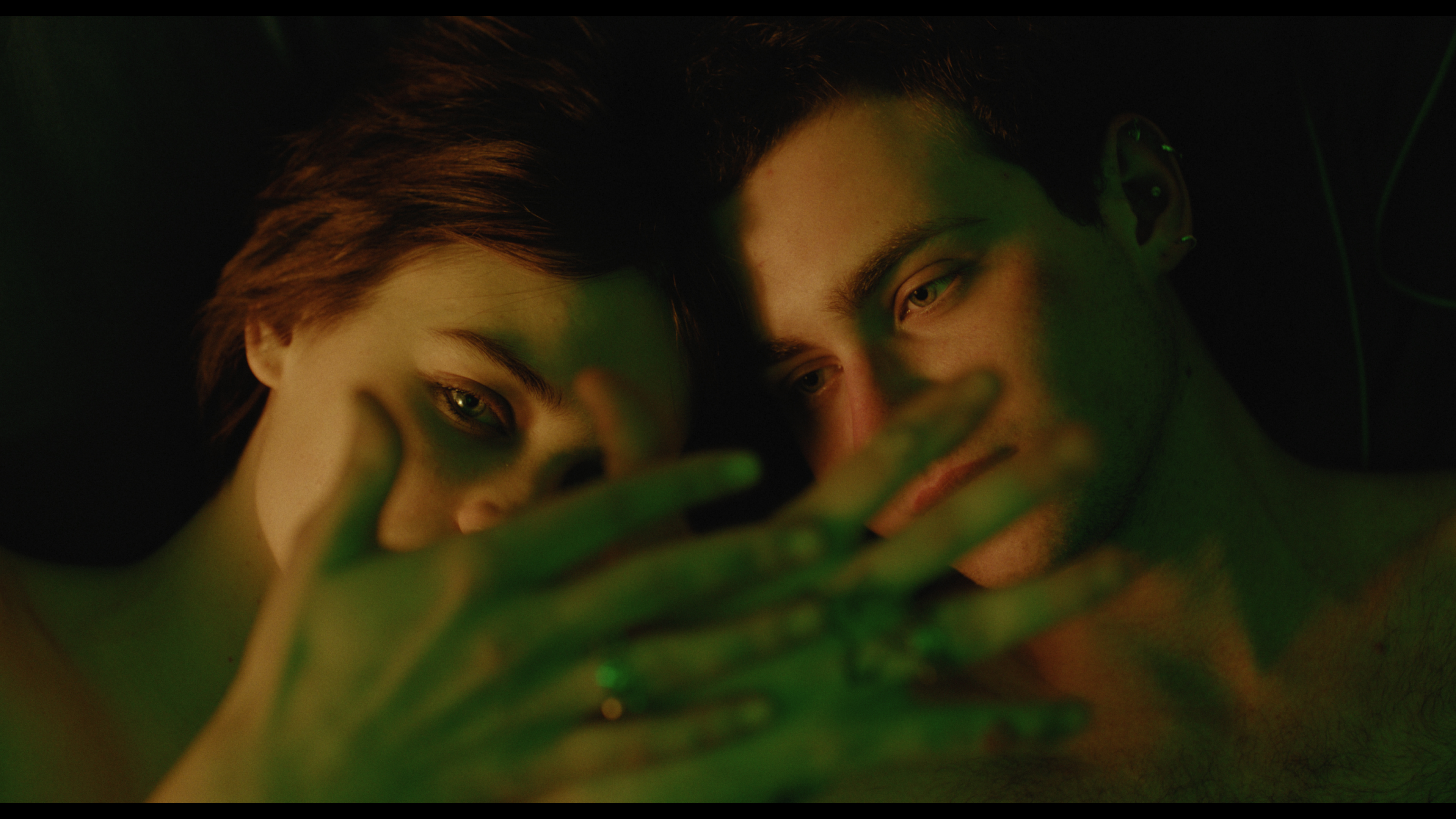
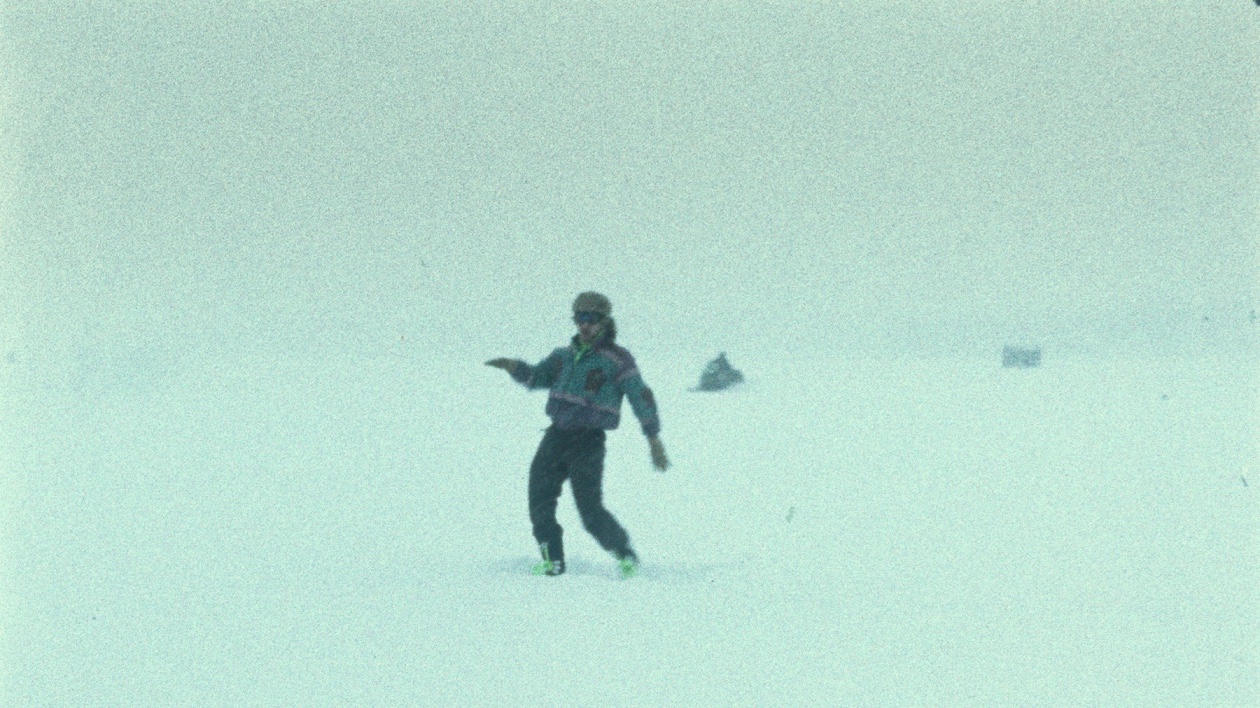
Andri Snær Magnason and his family are nominally at the centre of the film, but their depictions – children growing up and elders aging – are dedicated to the film’s broader sense of loss. Magnason’s reflection on his family history serves as a symbolic mirror for his elegy of the glaciers. Time and Water is a film of deaths and funerals. Bazin’s aphorism of cinema being used for the Mummy effect serves to simultaneously capture Magnason’s grandparents, who we’ve seen weathered by time – their wrinkles proliferate as the resolutions of technologies recording them enhance – and to capture the Ok glacier that has lost enough of its body mass and become too small to be considered a glacier. Magnason is assigned to write an obituary for Ok, and the framing device is a prerecorded death note. As a filmmaker himself, Magnason uses footage that varies between home video recordings of his family and professionally shot footage from an official documentary angle, as well as interviews with his grandparents in 2017.
Definition by measurements, the resulting number dipping below a threshold that leads to the disqualification of an identity. Humans define the existence of others through a system of empirical measurements, categorization by numbers that are cold and logical. Humans define personal existence through more sentimental attachments with what surrounds us: other humans, sights, and objects. Magnason, through his voice, argues whether the glaciers have entirely vanished from the face of the Earth due to their shrinkage, or whether they can stay with humanity for eternity in other forms, perhaps existing in the container inside Iceland’s Library of Water. Meanwhile, he reconciles his sense of belonging amidst the loss of those whom he holds dear. He may remember his grandparents by the glaciers, but what if those have also disappeared?
The nouns divided by “and” in the title bifurcate into two main directions the film is taking in tandem. Time: completely submerging the film in Magnason’s perspective. Water: science, enticing the viewer with the wonder of the natural world and the science behind it all.
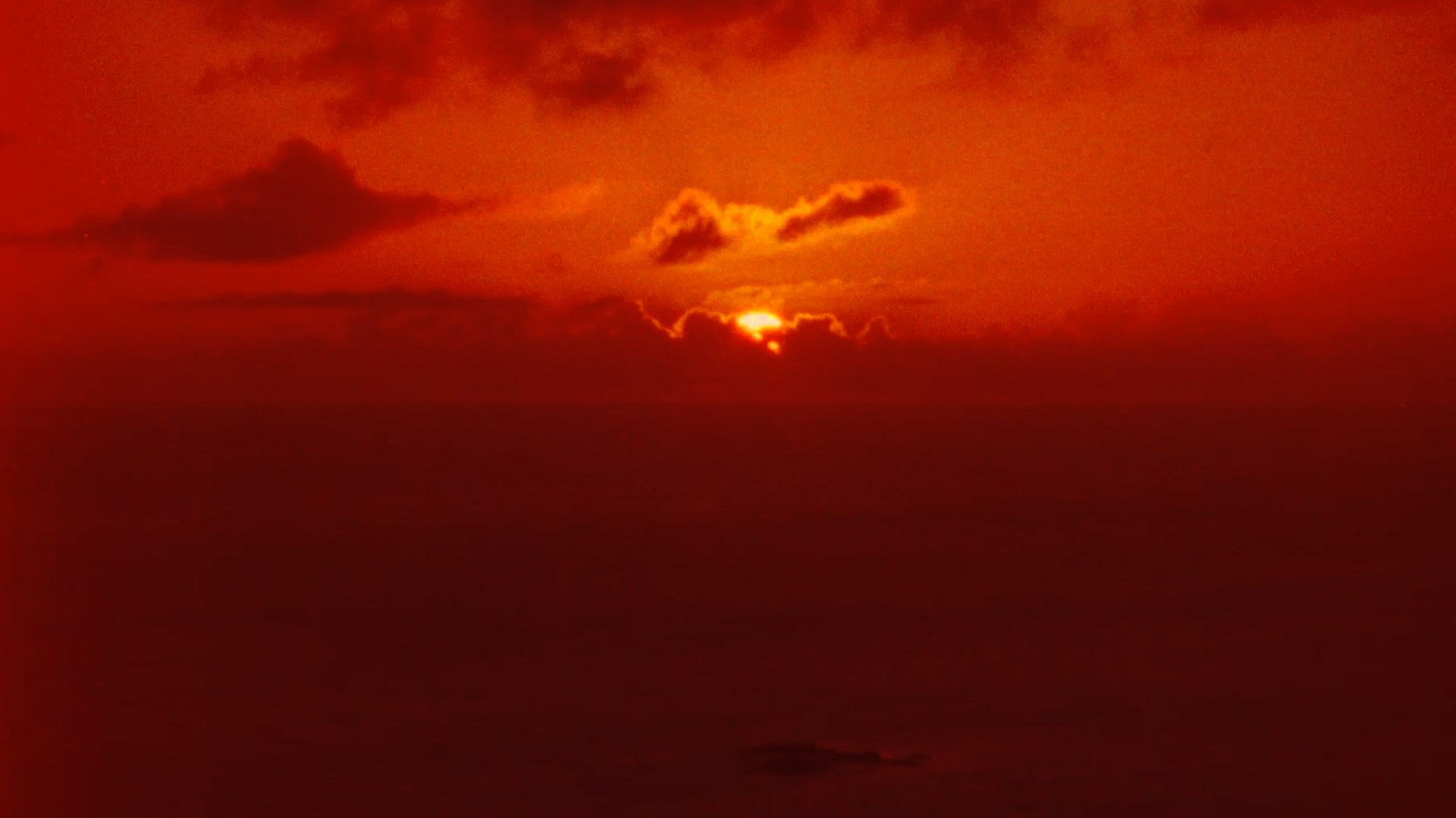
This is where Sara Dosa’s lack of clarity hinders the film. The film travels both paths – there are some intriguing chapters about the history of glaciers, such as the presence of trees beneath them, and cute moments of interactions between the family scattered throughout the home video recordings – but does not commit to either. In Fire of Love, the love and exploration of Katia and Maurice Krafft are also given a memorial service through the archival footage they left behind. Dosa’s main role was selecting Miranda July as the narrator and assembling the footage. Emotions, oversaturated into mawkishness, are unmissable in Dosa’s final output. Sentiments are what the film loves the most. The framing device would make more sense in written form, but faces some major issues in cinema. For instance, Magnason brings up the mummy effect – a Bazinian concept that’s basically inherent to the question of “What is Cinema?” – his words mean something as words because they leave those who hear or read them contemplating this abstract and emotional concept in their minds. But the mummy effect in cinema is concrete and stands for itself; the mere existence of an image savours it from time in physical form. The problem lies in how the power of these images, whether shot by Magnason, his grandfather, or Dosa’s cinematography team, is reduced in effect by the layering of artifice – the narrations and “poetic” underpinnings. The images that Dosa used to accompany Magnason’s narration – the ones he did not shoot or provide the film with – are mere visual symbolism incorporated to accompany Magnason’s narration, instead of existing as filmed entities on their own. When Magnason mentions the glaciers being sacrificed for consumerism, we see stock images of black fumes, heavy machinery, and oil rigs. Those images do not come from a personal perspective, but from an arbitrary official source that emerges to send a message. Sentiments do not transcend time, and whether images that do can no longer be just images, both become stranded in a timeless purgatory. So, despite Magnason speaking some truths and offering some heartfelt statements, the movie ultimately betrays its framing device, and it will remain a reactionary device for the present.
In the end, we should expect more from archival films than the taken-for-granted relationship between old footage and memory. And even with existing filmed materials, let’s have cinema as a form of invention instead of indulgence, shall we? Having loud string music blasting over a montage that captures the growth of children and the aging of seniors in seconds can be moving, because we see the long-term effects of time in a short period. But what else? Why does the music also abruptly stop when the film cuts to a wide shot of a glacier? Should time and water only be obtained through meaning, and not serve some surprises obtained from the cinematographic truth obtained by an astute observer? There must be something concrete, yet simultaneously indecipherable, behind the intention of the images and the way they connect. Perhaps the images taken by Magnason and his grandfather did, in fact, open the portal to those truths, but it is Dosa, the final author helming the film, that circumvents those images from breathing through montages that sedate them.



Leave a Reply