The depiction of Death has always been a key thematic interest for cinema. It extends beyond narrative to the physical manifestation of death onscreen as mythical, living iconography, personified by human actors, visible to the eyes, and interacting with physical living spaces. The chess duel between Antonius Black and death as a Scandinavian dude in dark cloak is one of the most iconic images in cinematic history, and one can find trace the legend further back to Bergman’s influence, Victor Sjöström’s 1921 silent masterpiece The Phantom Carriage, a film centred around a man who did not appreciate living enough and died at the worst possible time to obtain the worst job ever, carrying Death’s Chariot for a whole year.
In Nobody’s Violence, Denis Côté’s newest feature, Mira, played by an androgynous, leather-jacketed Larissa Corriveau, always in jeans, is not necessarily a direct agent hired by Death per se, but she is hired by someone, a mystery to us initially. As we gradually learn through the film, she is a human being with real emotions and attachments. Yet, in the first 30 minutes, where we first learn what her job entails, a travelling agent delivering assisted death service, where she is welcomed into homes of strangers across rural Quebec who willingly – despite sometimes hesitantly – drinks the potions of death that she hands over, her fleeting presence that comes along with the job – always being involved in this intimate, once-in-a-lifetime moment, but always leaving straight after without the expectation of any emotional residue – makes her somewhat of a ghost, an entity that doesn’t feel fully present in the moment, but is somehow there. This sense of palpable oddity allows her physical presence to oscillate between human and the iconography of Death herself that the clients welcome or repel in unexpected and natural ways.
The depiction of women with strange jobs is no unfamiliar ground for Côté. In his 2023 feature Mademoiselle Kenopsia, a woman (also played by Corriveau) is asked to homekeep a giant mansion alone; as it progresses, the film becomes a psychological battle between Kenopsia and her solitude, but also a physical battle against large, empty spaces, from which stems a series of imaginary and hallucinatory scenarios. The most intriguing part of Nobody’s Violence remains the simple premise of watching Mira perform her job. Unlike Kenopsia, where her main task deals with repetition of the same task and fighting boredom, which amounts to mentally inventing a “new” that doesn’t exist in reality, Mira’s job requires her to become an emotionless agent overseeing moments of the intensely personal – essentially demarcating herself from the pain she witnesses through the mental gymnastics of professionalism.
“You have an interesting face,” remarked one of the elderly who received the special potion from Mira. Despite all of her clients being paying customers, visited by Mira at will and welcomed with open doors, there is always a palpable tension between their acceptance and brief hesitancy before the job is actually done. Sometimes they seem to welcome the moment with grace, but sometimes they look at Mira seemingly asking for mercy, like they are not the ones who asked for the service. The trickiest part is always the family members who often meet this moment with anger, denial, and refusal; it seems like dying is easier than the person who has to live on to carry the burden. Côté’s form emphasizes this tension: the film never shows the process of those people dying; the camera rather focuses on Mira’s face or her leaving the place. Through those close-ups of Mira and thanks to Corriveau’s expressive face, we understand the burden.
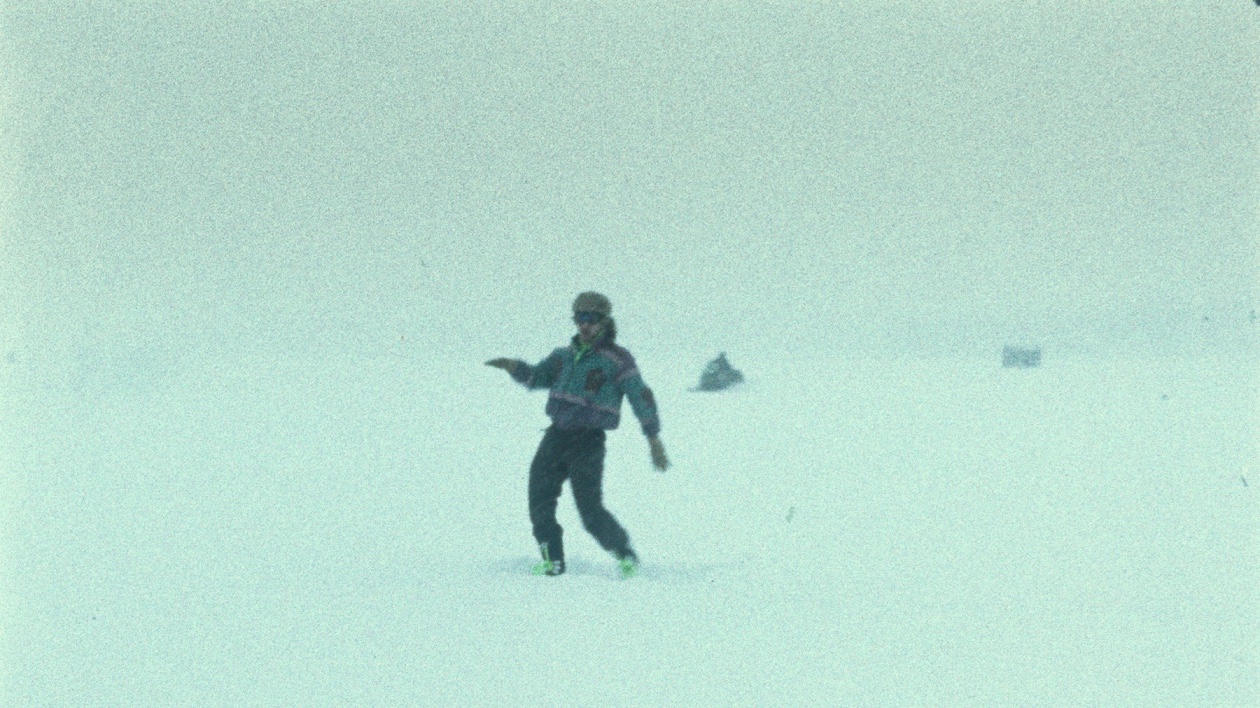
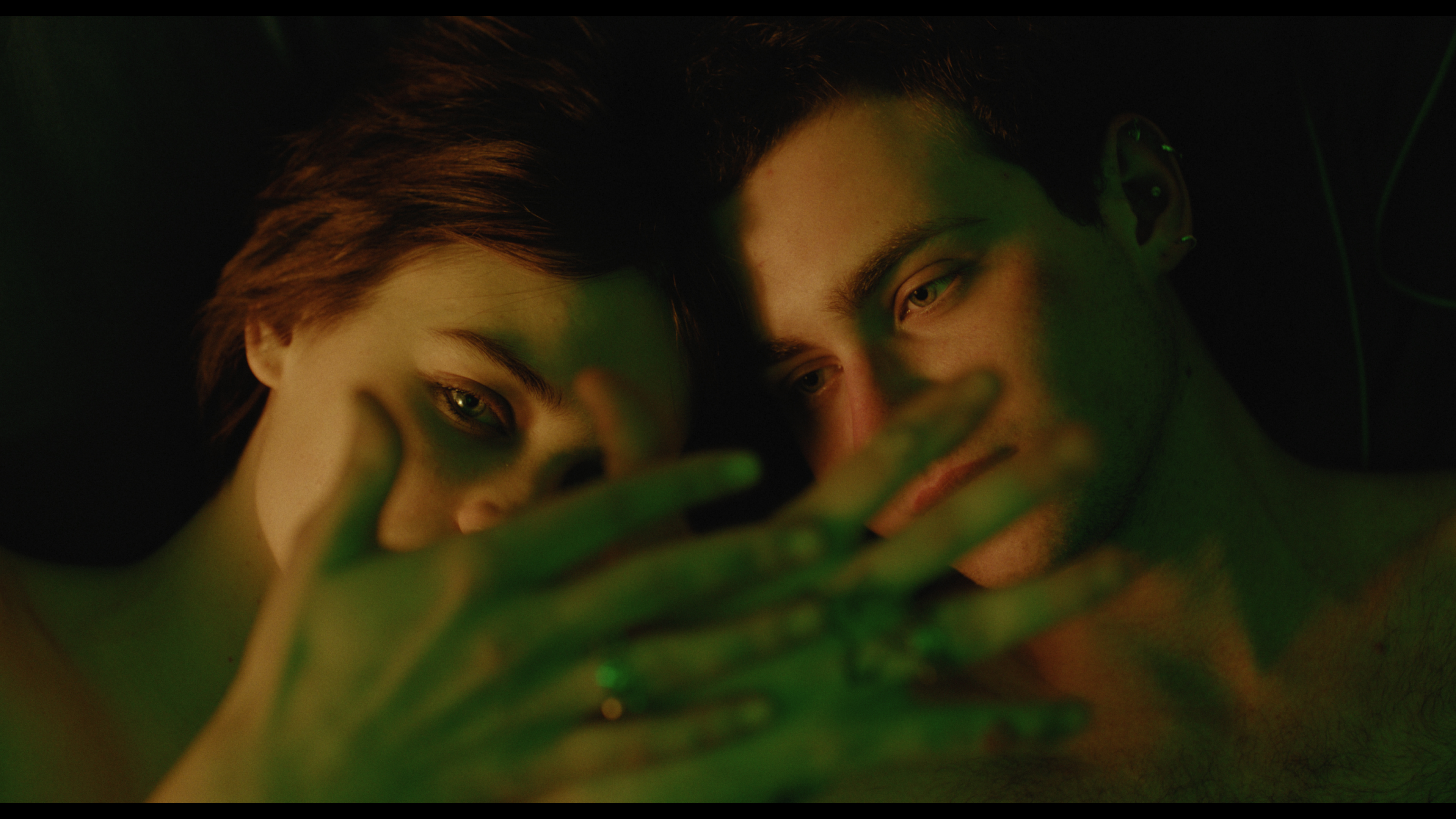
However, Côté is not satisfied with the heavy subject at hand, or at least he can’t quite comprehend how to dramatize the central tension further beyond the gruelling nature of the job into a narrative. Mira’s journey of solitude is complicated by two men living on the margins, Pierric (Xavier Bergeron) and Ludo (Philippe Rebbot), both hedonistic figures who become crucial to the shifting perspective she has on the job. She met Pierric during a wintry outdoor rave party. His electrifying “fuck everything” attitude and blabber-mouth juxtapose Mira’s taciturn and monotone daily routine. He marches into the film with dances and briefly transforms it into a romantic hang. Ludo is the man who sends Mira on her jobs, and unlike Pierric, his smiles and nonchalance represent his callousness toward the emotional heft carried by his business.
Côté’s most daring choice – but also an odd and tedious one – is to mask the film’s serious subject matter with a kind of stylistic superciliousness, submerging the film into the attitude of Ludo. As the mystique of the initial 30 minutes wears off, and the season transitions from winter to summer, the tonal shift is accompanied by positioning Mira as just an emotionally fed-up employee of a cult/company hybrid as she returns to a cabin in the forest inhabited by Ludo and his fellow hedonists. Despite the heavy analog textures, Côté’s camera resembles the style of a mockumentary, with handheld, long lenses, and wobbly zooms. The construction of scenes intentionally disregards continuity by including outtakes where a character performs the same gesture in the same shot, repeated and broken up by a cut. It creates an illusion by directly revealing its apparatus. For instance, in the opening scene, we see Mira follow one of her clients into a car; the car door closes, but we can clearly hear what is going on inside. But after Mira leaves the car, we don’t know anymore. So it’s clear that Mira’s mic’ed using a Lavalier microphone that allows private conversations to be recorded in documentaries.
The switch between serious drama and the parodic break of continuity that edges into absurdity reveals the mischievous nature of Côté’s filmmaking, but one that never comes into fruition as he never finds the shape of the film’s drama. After Mira returns to Ludo’s cabin, the film enters familiar, meandering territory that neglects the more interesting nuances: why does this organization exist? How does the transaction of money work? How does one become involved? In an interview with The Hollywood Reporter, Côté has mentioned the screenplay comes from a place of extreme personal experience, when he was undergoing kidney surgery and uncertain if his life would continue. With that, he also declines to associate scenarios within the film with any real-life policies, mainly the MAID (Medical Aid in Dying) law passed by the Canadian Government in 2016. The place of extreme personal does not usually correlate with a total vision, as it in fact distances the artists from the world and places them in a detached imaginary land. I find it important for Mira’s job to be grounded by real-world implications, for the sake of giving her morality a root and making her a character of our world. In this film, every character around Mira feels more and more like they are only there to serve the progression of the plot instead of a real person that we can meet and understand. When Mira goes into the houses of her clients, we understand the specifics of their respective worlds – their religion, their living spaces, their languages – but for the depiction of the hedonists, the film walks steadfastly into trite mannerisms. For the depiction of milieu on the margins, this feeling is detrimental.




Leave a Reply