
The treat of living in the era of online streaming and pirating is that one’s viewing habits are no longer constrained by what’s fed by big theatre chains and studio offerings; so many alternative paths can be taken, cinematic adventures ensue, and with that come a slew of unanticipated surprises. Case in point, today I watched two films that I thought were completely unrelated: Angela Schanelec’s Das Glück meiner Schwester (My Sister’s Good Fortune) and Nelson Yeo’s 好久不见 (Dreaming & Dying). Decisions to watch these films came completely on a whim; it’s mostly because I was looking forward to viewing their newest features soon, and these two films just happened to be available to me. Yet shortly after starting the second film, Dreaming & Dying, I realized some elusive connections between the two. First and foremost, these are the feature debuts of the respective filmmakers, Schanelec in 1995 and Yeo in 2023, and they welcome two idiosyncratic voices. When I say idiosyncratic, I’m not putting it totally as a positive: in the former’s case, it’s the establishment of a type of narrative possibility which she expands on in her later works; in Yeo’s case, I don’t think I necessarily appreciate the direction that he decides to take his film. Why exactly? Well, here comes the second coincidence: both features revolve around a love triangle, and the way the two filmmakers choose to expand on this central premise shows how narrative can often serve only as a starting point for cinema, from which the proliferation of possibilities for images follows.
My Sister’s Good Fortune
I began laughing towards the end as I realized Schanelec had taken a soapy rom-com premise, made it her own thing, and turned it into a film about unknown absences. By “unknown absences, I mean that the central conflict never fully becomes a total confrontation among all 3 principal players in this love triangle. The film begins by jumping directly into the central conflict, but only later, without any exposition from the film itself, does it reveal that the two girls Christian is in love with are sisters. We are always in the midst of witnessing two people in the process of reconciliation, dealing with the aftermath of a decision, or refusing to reconcile with the emotional turmoil that emerges from the situation.
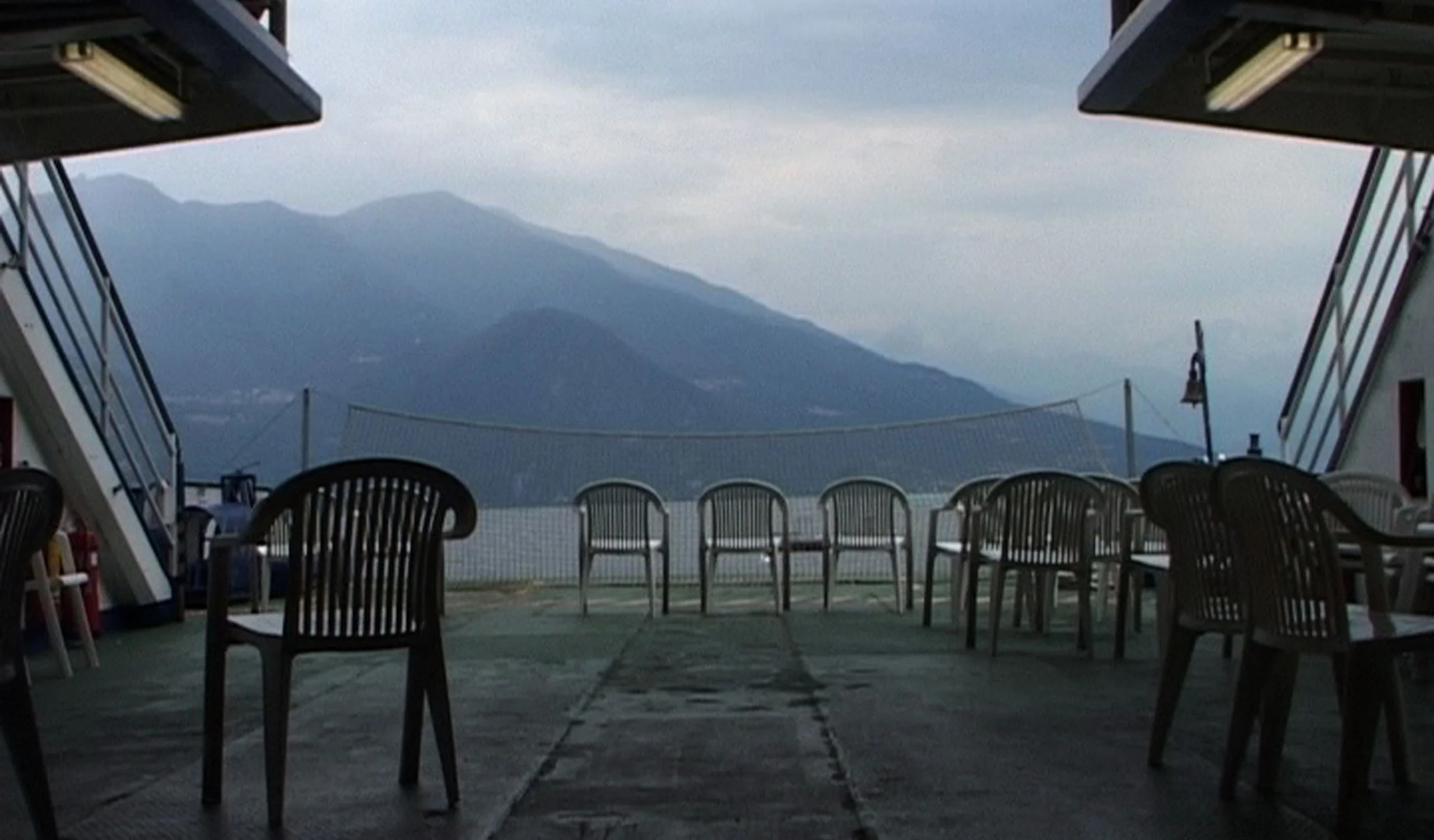
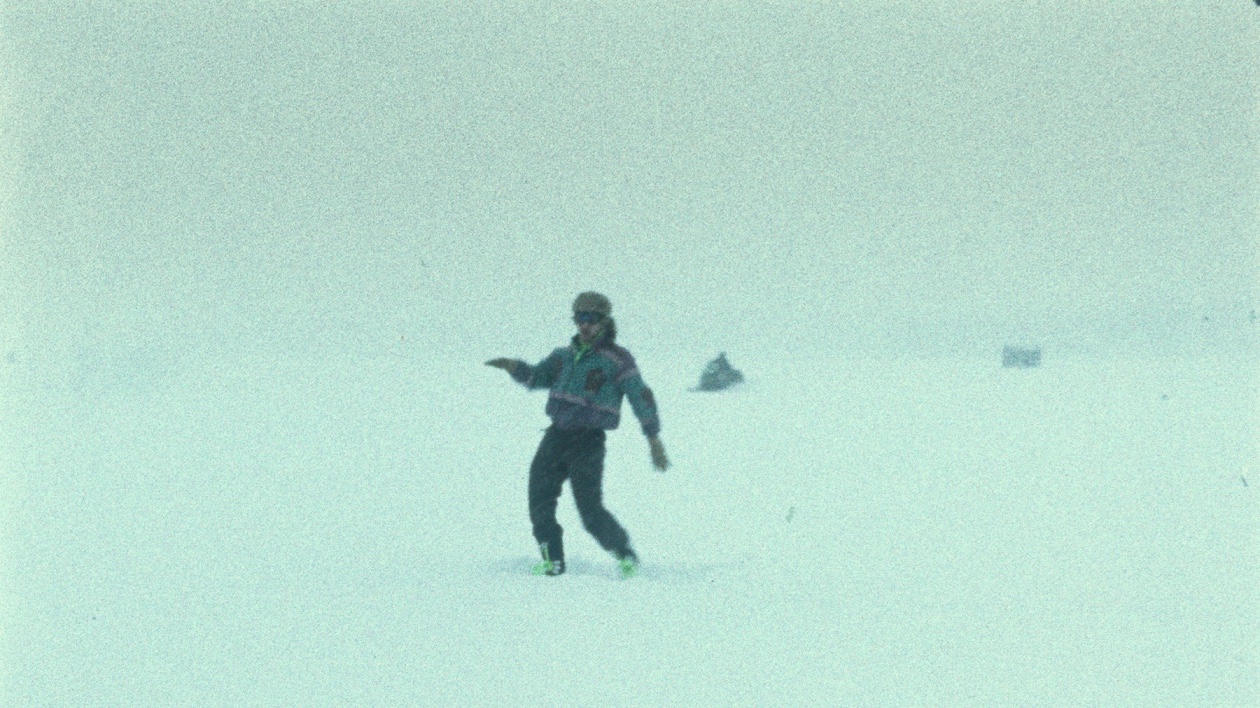
There’s never a sunny day in Berlin. The skies are always grey, and Schanelec leverages this atmosphere to depict a specific feeling of wintry ennui – the way characters clench their coats, the vapour rushing from their breath into the cold air, the empty tree branches. Schanelec also enjoys filming absences. One can see how the more Bressonian moments in her recent films, I Was At Home, But and Music, originated here, in the way a frame holds for a few more seconds after the bodies have departed.
Schanelec also excels at a rare accomplishment that I would call the totality of a scene, where every detail within the frame is precisely planned to the point that it allows the elements within it to regain their natural order, so that the moment onscreen attains complete freedom despite the control. The best example of this can be found in many films by Otto Preminger, or Jean Renoir, or in every frame of Vincente Minnelli’s Some Came Running.
There are smaller instances of inspiration here, such as the crepuscular sunlight touching Ari’s gossamer hair, or the bustling sound of traffic during the exterior scenes, or generally how smoking is incorporated, and they are so worthwhile for a debut, but the one scene that exemplifies what I describe is when Christian and Ari are sitting in a cafe and encounter an old friend of Christian’s. While Christian is writing down his contact information on a note for the friend, we see Ari sitting still, her eyes looking up and down, rapidly switching her gaze between Christian and the friend. There’s a rhythmic and playful absurdity in how Anna moves her eyes, to the point of introducing a brand new narrative into the frame and shifting the balance of the scene itself. What does the friend look like to make her do that? Is she interested in him? Or is she trying to divert Christian’s attention? At this point, our eyes are no longer sure which central action it should pay attention to; is it Christian, who is writing in the forefront, or Ari, who is attentively observing with her eyes? The way the camera pans to the friend, whose face was cut off by the frame during that scene, after the couple departs the cafe may provide an answer, but it’s not a settled one. At that moment, the frame feels totally alive.
Dreaming & Dying

I’ve only heard of Nelson Yeo after learning his newest film, 明月共此時 (The House on the Moon), will be premiering at Locarno this year. The film begins in a Hongian mode with a simple situational set-up on the beach: a chance encounter between the three main central players – who were old schoolmates – that leads to a conversation full of awkward pauses. A woman looks far out beyond the shore; we don’t know what she’s looking at. Gradually, she walks along the shore and sits next to hand-shaped statue; there, the camera zooms out as a stranger approaches her from behind and asks if she remembers him; before she has the opportunity to fully comprehend the moment, the man gets a slap on the butt, which the camera zooms out again and reveals the attacker to be a former classmate of both and the husband of the woman.
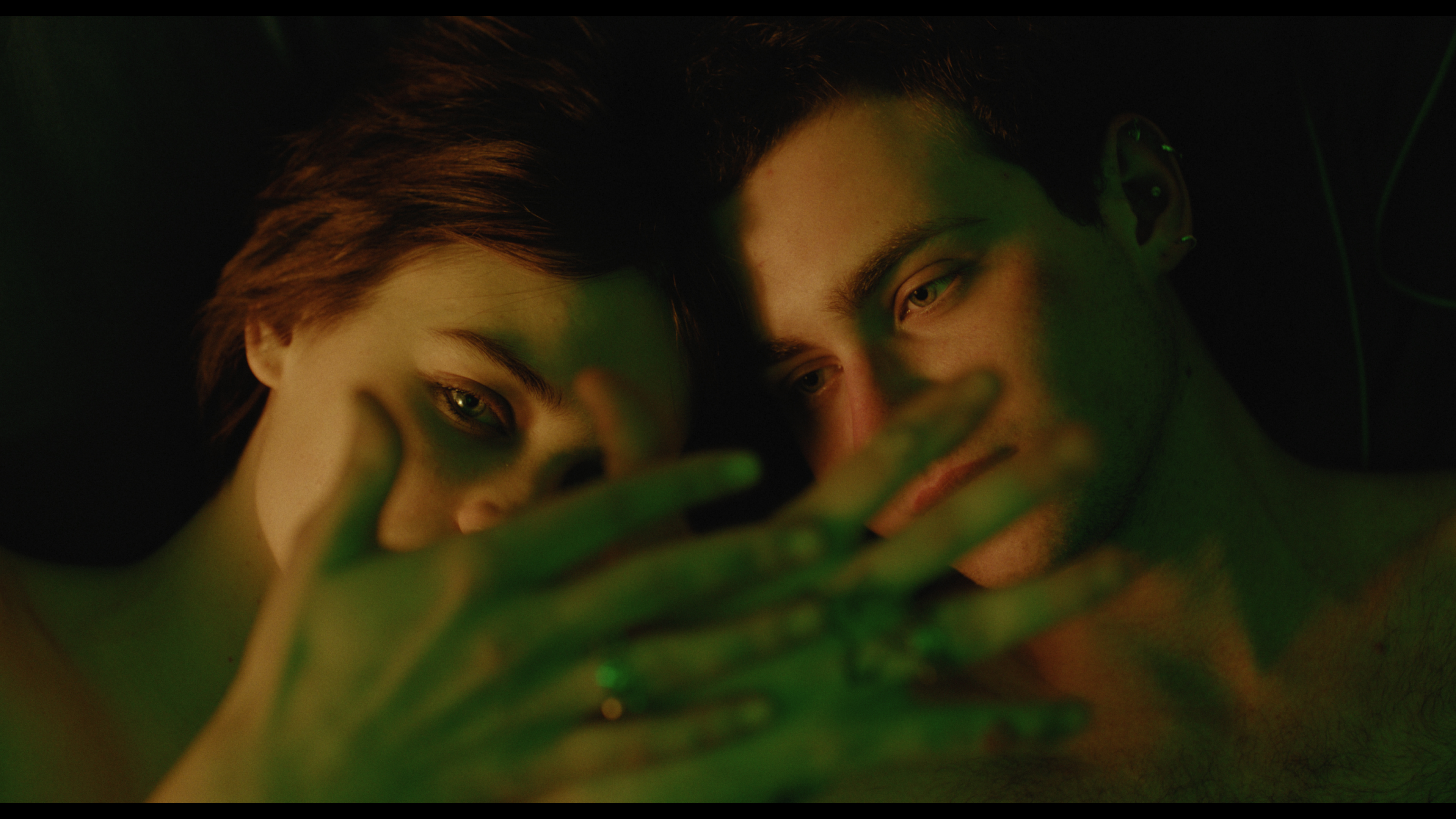
The 15 minutes following this set-up, along with how it takes place within a limited number of locations (the beach, a swimming pool), and how the camera set-ups are usually based on a series of zoom-in and zoom-out – although with a more constant pace than Hong’s zooms – suggests a rather stripped-down classmate reunion that shapes the situational comedy. However, a twist that occurs somewhere in the middle of the film, revealing one character to not be exactly who we thought they were, not only shifts the dynamic in how we, as an audience, perceive the triad but also transforms the film’s tonal register into a completely different territory.
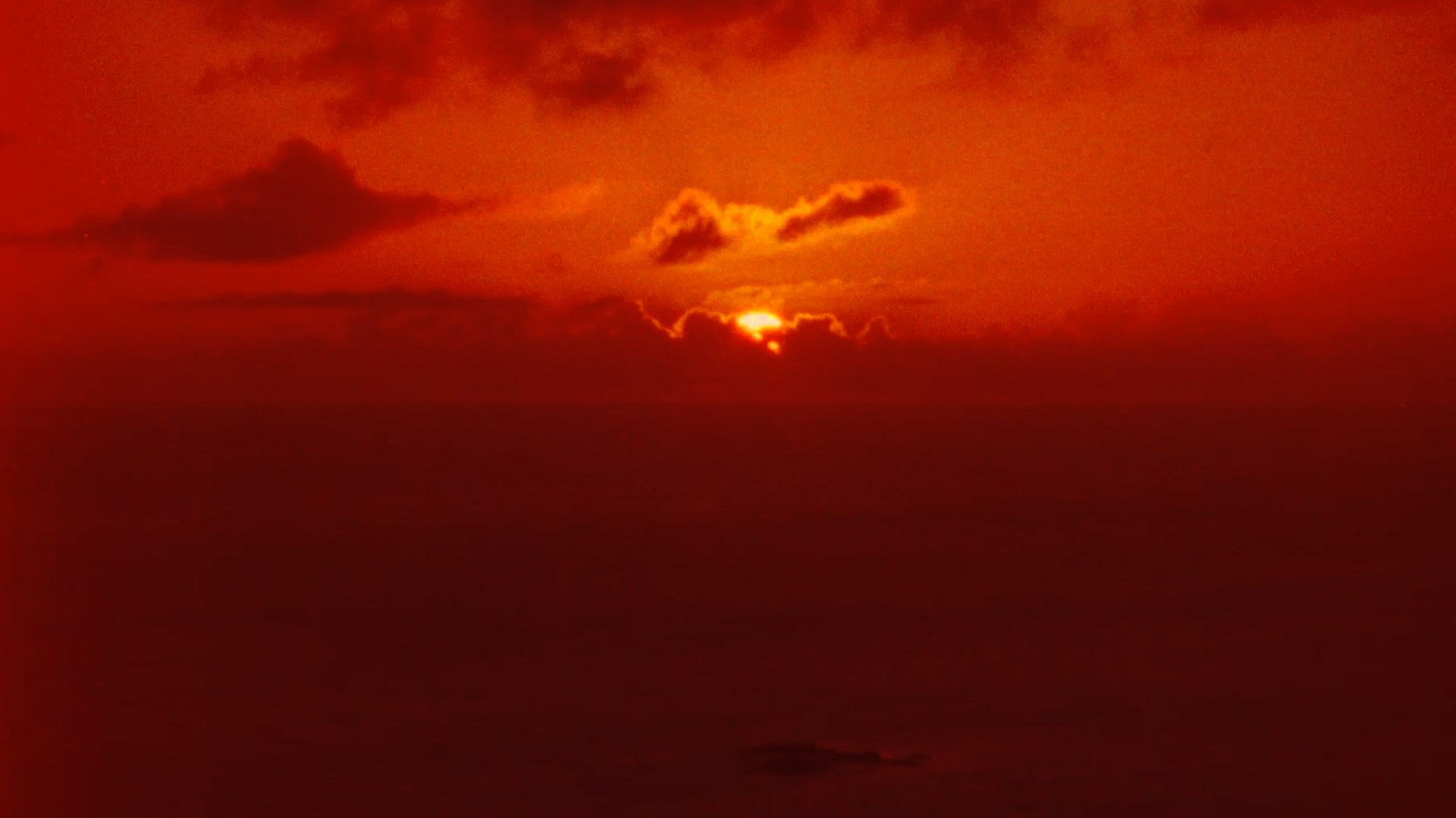
Different from Schanelec, who still structures her film’s narrative around the central love triangle, Yeo seems to treat the relationship as a jumping-off point for ideas more rooted in myth and the absurd. The “Dream” in the title allows the film to transport more freely across different locales. In complete contrast to the confines of the opening scenes, one can no longer tell where the characters are actually inhabiting, where they will be in the next scene, who or what they will be speaking to, or whether any of these are real; it doesn’t help when sometimes the extreme long lenses blur a majority of the frame. The visual motif of water – the undulating waves dominating characters’ backgrounds, the plunges into the murky fluid during dreamlike sequences, a swimming conspicuously dominating a solid portion of the frames – find their answers through the narrative transformation.
Now I begin to understand why Yeo’s new feature seems to be mixing so many genres: he had already made a clash of comedic, historical, and supernatural elements on a smaller budget, with less ornate production designs, as a proof of concept. But the shift, which I will not reveal, completely jettisons the dramatic tension – which was already subpar due to wooden line deliveries and a rather junky modulation of conversation – to favour a kind of illusive openendedness that I personally find to be an annoying recent film festival trend.
This trend – at least for East and Southeast Asian films – seems to arise from the influence of Apichatpong Weerasethakul and Tsai Ming-Liang. While I haven’t seen enough of Apichatpong to tell, what makes Tsai’s outputs throughout the 90s and 00s major was never abstraction, but rather a total understanding of the physicality of his actors – Lee Kang-Sheng especially, who will appear in Yeo’s new film – that guides his understanding of the spaces surrounding them. Physicality, while it can be found in several elongated sequences during Dreaming & Dying, never seems to satisfy Yeo as a filmmaker – he needs more cues such as ambient music and abstract montages that smooth those moments into metonyms. Consequently, Yeo’s solid sense of composition is nullified by the fact that scenes never cohere as a whole.
Schanelec doesn’t seem to have this problem. As a former theatre actor, she has repeatedly stated that her foray into cinema is due to cinema offering a kind of expression that theatre doesn’t. After seeing My Sister’s Good Fortune, I strongly sense this expression, contrary to rhetoric around her films being slow cinema, is the possibility of the cut. Schanelec’s découpage is noticeably sharp, with cuts that reveal completely different angles and perspectives on the characters and how they are positioned against each other, whether through close-ups or slanted angles on the actors’ faces. It often serves as a violent rupture of her static composition. So, her understanding of her actors’ physicality is accompanied by an understanding of how their emotions and the moment are connected to spaces around them. to connect moments.
So, what I’ve written may just seem like an appraisal for Schanelec and a pan for Yeo. But what I would like to argue is how viewing different films, no matter how related they are to one another in genre, nationality, language, or year, can help to recontextualize the other. I am eager to see Schanelec’s My Wife Cries whenever I get the chance to, but I am also curious to see how Yeo’s voice develops in The House on the Moon. Through that comes an axiom that I’ve always believed: films are more related to each other than not. The avant-garde is different than commercial films because of their production methods, but one doesn’t need to segregate them when discussing form, or how a single moment manages to inspire. Happy viewing!



Leave a Reply