
When I was in elementary school, my science teachers would often put on one of those documentaries that explained the effects of global warming and the urgency of environmentalism and climate mitigation. My childhood memories are filled with the voices of British men narrating over images of large groups of walruses stranded on an island surrounded by melting icebergs, birds standing in water with their bodies covered in dark, oily pollution, and temporal maps showing the rapidly decreasing size of the Amazon forest. But at the end of those videos, as if mandated, they always leave us devastated viewers with a somewhat uplifting and galvanizing message: if we collectively take action now, it is not too late, yet. Those images are now a decade old, and I still remember to recycle my garbage, limit my use of plastics, and turn off the lights whenever I can to contribute the bare minimum to the motto of collective environmentalism. But listening to the news of average temperature rising, seeing and smelling the smoke from wildfires in Ontario when I step out of my apartment building, my senses actively question if those actions, and those phantom promises ever had a chance to concretize into results through time, or were those messages at the end of those documentaries only there to provide a false sense of hope that one’s actions can overcome the immobility of societal change.
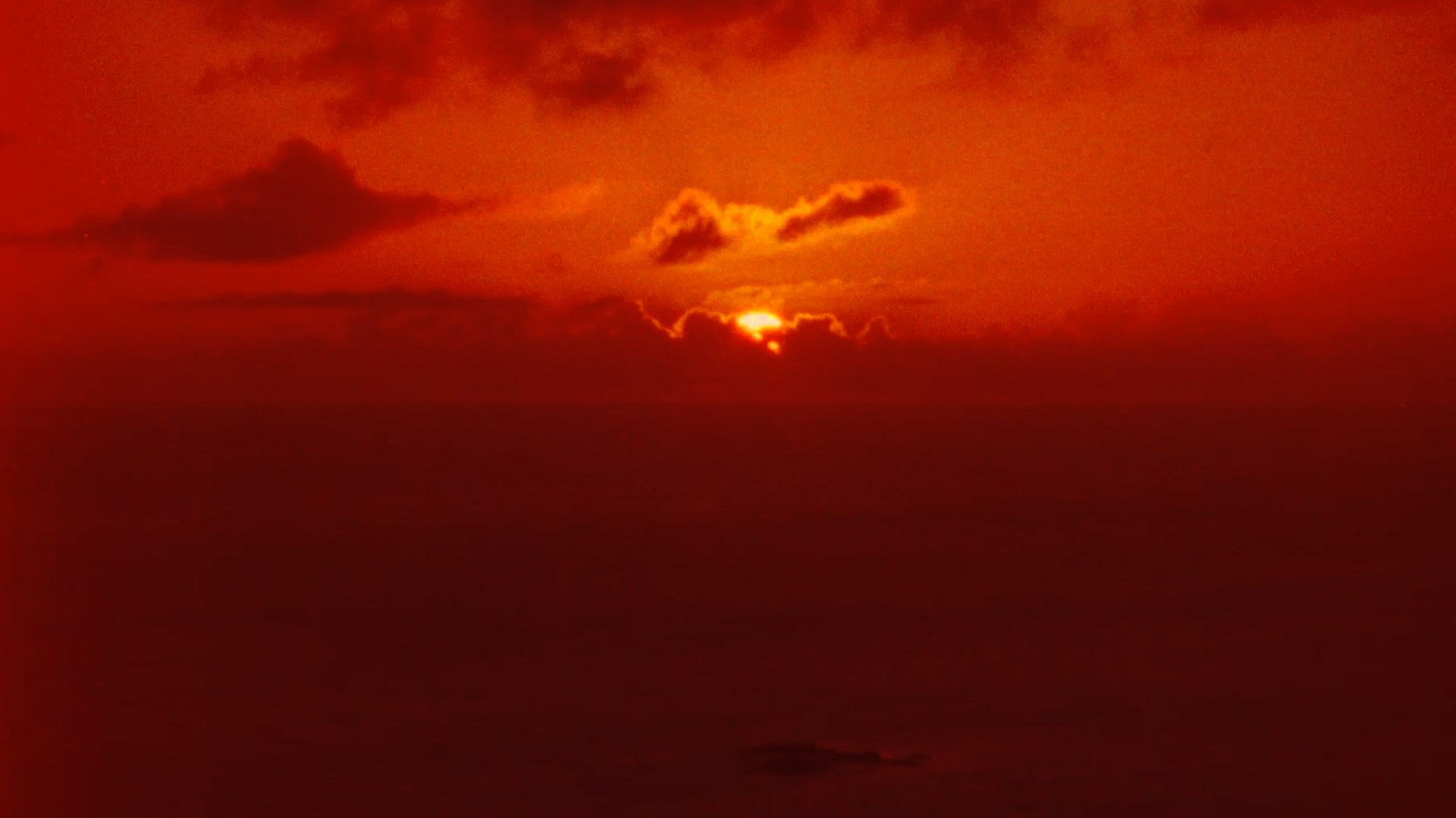
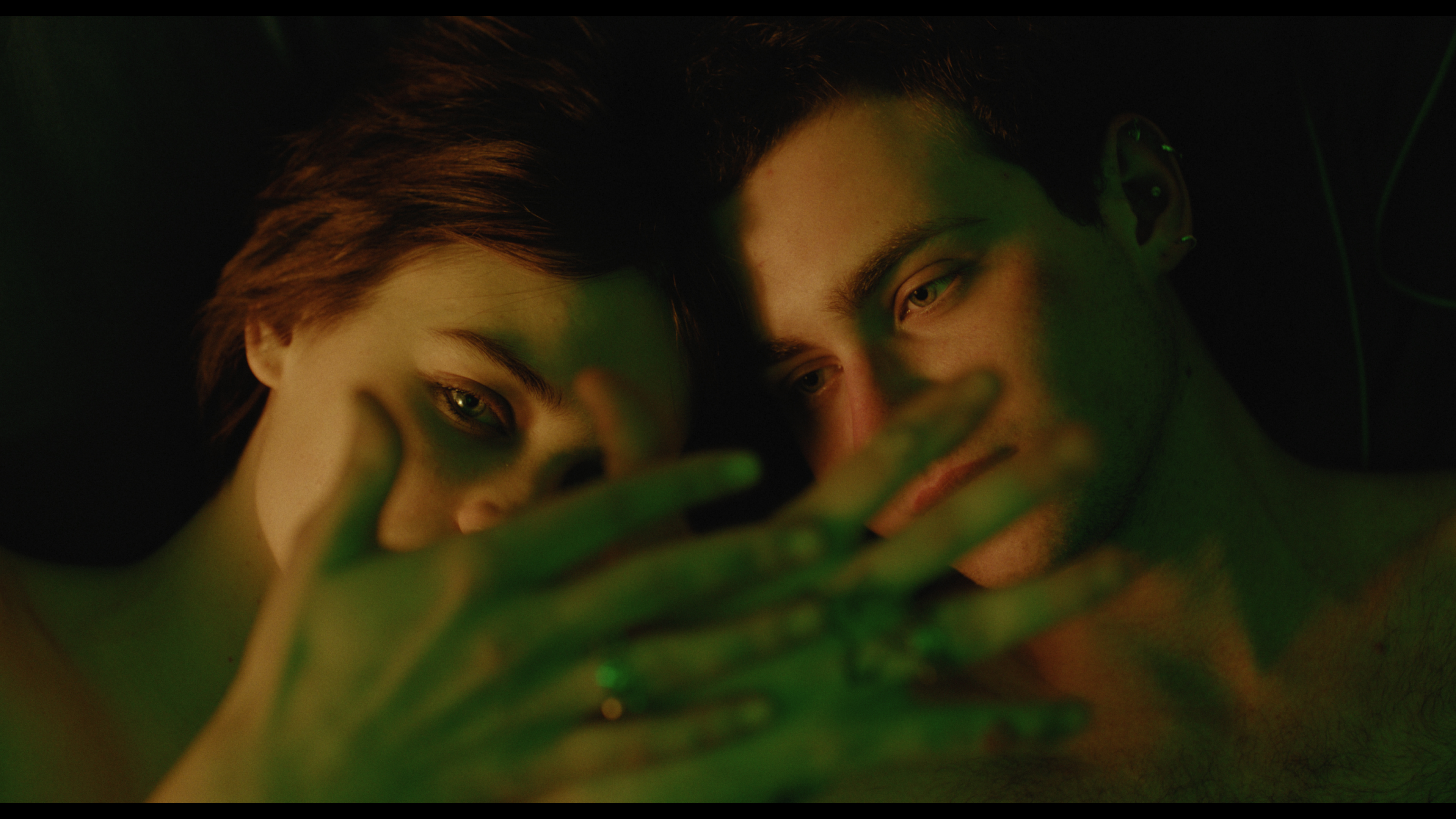
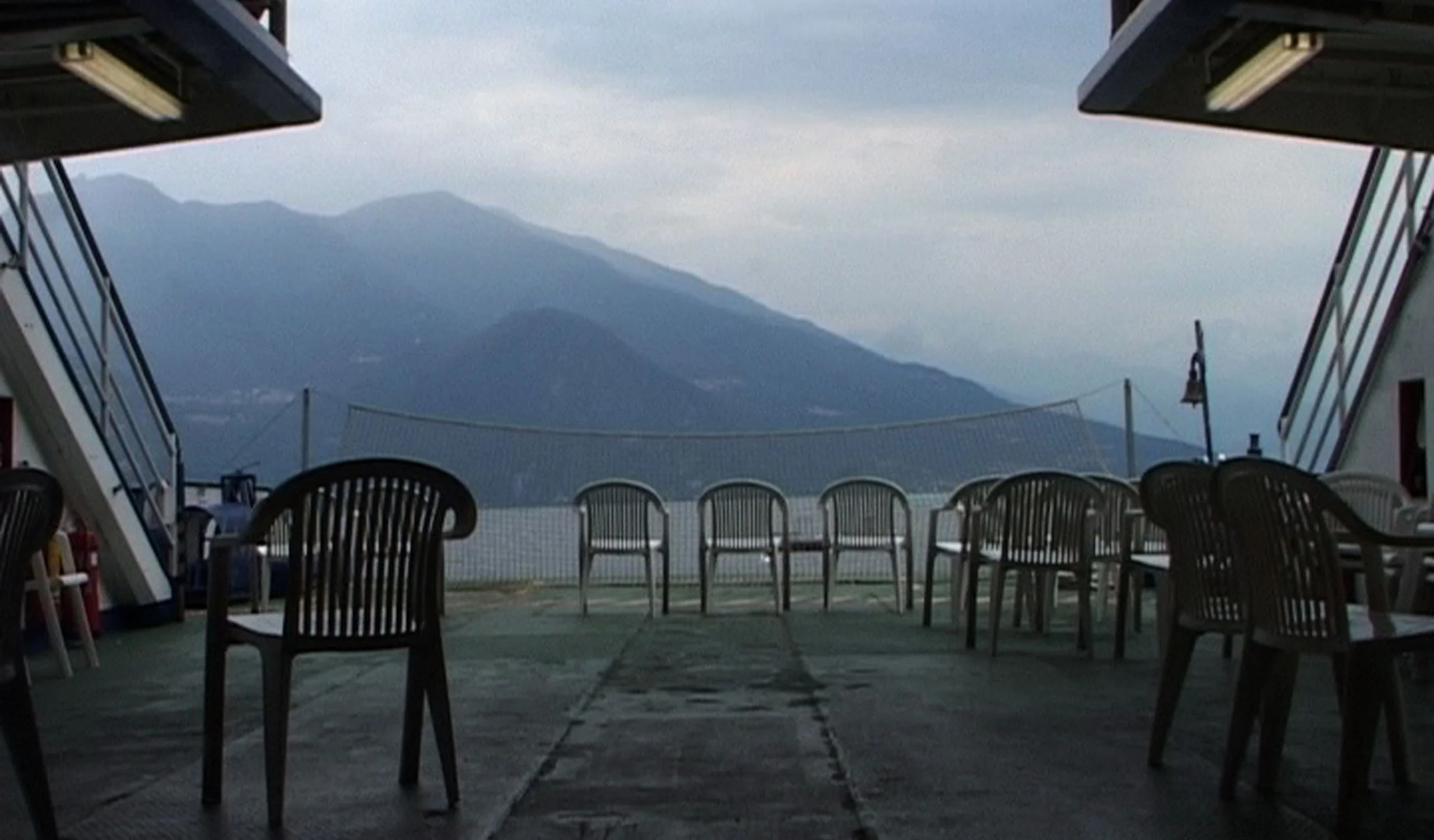
Anna Marziano’s first narrative feature, Foam of Worlds, carries precisely this search for hope throughout its runtime, but unlike the end of those documentaries, it is not here to deliver a totalizing message. The kind of radical change is impossible to realize at the moment, but as always, life goes on, and there are still people in the weeds fighting for whatever change or action is possible. At the centre of Foam of Worlds is a mother and a daughter, Antonia and Lena, living on Sant’Erasmo, an island in Venice, Italy. Antonia’s life revolves around fighting for practical changes through environmental human rights law, while taking care of Lena on the home front. The contrast between the grand matter of environmental activism and domestic responsibilities is the central tension of the film, and its form responds by mixing wonderfully spontaneous moments of interactions between the mother and daughter – at time so authentic making completely one forget that the film is a fictional work – and shots introducing the natural habitat around Sant’Erasmo – different bodies of flowing water that correspond to the concern of rising water levels around Venice, the vegetation, and sand.
I found the film incredibly moving, which is something that bewilders me as I try to remember its shape. And it is tough to recall scenes or moments, even right after the film’s finished, because the way Marziano assembles the film seems to emphasize a disconnect rather than allowing her audience to identify with the individual scenes and physical setting. There is this friction between the overarching feeling of impotence in Antonia’s work and the smaller, individual human moments that carry so much beauty; how does one still find joy in the everyday moment despite being at the forefront of knowing we’re in a downward spiral? I think it is through seeking this tricky balance that Marziano invents her montage within the film. Elliptical, but also grants the film a rhythm out of disjunction. Between the disjointed images, the sound bridges are constructed with natural sounds, emphasizing the concrete matter of the place, instead of instructive music that favours sentiment. The individual human moments at times feel displaced by landscape shots, yet the landscapes often provide context for the preceding and following images. The best example is when Lena is painting a picture by a dock; the landscapes that interstitially intercept the sequences of her paintings do not always resemble what she draws on the page, so identification is frequently connected, obfuscated, and reconnected.
Marziano’s montage, permeating the entire film, diffuses both the idea of a traditional “scene” and spatial construction (i.e. the découpage) that comes along with it. She is not particularly good with coverage or sustaining long interactions, but she also doesn’t seem too interested in those matters and the moments of interaction between humans, particularly between Antonia and Lena, are short and sweet. The two are mostly captured doing things on their own, with some compare and contrast; for instance, Antonia is seen watching Rossellini’s Europa ‘51 late at night through a close-up of her face lit by the glowing screen playing the movie, while Lena watches Ponyo during the day. When one’s eyes perceive they are inside for one shot and outside the next, where the sense of exterior and interior are constantly flickering, it becomes much more difficult for the audience to precisely identify themselves with one place. The idea of preventing the film’s spectator from becoming omnipotent, by allowing one to see and hear the video footage of courtroom cases but never be able to step into that physical space, seems pivotal for Marziano:
In this film, driven by her restlessness, Antonia is compelled to transform the prescriptive nature of law into a journey of setting in motion. In Schiuma di mondi, case-law becomes a membrane that connects social sensibilities and organisations thanks to a ceaseless process on a case-by-case basis. So, I chose not to step inside court buildings – often exploited rhetorically in cinema productions – and I rather focused on the legal cause preparation.
Partly due to the great difficulties of producing this film, the shooting was scattered over several months. In that period, institutions such as the International Criminal Court struggled to enforce warrants. It suddenly became clear to me that those radiophonic news had to be part of the film, as they could well convey the clash between Antonia’s daily efforts of care and her heavy sense of impotence. In these years of conflicts and uncertainties, I believe we need to explore and to devote ourselves to a constructive dimension: even in the arts, satirical provocations are of little consequence and they don’t par up to the pain of others. We need films that can be brutal gestures of solidarity, free of rhetoric. I pin my hopes on films where thinking can help us feel and where emotions can help us think about our conditions.
There’s also an argument that the film’s free-flowing images, almost like an unmediated process of thinking, hinders its portrayal of the day-to-day, case-to-case struggles. Unlike a Wiseman film, which puts power dynamics and precise descriptions of situational matters at the forefront of its camera by focusing and zooming attentively to its subjects’ faces, Foam of Worlds‘s elliptical style often eludes detailed depictions of Antonia’s work. The calls where Antonia prepare legal cases with colleagues and experts are depicted aurally, whereas the images themselves would drift away and focus on landscapes or matters unrelated to the subject at-hand. The distance between image and sound seems like a continuous topic that Marziano is attempting to explore throughout the film, but the way those more discursive moments fit seamlessly with film’s stream of images seems too easily for me. This may be where the film’s ineptitude for fiction is exposed the most, the lack of extended and concrete moments of interaction about human efforts.
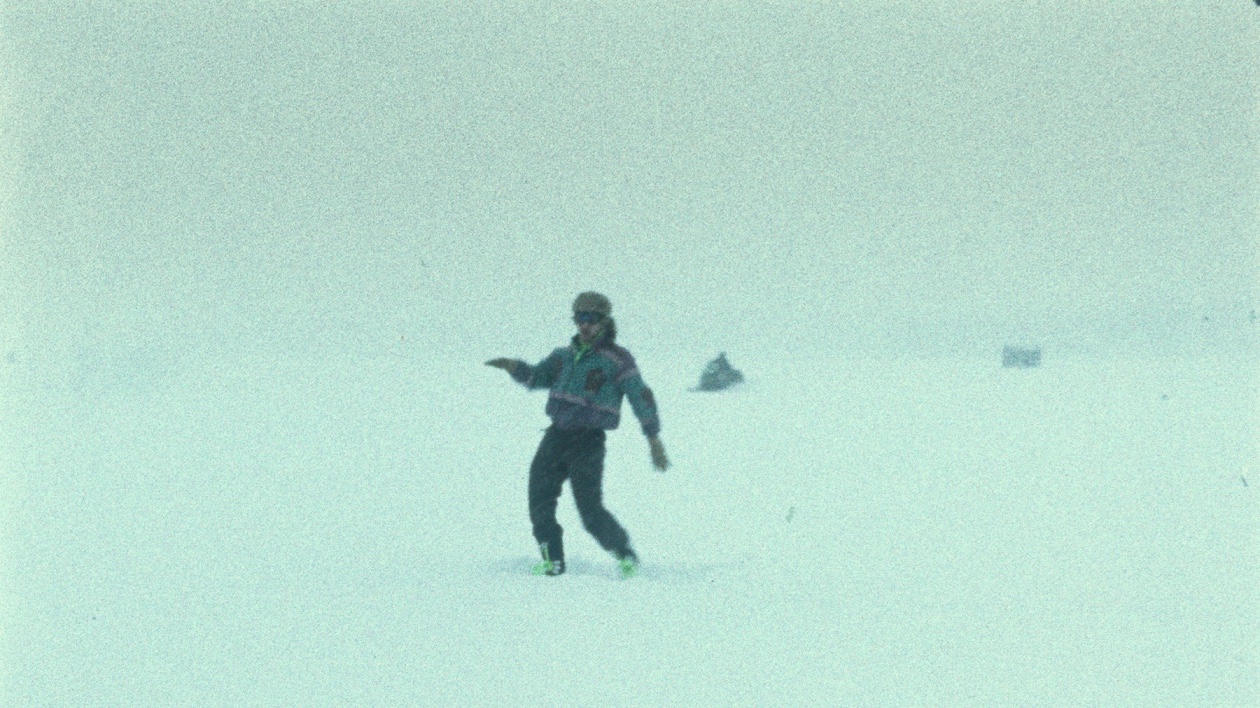
The film is bookended by radio news of Netanyahu submitting a pardon request to the Israeli government without pleading guilty and the subsequent rejection; the explanation being that one must admit guilt before one can be forgiven. The names of Netanyahu and his friend, the imprisoned former Brazilian president Bolsonaro, who was once the greatest threat to the Amazon rainforest, are echoes of powers that a meagre figure like Antonia cannot fight. Yet their actions and the complex web of global political systems are left for people like her to untangle and find something good in. The eerie concoction of sirens and moving figures at the end of the film strikes a chord about what it means to carry the guilt for the environment we are handing over to our children, and the gradual realization that reckoning may no longer be enough. Marziano’s film is a work of uncertainty, a constant oscillation between the concreteness of what’s surrounding us – nature, work, our loved ones – and the unknown future.



Leave a Reply