The 79th Locarno Film Festival concluded more than a week ago. Due to personal scheduling reasons, I could not be there in person this year, so I am still catching up on many of its exciting offerings thanks to their intrepid virtual library. Here are two films that I watched.
I Rarely Wake Up Dreaming
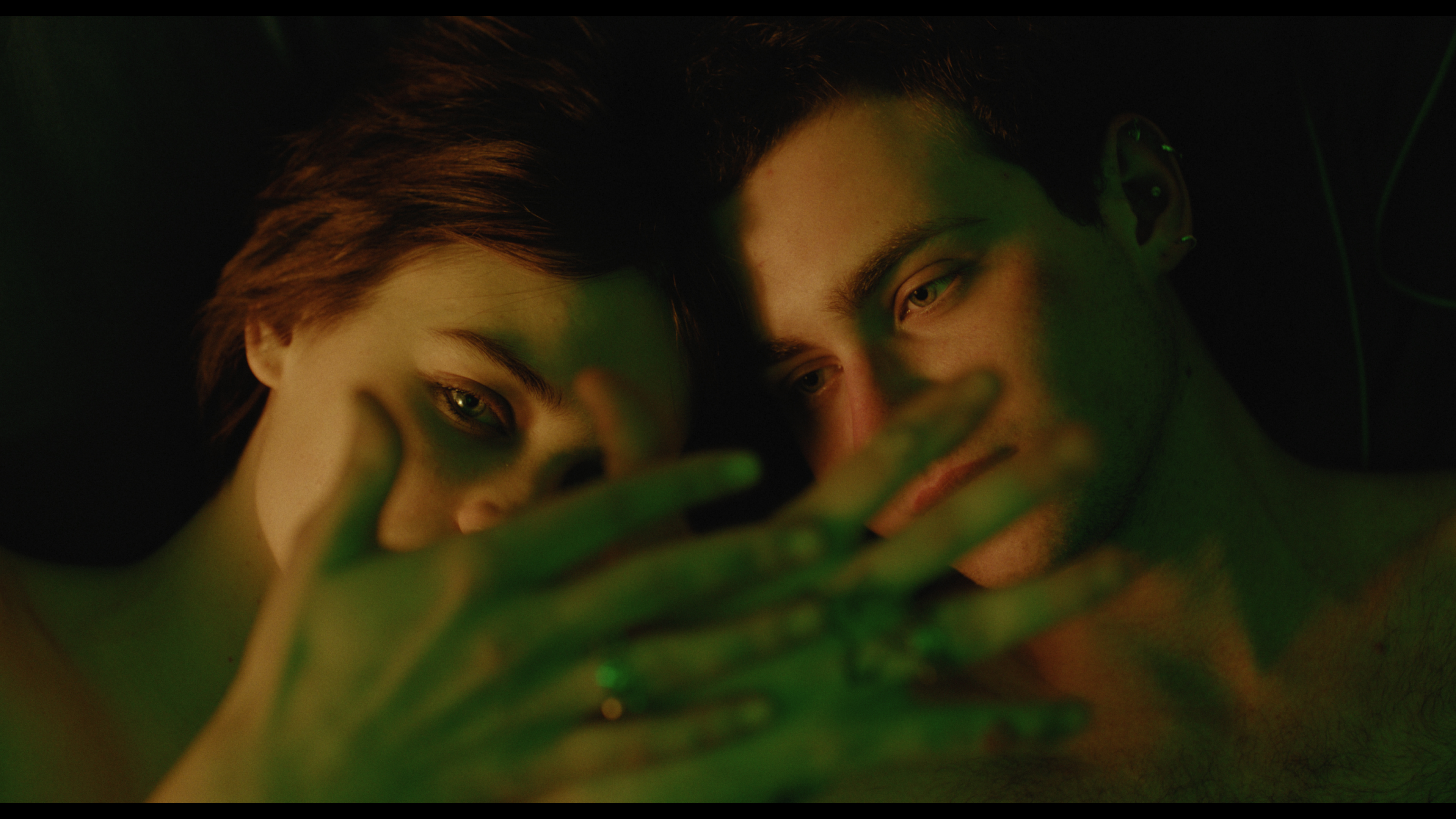
I did not have Isabelle Stever’s I Rarely Wake Up Dreaming – a restrained wartime drama about a newlywed couple, with the husband being a transgender man, living in Ukraine and trying to escape the country after Russia’s invasion in early 2022 – high on my Locarno watchlist until NYFF announced their main slate line-up earlier this month. Outside of the inclusion of Hong Sang-soo’s Nowhere to Lay My Eyes (which let’s honest, no surprises no one), it is the only other film out of the entire festival to be selected As context matters for film viewings matter, I watched the film with the question of how did a film by an experienced (this is her 7th feature), but a stranger to North American cinephilia like Stever be offered a spot in a rather prestigious and auteur-biased line-up (again, cough cough, Hong Sang-soo, although I love him and he deserves it). The answer I could come up with is that the film, in a sense, has a slippery contemporaneity that creates a specific kind of friction in its storytelling that the NYFF programming team would appreciate. It is sort of a period piece, yet its history is only 4 years ago, so most of us watching the movie will remember the invasion happening in real time on the news; tragically, the war is still ongoing, so the fictional elements of the film’s images are far from being finite.
There are two battles in tandem in the film: people fighting an interior battle against societal prejudice as an extraneous one intrudes uninvited. Director Isabel Stever and screenwriter Anna Melikova conceived the project prior to the war as an attempt to depict the experiences of their trans friends living in Ukraine. After the war begins, their task of representation becomes harder, as they must consider how this experience shifts alongside people’s changing mentality during war and the entirely altered reality of conditions and situations.
The film begins at a New Year’s Eve party in 2022, just when the couple Olya and Oleh are celebrating their newlywed status. Oleh is a transgender man and has just obtained a passport that confirms his new identity, which legally allows him and Oleh to be married. But the happiness is ephemeral, like New Year’s fireworks. The war slowly encroaches on the couple’s lives. First they see bombs going off in the distance from their window, then their brother-in-law enrols into the army, leaving Olya’s sister and their newborn baby behind, then Olya’s parents leave their house and move back home, leaving the two alone, stranded with a limited food supply.
The film often feels deprived of formal energy and narrative momentum, as if the stasis of Oleh and Olya’s increasingly intensified situation feeds into the film’s own enervation. Stever’s visual plan uses many obstructions, such as frame-within-frame blocking with door frames and windows, cutting off half of the characters’ faces at the frame’s edge, or turning a character’s face away from the camera during key emotional scenes. The two leads in the film are non-actors; their muted line deliveries combined with its visual strategy create a strained distance throughout.
In dire circumstances, the most extreme hidden emotions in one’s inner self rush out as walls of quotidian comfort are demolished one by one. They are mostly negative ones as People in the supermarkets start fights to defend their native tongue, Olya comes to question if her marriage with Oleh is just her resignation to traditional values, and Oleh’s confronted by how his newly assumed masculinity makes him the alien object standing in the middle of the conflict between the couple’s desire to flee and a patriotism that pressures him to fight for his country. There is a sense that I Rarely Wake Up Dreaming is a siege film, but the outside forces attacking the two and attempting to destroy their unity are what the two held in their hearts in the first place. But oddly, Stever’s consistently pensive visual strategy keeps the film in a deadlock from the start, and the emotional spark born of confrontation never fully strikes. The opening scene shows the couple’s intense argument through an establishing shot outside their apartment, where we see them only as shadowy silhouettes through the window curtain; the same argument is recreated toward the end of the film, this time inside their apartment. This switch seems to signal newly acquired context through familiarity with the two people involved, but we didn’t; our fascination with the arguments didn’t grow, as the two never show any liveliness outside the struggle they represent.
Tomorrow a Long Time Ago

The title “I Rarely Wake Up Dreaming” fits perfectly for Luise Donschen’s Tomorrow a Long Time Ago, a dry, ever-drifting narrative exercise in how people across different times collapse onto the same plane of the film. History becomes a dream the people in the film either wander into or dissolve out of, and we as the audience can no longer decipher which of the different periods, connected through mysterious linkages of personal pasts, is the film’s true reality.
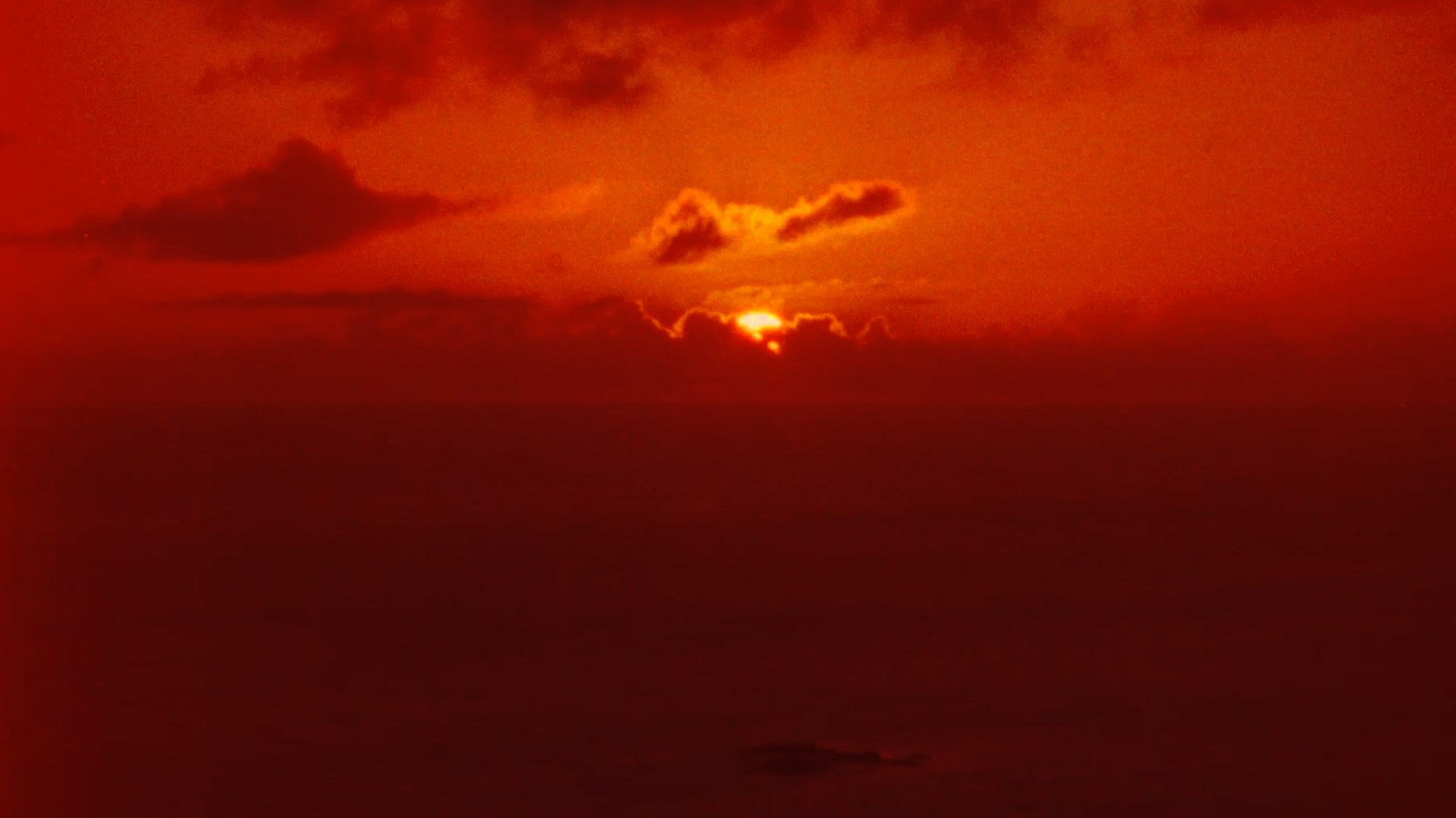
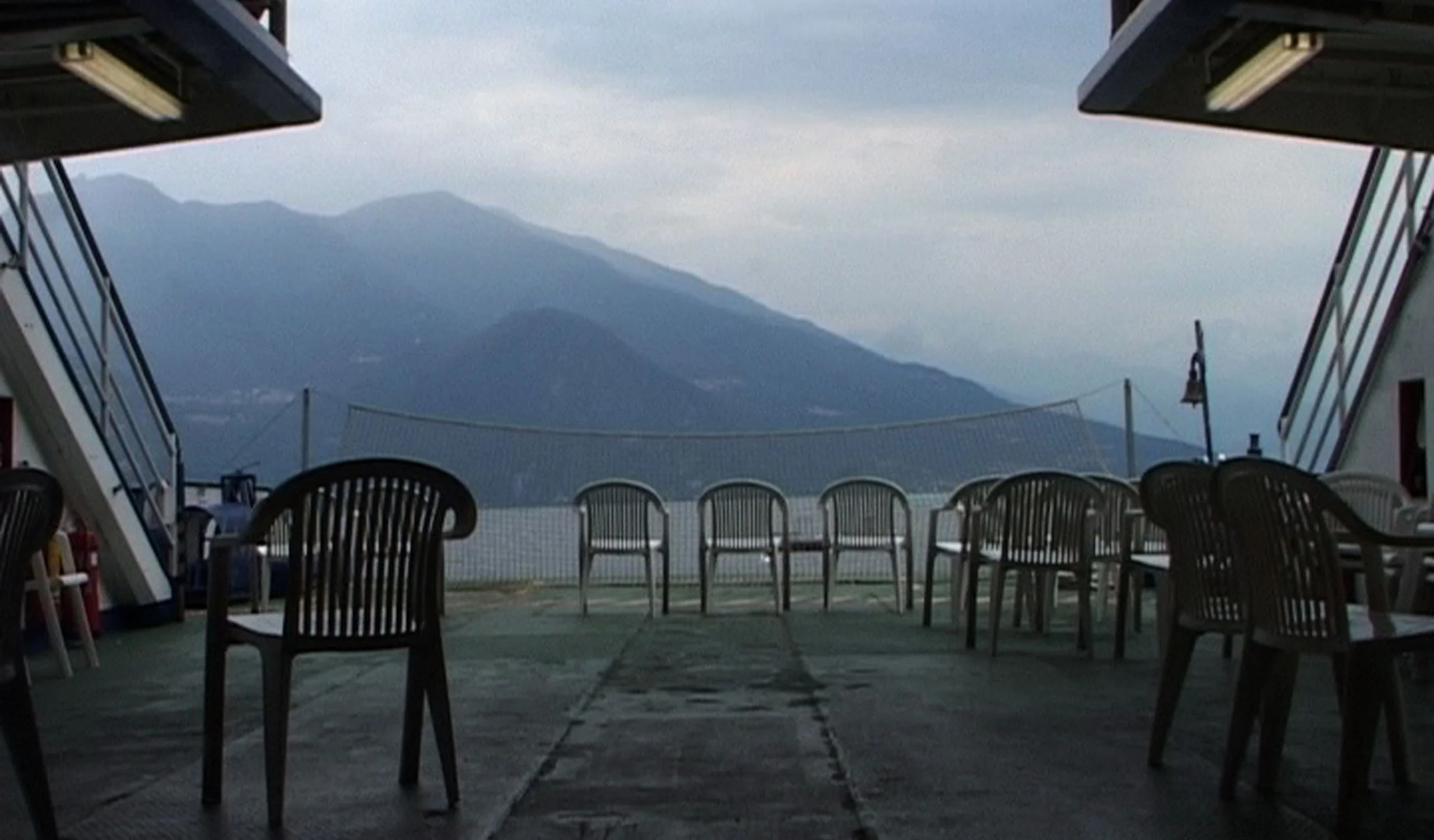
The film opens with Jelena, an elderly staff member at a museum or exhibition of sorts, inviting a wheelchair-bound man to advise on a large historic painting. During the two’s discussion, the film cuts to a montage that gives a closer look at the various sections of the painting as if to plunge the viewer deeper into this representation of the bygone past. The following 10 minutes are extremely exciting; it follows Jelena making her way home, passing through a forest and stopping by a grocery shop on the way. It achieves a rare feat in cinema where I found myself drifting along with the film’s movement without feeling bound by a strict narrative set-up. Donschen’s camera (and shot by Helena Wittmann) falls under the typical festival arthouse set-up of long static compositions and a general refusal of découpage. But she has a good eye for both the human and natural spaces, and the film’s soundscape incorporates plenty of noises that make the overall atmosphere feel full. What’s exciting about those 10 minutes is that it provides an illusion of agentlessness thanks to how certain people and objects in frame gain meaning through focus and lose it a few shots later as the film wavers onward, which dissolves the rigidity of the individual composition as the emphasis of the film itself is constantly shifting.
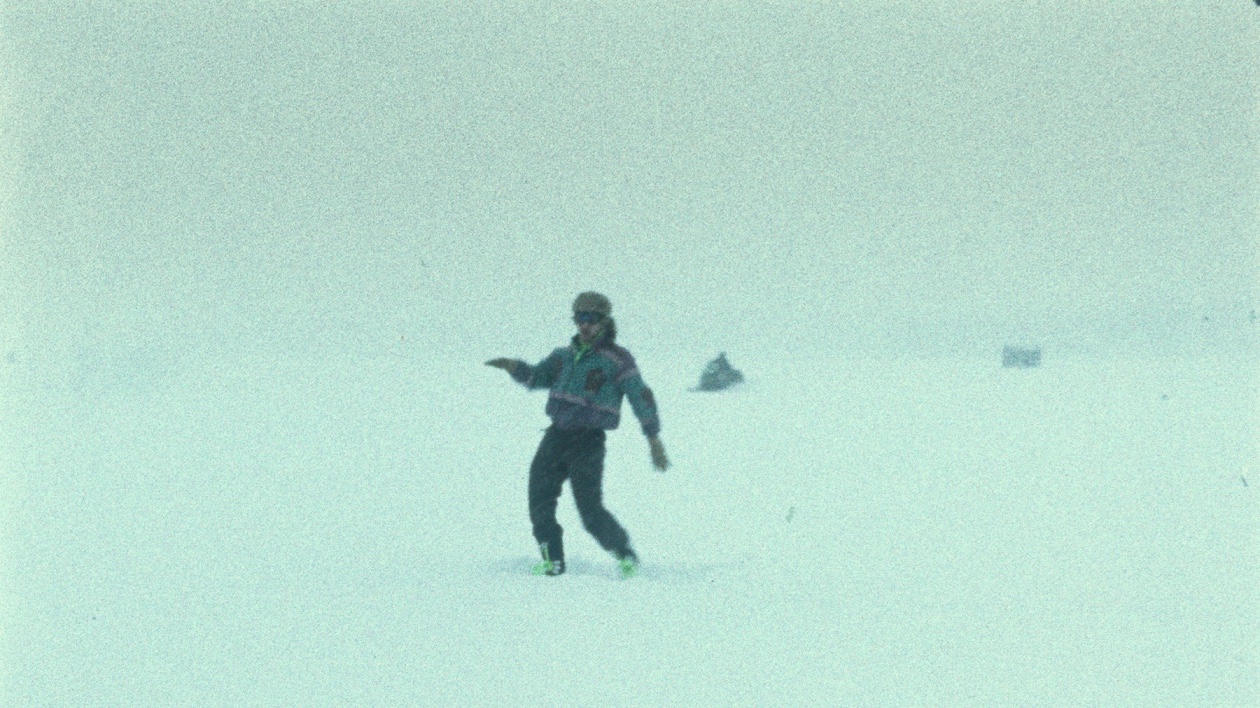
We eventually see Jelena in her home, and in her dream, we see a riot and are transported back to 1990. The title card drops and the main character seamlessly changes to Patty, a 50-year-old worker in a film factory who’s just been informed that she’s laid off alongside a dozen of her colleagues. The almost cartoonish depiction of capitalism and the Bressonian mannerism during these scenes are reminiscent of Cyril Schaublin’s Unrest, but it does not linger on this struggle either. As it progresses, it becomes clearer that the film is under a cosmic spell cast by the film’s formal structure. The Bressonian mannerism and the lack of dialogue also serve this edge by signalling the actors are mere objects within its larger operation. It instead consistently changes where it wants to be narratively, and Patty becomes more of a vessel carrying the filmmaker’s appetite for its narrative gamesmanship. We see her moving from one place to another, from her apartment out towards the mountains and the forests, but her motivations remain a mystery, so the film’s general operation feels more and more like an attempt to see how disparate images can develop connectivity in meanings through sheer sequentiality.
What ultimately makes the film taper off is how its grasp of history is so esoteric that it becomes an overt formalist exercise. Real political movements and effects seem to only exist in the periphery, sometimes as template questions for math classes or noises that can be turned off by shutting the windows close. Several times, Donschen seems to actively deny the real connection with historical events and political movements, but what her true project regarding the role of history remains very muffled.



Leave a Reply